Short-term rentals along the North Carolina coast have been a popular investment thesis for a decade now. Some buyers built portfolios that genuinely changed their finances. Others overpaid in 2021, met rising expenses, met new regulations, and quietly sold at break-even three years later. In 2026, the honest answer is somewhere in between — short-term rentals on this coast can still work, but the math is tighter, the rules are less forgiving, and the operator matters more than ever.
Here is the realistic picture of whether a coastal NC short-term rental still makes sense as an investment, drawing on what we are seeing across Oak Island, Holden Beach, Sunset Beach, the Topsail corridor, and the Wilmington beach towns.
How the Market Has Shifted
The 2020 to 2022 period was unusual. Demand for coastal vacation rentals spiked, supply was thin, and yields were easy to achieve at almost any price. That window has closed. Three things changed at once. Buyer purchase prices rose sharply. Insurance premiums and HOA dues climbed. Vacation rental supply caught up with demand in most coastal markets, which pressured nightly rates and occupancy.
The net result: 2026 yields on a newly purchased coastal short-term rental are meaningfully lower than they were three years ago. Strong operators in good locations still make the model work. Marginal operators in marginal locations no longer do.
Which Markets Are Still Performing
Oak Island, Holden Beach, and Sunset Beach
The Brunswick beaches continue to deliver some of the most consistent rental returns on the NC coast. Established booking infrastructure, family-friendly reputations, and steady summer demand from the Carolinas, Virginia, Ohio, and Pennsylvania support performance. Sunset Beach in particular has a deep repeat-guest base.
Topsail Island and Surf City
Topsail Island and the Surf City corridor continue to attract family rentals and have a slightly less saturated supply picture than some Brunswick beaches. Oceanfront and second-row inventory performs particularly well.
Wrightsville Beach and Carolina Beach
Both still produce. The trade-off in Wrightsville Beach is the tightened municipal regulation on short-term rentals, which has reshaped the operator landscape. Carolina Beach remains friendlier to STR operators and continues to deliver solid yields on the right properties.
Bald Head Island
Bald Head's structural scarcity, ferry-only access, and managed rental ecosystem make it a different category. Yields are moderate compared to the bigger volume markets, but the long-term appreciation profile and predictable demand support a different investor thesis.
The Honest Yield Math
A typical Brunswick-area oceanfront or near-oceanfront short-term rental that grosses $80,000 to $120,000 a year in 2026 usually nets the owner $30,000 to $55,000 after expenses, before debt service. Expenses include property management fees of 18 to 35 percent of gross, insurance, HOA dues, cleaning fees, utilities, repairs, taxes, and listing platform fees.
For an investor buying with traditional 25 percent down financing, the cash-on-cash return on most of today's coastal STR purchases is in the 3 to 7 percent range, with the upside more in long-term appreciation than current yield. Cash buyers see better cash returns but give up the leverage that drove the bigger 2018-to-2022 outcomes.
The Regulatory Reality
Short-term rental rules in coastal NC are local, not state-level. Each town and each HOA writes its own rules, and the rules can change. The trend has been toward tighter rather than looser regulation. Some towns require registration, occupancy limits, off-street parking minimums, and noise enforcement standards. A handful of HOAs prohibit short-term rentals entirely.
Investors should confirm three things before any STR purchase. The town's current STR ordinance and any pending changes. The HOA or condo association rules and their enforcement history. The neighbors' attitude toward rentals — a hostile street can make even a legal rental untenable.
Expense Categories Investors Underestimate
Property Management Fees
Full-service vacation rental management on this coast typically runs 25 to 35 percent of gross rental income, sometimes higher for boutique management. That includes booking, guest communication, cleaning coordination, and minor maintenance. Self-management can save much of that, but it is genuinely a part-time job.
Repairs and Replacement
Vacation guests are harder on a home than full-time residents. Plan for higher replacement frequency on linens, appliances, furniture, screens, paint, and finishes. A reasonable repair-and-replacement budget is 5 to 8 percent of gross revenue.
Insurance Premium Creep
Insurance premiums on the coast have moved up every year since 2018 in most markets. Investors should budget 3 to 8 percent annual increases as a baseline.
Tax Treatment
Rental income is taxable, and the IRS rules around personal use, days rented, and deductible expenses are specific. The tax treatment can be favorable if structured correctly, including potential depreciation and cost segregation benefits. A CPA with vacation rental experience is essential.
What Separates the Winning Properties
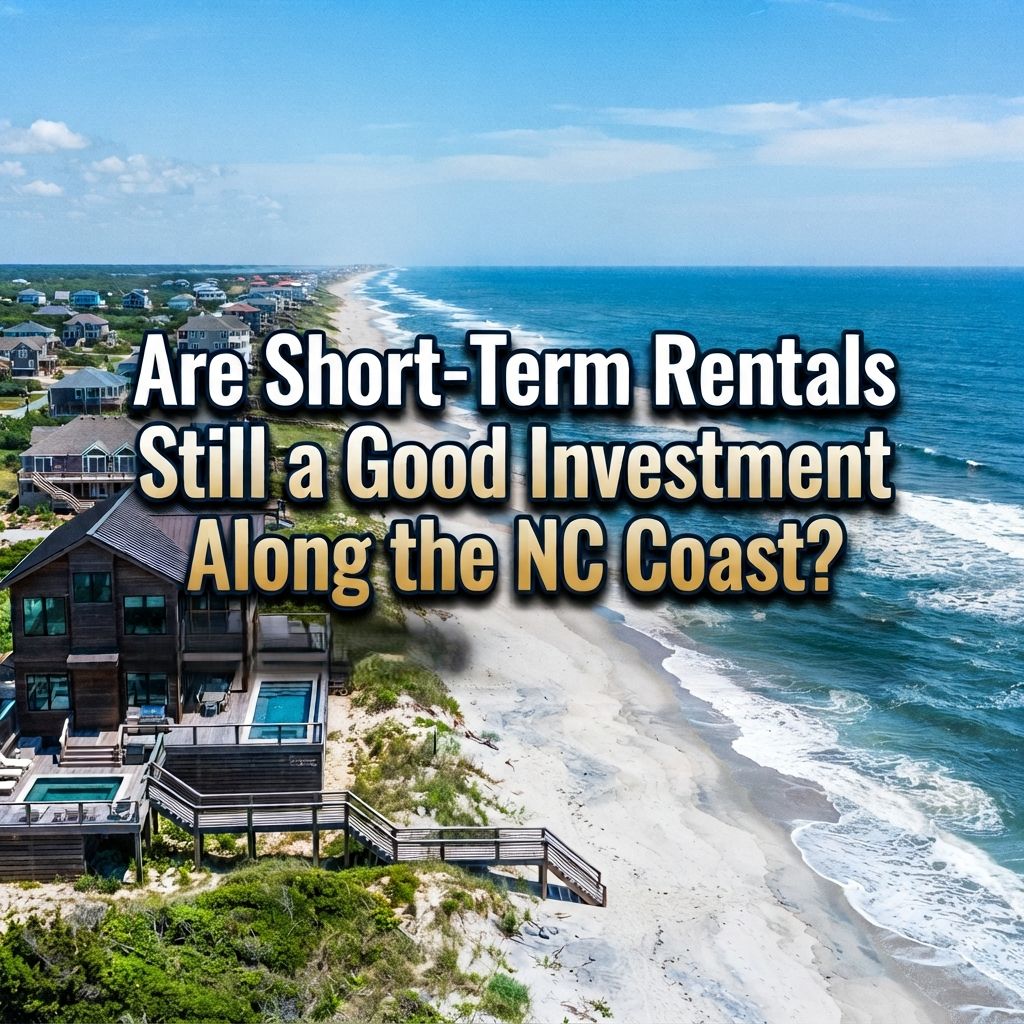
The vacation rentals that consistently outperform have several things in common. They are in markets with established booking infrastructure and strong repeat-guest bases. They are sized for the dominant booking pattern in that market — typically families of six to ten guests. They are finished, photographed, and marketed at a higher level than the median in their market. They are professionally managed by an operator who actively prices the calendar, not one who sets it and forgets it.
Underperforming rentals usually fail on one or more of these. Wrong market, wrong size, mediocre finish, or weak operator. Each is fixable, but each costs money and time to fix.
The Long-Term Thesis
The honest investor argument for coastal NC short-term rentals in 2026 is less about cash yield and more about long-term ownership of a coastal asset that has held value through multiple cycles. The rental income offsets the carrying cost. The appreciation provides the real long-term return. Investors who think of an STR as a coastal asset with a rental income engine attached generally do well. Investors who think of an STR as a pure cash-flow vehicle often do not.
Key Takeaways
- Coastal NC short-term rentals still work in 2026, but yields are tighter than they were three years ago and operator quality matters more
- The Brunswick beaches, Topsail Island and Surf City, and Carolina Beach continue to be the most consistent STR markets
- Cash-on-cash returns on newly purchased coastal STRs typically run in the 3 to 7 percent range with leverage, more for strong properties with cash buyers
- Short-term rental regulations are local — always verify the town ordinance and the HOA rules in writing before buying
- Property management fees, insurance increases, and replacement cycles all compress the actual cash yield more than gross rent suggests
- Long-term appreciation is doing most of the work in the investor thesis right now, not current cash yield
- Winning properties combine the right market, the right size, professional finish, and an actively managed pricing strategy
Frequently Asked Questions
What is a realistic gross rental yield on a coastal NC vacation rental?
For most properties, 7 to 12 percent of purchase price in gross annual rent is a reasonable target. Premium oceanfront and exceptional properties can run higher; smaller inland or older units run lower. Always cross-check with comparable rented inventory rather than the listing agent's pro forma.
How long does it take to ramp up a new vacation rental to full performance?
Most new rentals reach stable performance in 18 to 24 months. The first season often runs below stabilized numbers as reviews accumulate, repeat guests start to book, and the listing climbs in search rankings. Plan for a soft first year in any pro forma.
Are short-term rentals being banned in coastal NC?
No, but they are being regulated more tightly in some towns. Wrightsville Beach has tightened rules in recent cycles. Other towns have moved toward registration, occupancy limits, and parking minimums. Outright bans are uncommon but possible in specific neighborhoods or HOAs.
How does financing differ for an investment property versus a second home?
Investment property loans typically require larger down payments — often 20 to 25 percent — and carry slightly higher interest rates than second-home loans. Investment loans also let the lender count projected rental income toward qualification, which can help on the right property.
Should I self-manage or hire a property manager?
Depends on your time, your location, and your comfort with the work. Self-managing can save 20 to 30 percent of gross revenue but is genuinely involved. Most out-of-state owners hire a professional manager. Local owners with the time often self-manage successfully.