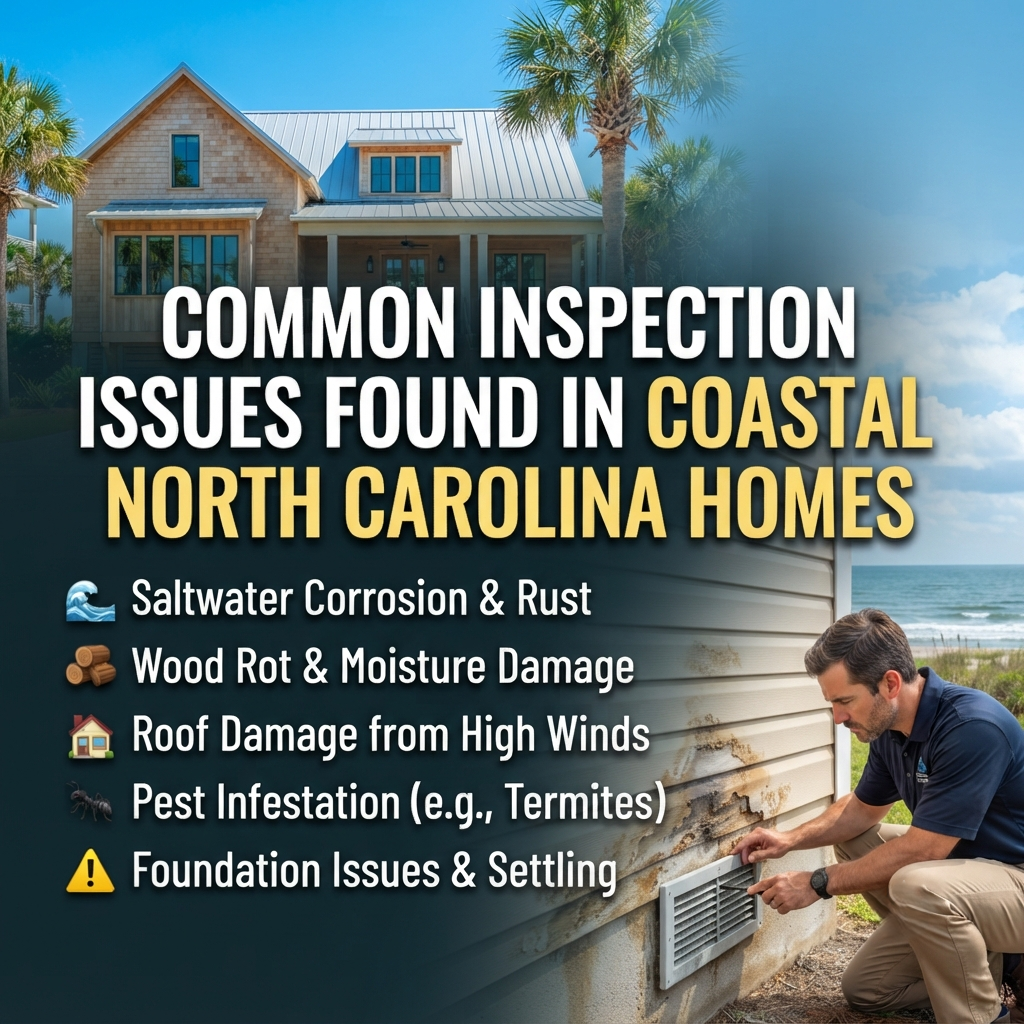
Every coastal North Carolina home will surface inspection items. The question is not whether the inspector finds something — they will — but whether the items are routine maintenance, manageable repairs, or the kind of structural or moisture issues that should change the deal. After thirty years walking inspections from Wilmington down through the Brunswick beaches, the patterns are predictable. Buyers who know what to expect react to inspection reports calmly. Buyers who do not often overreact and lose the home.
Here is the honest list of what inspectors actually find in coastal NC homes and how to think about each item.
Roof and Flashing
Roofs take the biggest beating on the coast. Wind, sun, salt, and storm-driven rain wear shingles, lift flashing, and compromise sealant around chimneys, skylights, and roof penetrations. Inspectors routinely flag aging shingles, soft spots, missing nail patterns, and flashing that needs resealing. Roofs in Wilmington, the Brunswick beaches, and the Topsail corridor typically need full replacement at 15 to 20 years rather than the 25 to 30 you would see in inland markets.
Buyers should treat the roof as the most expensive likely line item on any older coastal home. Insurance carriers are tightening underwriting on roofs older than 15 years, which can affect both the cost and the availability of coverage at renewal.
Crawl Space Moisture
Most homes in this region sit on a crawl space rather than a slab, and crawl spaces in a humid coastal environment need active moisture management. Inspectors flag standing water, damp insulation, sagging vapor barriers, fungal growth on framing, and inadequate ventilation. None of these are necessarily dealbreakers — most can be solved with encapsulation, a dehumidifier, and grading correction — but the cost varies widely.
A clean, encapsulated, conditioned crawl space is a real feature on a listing. A neglected crawl space is the single most common reason a coastal home renegotiates after inspection.
HVAC and Salt Corrosion
HVAC condenser units on the coast suffer from salt air corrosion faster than inland equipment. Inspectors check coil condition, fin straightness, refrigerant line insulation, and the age of the system. Coastal HVAC systems often need replacement at 10 to 12 years instead of the 15 to 20 manufacturers advertise. Homes closer to open water — especially on Oak Island, Wrightsville Beach, and the Brunswick beaches — wear systems faster.
Electrical and Panel Issues
Older coastal homes commonly show outdated panels, ungrounded outlets, missing GFCI protection in kitchens and baths, and reverse-polarity outlets. Federal Pacific and Zinsco panels appear in homes from the 1970s and 80s and almost always need replacement for both safety and insurability. Many insurance carriers will not bind a policy with those panels in place.
Plumbing
Polybutylene plumbing from the 1980s and early 1990s shows up in some coastal homes and is a known failure risk. Older galvanized supply lines can show pitting and corrosion. Drain stacks under bathrooms often show small leaks that have caused subfloor staining. Inspectors flag all of this. Buyers should plan for potential repipe budgets on homes from those eras.
Windows and Exterior Doors
Salt air, wind-driven rain, and sun exposure wear exterior glazing seals and door weatherstripping. Inspectors flag foggy double-pane windows, failed seals, swollen and sticking doors, and threshold rot. None of these are structural, but they add up. Buyers should price both the immediate repairs and what a full window package would cost if the home will eventually need it.
Decks, Porches, and Outdoor Wood
Decks, porches, screened rooms, and pergolas in coastal NC age quickly. Inspectors flag rotted joists, deteriorating ledger connections, loose railings, and screens that need replacement. The structural items are the priority — a deck ledger that has pulled away from the house is genuinely dangerous and not unusual on older homes. The cosmetic items can be staged into a maintenance plan.
Stucco and EIFS
Older synthetic stucco (EIFS) systems on some 1990s-era Wilmington and Brunswick County homes have documented moisture intrusion issues. A qualified moisture inspection is essential on any home with EIFS exterior, regardless of how clean the visible surface looks. This is one of the few inspection items that should genuinely change a deal if the readings are bad.
Flood and Drainage
Inspectors note evidence of water intrusion, settled grading, sump pumps, and signs of past flooding. Buyers in Carolina Beach, low-lying parts of Hampstead, and other flood-zone-adjacent properties should pay particular attention. Past flooding is not necessarily a dealbreaker, but it needs to be disclosed, mitigated, and insured.
Termites and Wood-Destroying Organisms
North Carolina law requires a separate wood-destroying-organisms inspection. Coastal NC sees subterranean termites, formosan termites in some submarkets, and a steady supply of moisture-driven fungal damage. Active infestation triggers treatment and damage repair before closing. Old, inactive damage is more common than buyers expect and is usually negotiable.
Hurricane Hardening
Inspectors note whether the home has impact-rated windows or shutters, hurricane straps, and a roof rated for high winds. The presence of these features matters for both insurance pricing and resale value. Their absence is not an inspection failure, but it is a planning item — many coastal owners add storm protection in the first year or two of ownership.
How to Read an Inspection Report
The single biggest inspection-report mistake buyers make is reacting to volume rather than severity. A 60-page report sounds scary, and most of it is informational. Focus on three categories: safety issues (electrical, structural, gas), moisture issues (roof, crawl space, EIFS), and high-cost systems (HVAC, roof, plumbing). Everything else is usually negotiable, repairable over time, or already priced into the home.
The job of your agent is to translate the report into a request that fits the contract and the market. A reasonable due-diligence repair request on a coastal home in 2026 is firm but not unreasonable. Buyers who try to renegotiate every line item lose homes that other buyers will gladly take with the same report.
Key Takeaways
- Every coastal NC home shows inspection items — focus on safety, moisture, and high-cost systems rather than reacting to report length
- Roofs on the coast typically need replacement at 15 to 20 years, and insurance underwriting is tightening on aging roofs
- Crawl space moisture is the most common renegotiation driver — a clean, encapsulated crawl space is a real selling feature
- HVAC condensers wear faster on the coast and often need replacement around 10 to 12 years
- Older electrical panels, polybutylene plumbing, and EIFS exterior systems all warrant special attention and can affect insurability
- Decks, porches, windows, and doors all show coastal wear — most items are manageable maintenance, but structural issues are dealbreakers
- Wood-destroying organism inspections are required by NC law and routinely surface inactive damage that is usually negotiable
- Hurricane hardening features affect both insurance pricing and long-term value
Frequently Asked Questions
How much should I budget for repairs after a typical coastal NC inspection?
For a well-maintained home in good shape, $2,000 to $8,000 is a reasonable range for negotiated repairs or credits. Older or deferred-maintenance homes can run well above that. Major issues like a new roof or full HVAC replacement can push the number into five figures.
Can I waive the inspection to be more competitive?
You can, and some buyers do, but it is risky on a coastal home. The hidden moisture and salt-environment issues are too consequential to assume away. A more practical approach is a fast inspection — three to five business days — so you keep competitive timing without skipping the diligence.
Are inspectors in coastal NC familiar with EIFS, crawl spaces, and salt issues?
Most local inspectors are, but not all. Ask whether the inspector has specific coastal NC experience and whether they are certified to perform an EIFS or moisture-meter inspection if the home requires one. Hiring a specialist for EIFS or for a deep crawl space inspection is often money well spent.
How long should the due diligence period be on a coastal NC home?
Most contracts in this market run 14 to 21 days. That gives time for the home inspection, the wood-destroying-organism inspection, any specialist follow-up, appraisal, and survey. Shorter windows are possible but cut margin for any issue that comes up.
What inspection items should make me walk away?
Active major structural movement, large unmitigated EIFS moisture intrusion, recent severe flood damage that has not been remediated, and significant active termite damage are the most common deal-killers. Most other items are negotiable. Your agent should help you read the difference.