Every buyer on the coastal North Carolina market eventually runs into flood zones. The FEMA-issued designations that label a property as X, AE, VE, or something more specific look bureaucratic on paper and are actually one of the single largest factors driving what a home costs, what it costs to insure, whether a lender will finance it, and how it sells at resale. Buyers who understand flood zones make sharper decisions. Buyers who do not sometimes buy a beautiful home and inherit a carrying-cost problem they never accounted for.
Here is the honest picture of how flood zones actually affect home prices along the coast — Wrightsville Beach, Carolina Beach, Oak Island, and the broader Wilmington region.
What the Flood Zone Labels Actually Mean
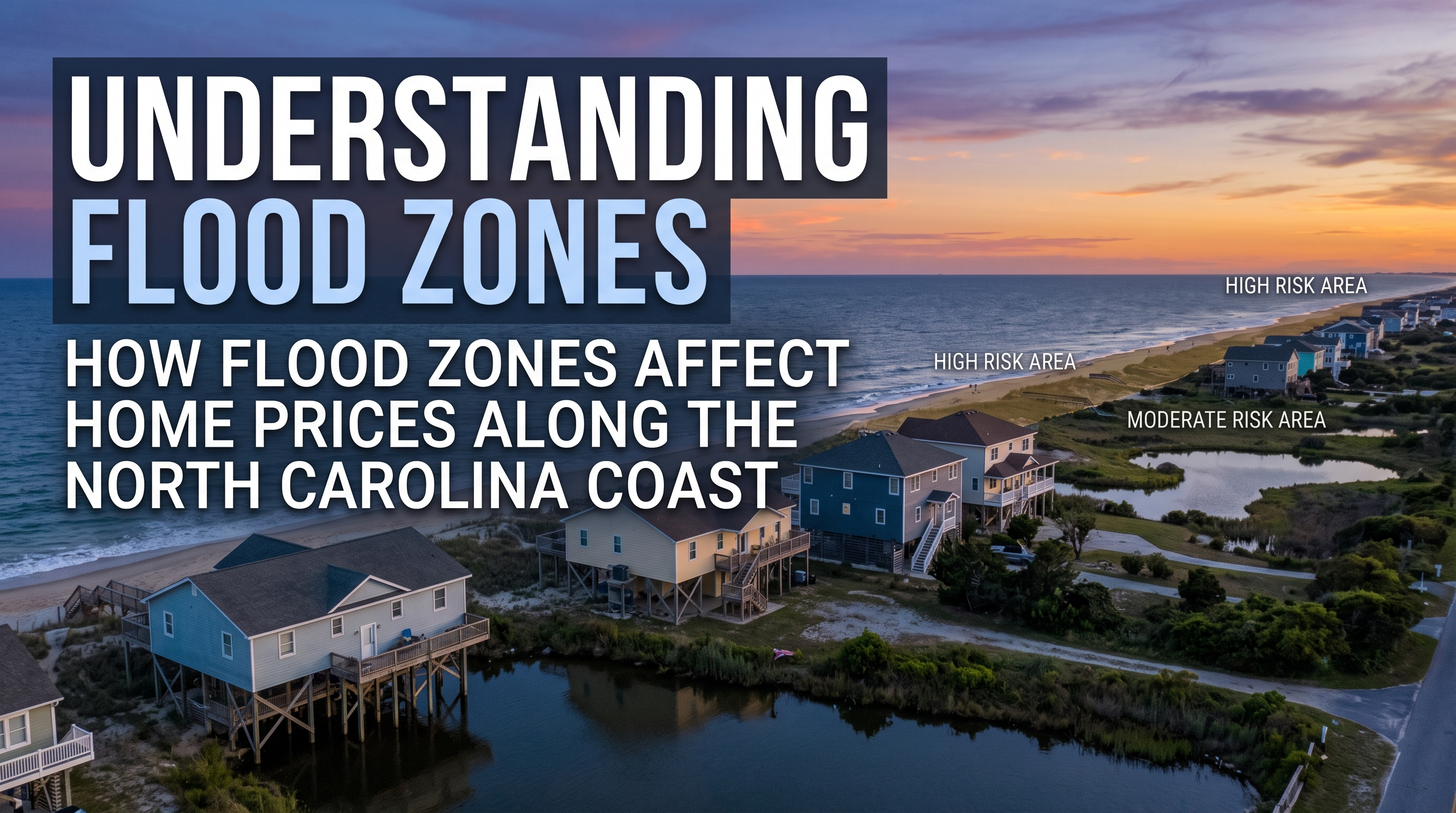
FEMA divides property into flood risk zones based on modeled base flood elevations, storm surge scenarios, and historic data. Zone X, sometimes labeled "shaded X" or "unshaded X," represents the lowest flood risk — either outside the modeled 100-year floodplain or in the 500-year floodplain. Zones A and AE indicate high-risk areas within the 100-year floodplain, with AE providing a specific base flood elevation for insurance and construction purposes. Zone VE indicates high-risk coastal areas with wave action, typically along oceanfront and near-inlet properties. Each label carries different insurance and lending implications.
Buyers should always pull the current flood determination on a specific property. The zone can vary block by block, and the label on a listing description is not always current or accurate.
How the Zone Affects the Home Price
The zone shows up in the sale price through several channels. The most direct is flood insurance cost. Homes in AE and VE zones require flood insurance for any federally backed mortgage, and the annual premium can range from $600 for a well-elevated home in a favorable AE zone to $5,000 or more for a poorly elevated home in an aggressive VE zone. That premium is a real recurring cost that buyers price into what they will pay.
The second channel is elevation compliance. Homes built or substantially improved in an AE or VE zone are required to meet base flood elevation standards. Older homes that predate the current standards may be grandfathered but face renovation and rebuild restrictions that reduce future flexibility. Buyers looking to renovate significantly should understand the "substantial improvement rule," which triggers full compliance if the improvement exceeds 50 percent of the pre-improvement value.
Zone X: The Quiet Advantage
Homes labeled X sometimes trade at a premium for what feels like an intangible reason — buyers simply prefer them. The financing is straightforward, flood insurance is optional, elevation compliance is not required, and daily peace of mind is higher. Even a few blocks of inland shift can move a property from AE to X, and that shift can be worth meaningful money at resale.
Buyers should not assume Zone X means no flood risk. Some of the most expensive coastal flood claims come from properties outside the highest-risk zones. Flood insurance in Zone X is affordable and is generally worth considering even when it is not required.
Zone AE and VE: Where the Math Gets Detailed
In AE and VE zones, the specific elevation of the finished floor relative to the base flood elevation matters. A home built two feet above BFE quotes far better than a home built at BFE or below. Buyers should ask for an elevation certificate on any home they are considering in AE or VE, and if one does not exist, plan for an elevation survey during diligence.
The math often works. A well-elevated AE or VE home in a desirable coastal location can still trade at premium prices, and buyers who understand what they are pricing tend to come out well. What kills value is a poorly elevated home with unclear compliance status and a large insurance quote — that combination becomes a discount property fast.
How Zones Affect Lending
Federal law requires flood insurance for any federally backed mortgage on a home in a Special Flood Hazard Area (SFHA), which includes AE and VE zones. Cash buyers can technically skip the insurance in these zones, but doing so is rarely advisable given the exposure. Some lenders have additional overlays that affect underwriting, especially on older homes with unclear elevation compliance.
Resale and Long-Term Value
Homes with clear flood zone documentation, current elevation certificates, and manageable insurance quotes resell more easily than homes with murky zone histories. Buyers ask harder questions than they did five years ago, and unresolved flood questions consistently slow deals. Sellers of homes in AE and VE zones should proactively assemble the documentation before listing.
Homes that have flooded in the past face additional scrutiny. North Carolina requires disclosure of known flood history, and prior claims show up on the CLUE report. This is not a dealbreaker, but it is information that affects both price and financing.
Neighborhood-Level Variation
Flood zones can vary block by block. A home on the higher side of a beach town street may sit in Zone X while a home a block away sits in AE. Even within the same street, drainage patterns, natural elevation, and construction era can produce meaningful differences. This is one of the reasons buyers should treat flood determination as property-specific, not neighborhood-specific.
Practical Steps for Buyers
Pull the current FEMA flood determination on any property being considered — this is inexpensive and quick. Quote flood insurance during due diligence, not after. Request the elevation certificate if the home is in AE or VE. Ask about prior claims and prior flooding. Look at the property in a heavy rain if possible. Match the total carrying cost against the buyer's budget rather than the sticker price alone. These steps together turn what feels like a bureaucratic layer into practical information.
Practical Steps for Sellers
Assemble the flood documentation before listing. Pull the current determination, locate or commission the elevation certificate, gather any prior claim documentation, and be ready to hand it all to a buyer's agent on request. Sellers who have their flood story organized close deals faster and negotiate better than sellers who do not.
Key Takeaways
Flood zones are one of the biggest single drivers of coastal North Carolina home value, and yet many buyers spend less time understanding them than they spend picking paint colors. The FEMA-issued zone determines whether flood insurance is required, how much it costs, whether elevation compliance applies, and how the home will sell in the future. Zone X properties often trade at quiet premiums for the flexibility and peace of mind they deliver. Zones AE and VE can absolutely trade well when the home is well-elevated, the documentation is complete, and the insurance math is reasonable. What consistently hurts pricing is unresolved documentation, unclear elevation status, prior claims that were not disclosed cleanly, or an insurance quote that arrives late in the process. Buyers who pull the flood determination early, request the elevation certificate, quote insurance during due diligence, and factor the true carrying cost into their offer consistently make good decisions. Sellers who organize their flood documentation before listing sell faster and closer to ask. Flood zone information is one of the highest-leverage things a buyer or seller can master on this coast, and it costs almost nothing to master.
Frequently Asked Questions
How can I find out what flood zone a specific home is in?
The FEMA Flood Map Service Center (msc.fema.gov) provides free lookup by address. Local county GIS systems also display flood zones. Your buyer's agent should pull the current determination during initial diligence, not after contract.
Does flood insurance transfer with the property?
NFIP flood policies can be assumable in some cases, which can be valuable if the seller has an older policy at a favorable rate. Your agent and insurance agent should confirm whether the specific policy transfers and whether it is worth taking over.
Do I need flood insurance in Zone X?
Lenders do not require it in Zone X, but many owners still carry it because premiums are modest and coverage is meaningful. Some of the most expensive flood claims come from properties outside the highest-risk zones.
How much does an elevation certificate cost?
Typically $400 to $800 for a coastal NC home. Sellers sometimes have one on file. If not, buyers can commission one during due diligence, and the cost is often recouped in reduced insurance quotes if the elevation is favorable.
Can flood zones change over time?
Yes. FEMA updates flood maps periodically as new data becomes available. Homes that were previously in one zone can be remapped into another. Buyers should always use the current determination rather than relying on older documentation from the seller.