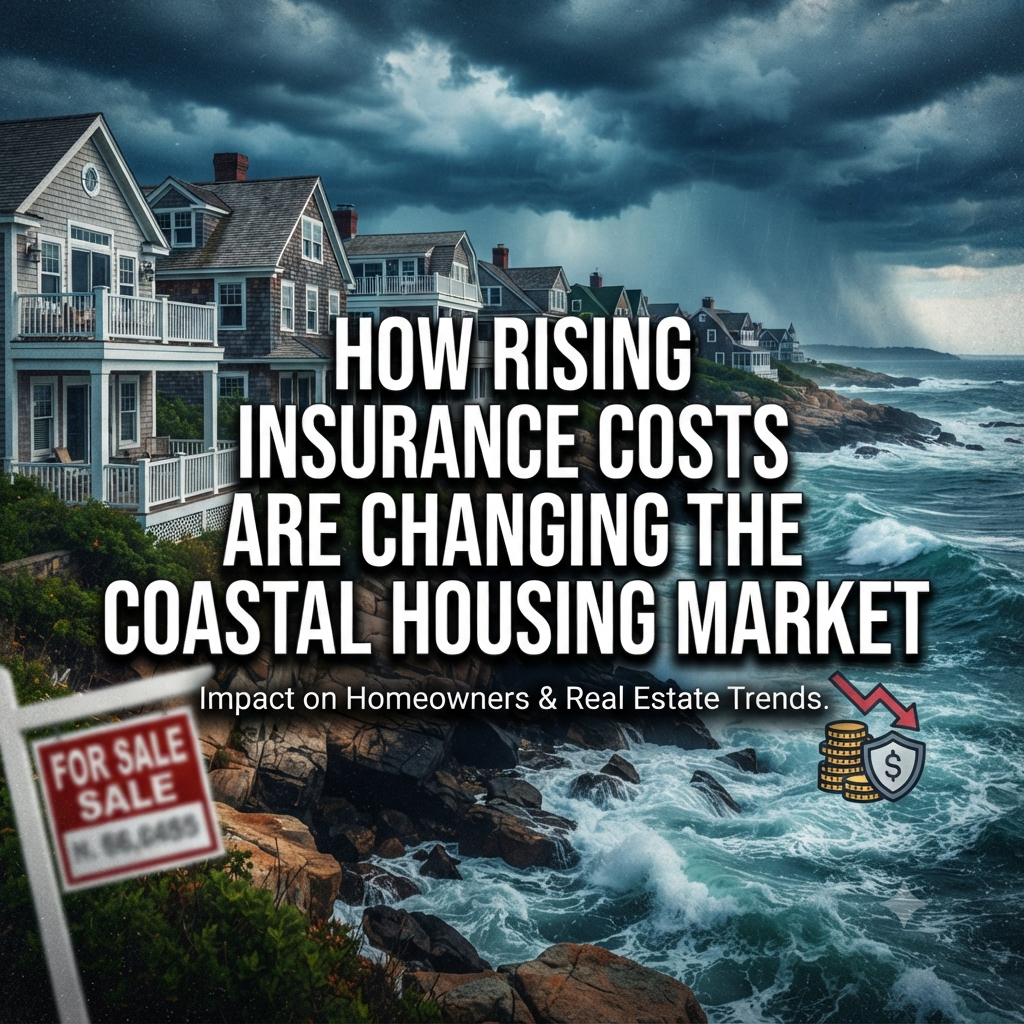
Insurance has become the quietest but most consequential force reshaping the coastal North Carolina housing market. Over the last five years, wind and hail premiums have moved up in most years. Flood insurance has repriced under federal NFIP changes. Carriers have tightened underwriting, non-renewed policies, and in some cases exited coastal markets. None of these shifts arrived with a headline, but together they have changed how buyers shop, how sellers price, and which submarkets are winning and losing.
Here is the honest picture of what rising insurance costs are actually doing to the coastal NC market in 2026, drawing on what we are seeing every week in Wrightsville Beach, Oak Island, Carolina Beach, and the broader Wilmington region.
What Has Actually Changed
Premium Levels
Wind and hail premiums on the NC coast have moved up meaningfully since 2020. Oceanfront homes that quoted $3,500 to $5,000 a year in 2020 now regularly quote $6,000 to $12,000 or more. Homes a few blocks inland have seen smaller but real increases. The trend has been steady rather than sudden, which has masked how much has moved.
Deductible Structures
Percentage deductibles on wind and hail policies have grown more prominent, and the percentages themselves have crept higher. A 5 percent wind deductible on a $1 million home is $50,000 out of pocket before the policy pays. Buyers and existing owners are increasingly encountering this structure, and it changes how ownership is planned.
Underwriting Rules
Carriers have tightened underwriting on roof age, prior claims history, distance to coast, and construction type. A home with a 20-year-old roof that was insurable in 2020 may not be insurable under preferred terms today without a replacement.
Carrier Exits
Several national carriers have quietly reduced their coastal NC exposure. The state-run Beach Plan has taken on more policies as private markets have narrowed. Independent agents with access to remaining private markets have become more valuable to buyers.
How This Is Changing Buyer Behavior
Insurance Quotes Earlier in the Process
Sophisticated buyers now quote insurance during due diligence, not after loan approval. Surprise premiums that surface in the final underwriting week have killed enough deals that the market has adjusted.
More Attention to Roof Age
Buyers now ask about roof age up front. Homes with roofs older than 15 years increasingly face a de facto price adjustment because the buyer will need to plan for replacement to secure preferred insurance rates.
Distance-to-Coast Sensitivity
The price gap between homes right on the water and homes a few blocks inland has widened as the insurance math has amplified. A comparable home a half-mile from the beach can now save the owner several thousand dollars a year in premiums compared to the equivalent home directly on the water.
Rethinking Vacation Rental Math
Investors have re-underwriting rental properties as insurance has climbed. Some marginal STR investments no longer pencil out. Investors are moving toward larger, better-located properties that can absorb the premium hit while still producing acceptable returns.
How This Is Changing Seller Behavior
Roof Replacement Before Listing
Sellers with aging roofs are increasingly replacing them before listing to protect the transaction and the buyer's insurance quote. The math often supports the investment.
Documentation of Hardening
Sellers with impact-rated windows, hurricane straps, and roof-to-wall connection documentation are highlighting those features. Verified hardening features can be worth real money at resale because they reduce the buyer's insurance costs.
Realistic Pricing on Older Homes
Sellers of older coastal homes with deferred maintenance are having to price them realistically. The buyer's total carrying cost — mortgage plus taxes plus insurance plus repairs — has moved up faster than sticker prices, and the market is pricing the difference in.
Which Submarkets Are Winning and Losing
Winning: Inland Coastal Communities
Communities that are near the coast but not on it have benefited. Hampstead, Leland's inland sections, Burgaw, and Shallotte all offer coastal-region access with lower insurance profiles than beachfront alternatives. Buyers priced out of oceanfront insurance math are moving into these markets.
Winning: Well-Built New Construction
Homes built to current codes with documented hardening features have advantages that older homes do not. Buyers can insure them more easily, at better rates, and with less friction.
Under Pressure: Older Oceanfront Homes
Older oceanfront homes with 15- to 25-year-old roofs and no hardening upgrades are the most challenged inventory in the market. Sellers face a real choice — invest in upgrades before listing or price accordingly.
Under Pressure: Aging Condos With Rising Master Insurance
Some coastal condo buildings have seen master insurance premiums move up sharply, which flows through to HOA dues. Owners are seeing 10 to 30 percent HOA increases in some buildings, which has affected resale pricing.
What Buyers Should Do Now
Quote insurance on every candidate property during due diligence. Use an independent agent who actively writes coastal NC wind and flood business. Ask about roof age, prior claims, and hardening features on every property. Build the actual carrying cost into your budget rather than the sticker price. Focus on submarkets and property types that insure well rather than assuming the market average.
What Sellers Should Do Now
Confirm your current policy's premium, deductible, and roof-related conditions. Consider roof replacement or documented hardening before listing if applicable. Provide the buyer with your CLUE report and existing policy details to smooth their diligence. Price the home realistically for the insurance math the buyer is running, not for last year's math.
The Longer-Term Outlook
Premium increases are unlikely to reverse quickly. The underlying drivers — climate exposure, reinsurance costs, and rebuilding costs — all point toward continued pressure. Buyers and sellers should assume premiums will keep rising at 3 to 8 percent a year on average, with the possibility of larger jumps in years following major storm activity. That said, the market is adapting rather than breaking. Buyers are still buying. Sellers are still selling. Prices in most submarkets are still holding or rising modestly. The insurance environment is a real headwind but not a market-ending one.
Key Takeaways
- Wind and hail, flood, and homeowners premiums on the coastal NC market have moved up meaningfully since 2020 and continue to climb in 2026
- Percentage deductibles on wind coverage — often 2 to 5 percent — mean tens of thousands of out-of-pocket exposure before the policy pays
- Underwriting has tightened, especially on roof age, prior claims, and distance to coast
- Buyers are quoting insurance during due diligence, paying closer attention to roof age, and looking further inland for better carrying-cost math
- Sellers are replacing roofs before listing, documenting hardening features, and pricing more realistically
- Inland coastal communities and well-built newer construction are winning; older oceanfront and aging condos are under pressure
- The trend is likely to continue — premiums will keep climbing modestly year over year, and the market is adapting rather than breaking
Frequently Asked Questions
Are insurance premiums going to keep rising in coastal NC?
Most base-case forecasts point to continued modest annual increases through the next several years, driven by climate exposure, reinsurance costs, and rebuilding costs. Sharp jumps are possible in years following major storm activity.
Is the state-run Beach Plan a good option?
It is a reliable fallback when private markets are unavailable, but private markets usually offer better pricing and coverage when they will write the policy. An independent agent can quickly determine which option applies to a specific property.
How much can hardening features actually save?
Meaningful amounts. Impact-rated windows, hurricane straps, roof-to-wall connections, and modern roof age can together produce 15 to 40 percent premium discounts depending on the carrier. The savings compound over long ownership.
Are lenders requiring higher insurance coverage now?
Not fundamentally, but they are stricter about verifying that the required wind, hail, and flood coverage is bound at closing. Buyers should expect standard coastal loan requirements to be enforced without exception.
Should I skip coastal ownership altogether because of insurance costs?
Not necessarily. Coastal ownership still delivers a specific lifestyle that most buyers value highly. The right response is to price the insurance into the total carrying cost, choose properties and submarkets that insure well, and go in with realistic expectations rather than avoiding the coast entirely.