Storm season on the North Carolina coast is not a crisis. It is an annual rhythm that every coastal homeowner learns eventually. The owners who ride it out best are the ones who treat preparation as a routine — spread across months, not compressed into the 48 hours before landfall. The owners who struggle are almost always the ones who wait. After watching many storms come and go along Wilmington, Wrightsville Beach, and the Brunswick beaches, here is the practical, no-drama preparation guide that works for a typical coastal NC home.
What Storm Season Actually Looks Like
The Atlantic hurricane season runs June 1 through November 30. On this coast, June and July are typically quiet. Late August through mid-October is the active window, with the third week of September historically the highest-risk stretch. November brings occasional late-season systems, usually weakening as they approach. Most years pass with one or two systems that affect the region in minor ways. Occasionally a serious storm arrives. Preparation should assume the serious storm can come this year even when it usually does not.
What to Do in May and Early June
The heaviest lift is at the start of the season. Insurance should be reviewed and any renewals or updates completed. Wind, hail, and flood policies all need to be in force well before any named storm — flood coverage in particular has a 30-day waiting period. A professional tree assessment and pruning of any branches over the house, driveway, or power lines is one of the highest-value annual investments a coastal homeowner makes. Cleaning gutters, downspouts, and site drainage prevents most rainwater damage before it starts. Roof inspection and repair of any minor issues protects against the compounded damage of wind and driven rain.
The other May job is inventory. A phone walkthrough of the house — every room, every closet, every drawer, appliances, art, electronics, high-value items — creates a claim-ready record that costs ten minutes and can save weeks after a serious storm.
What to Have Ready by Mid-July
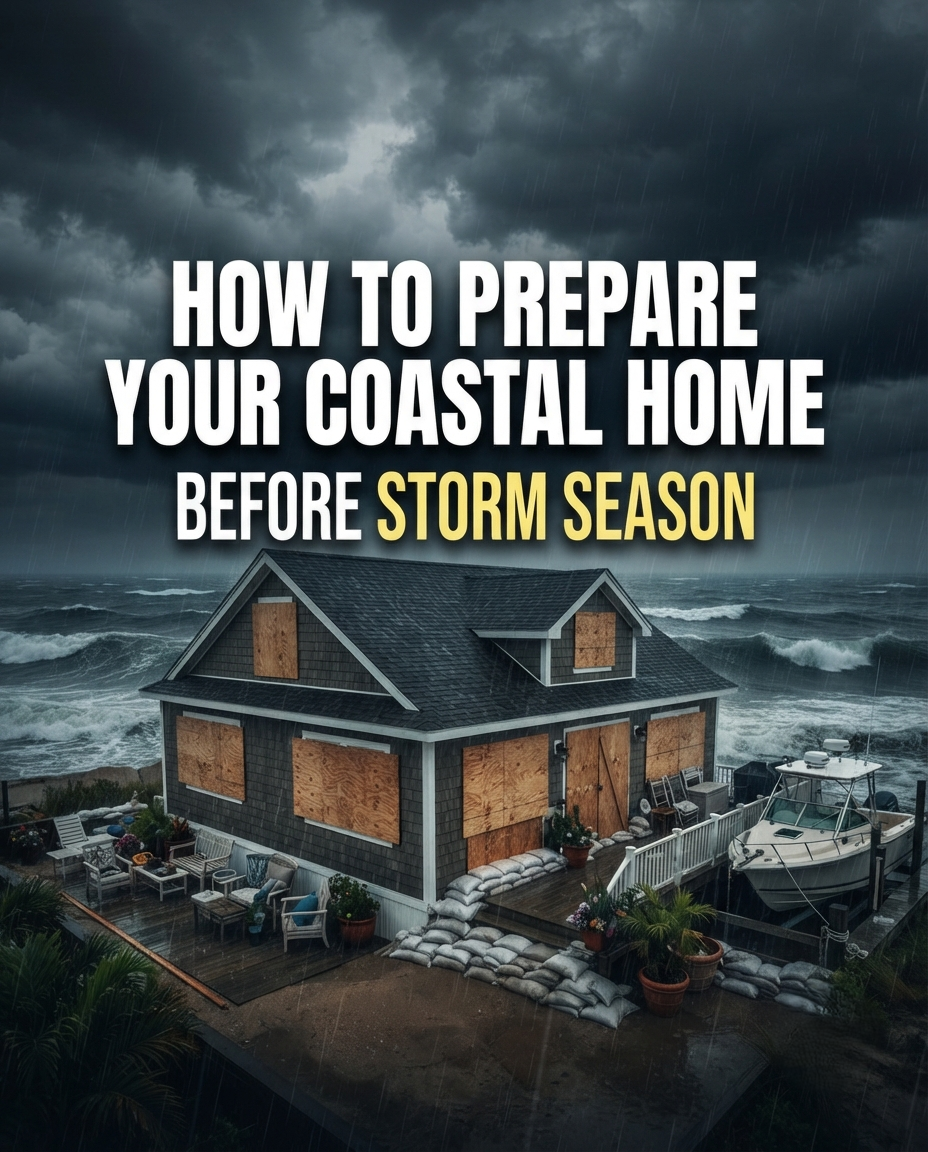
Shutters, plywood panels, or impact-rated windows should be in place, staged, and rehearsed. If storm-shutter deployment is the plan, the owner should have physically installed a set by mid-July, not learned the process during a storm watch. Emergency supplies — water, non-perishable food for seven days, medications, batteries, flashlights, portable phone chargers — should be stocked. Important documents should be scanned to cloud storage. If a generator is part of the plan, it should have been serviced, run under load, and fueled up. The car should be maintained and gas topped off.
What to Do Three to Five Days Before a Named Storm
Watch the National Hurricane Center directly rather than social media. Update on the cone twice a day and read the discussion sections that explain forecast uncertainty. This is when serious owners run their pre-storm checklist. Fuel up vehicles. Confirm the generator runs. Refill prescriptions. Confirm the evacuation plan for the household — where you go, how you get there, what you take. Pull outdoor cushions in from screened porches. Move loose items in the yard that could become projectiles. Confirm that neighbors and family know your plan.
What to Do 48 Hours Before Landfall
This is when shutters go up. Outdoor furniture, grills, planters, and anything not tied down comes inside. The boat gets moved to an inland storage yard or secured at the dock with extra lines. Freezers get bagged ice. Trash cans come in. Any loose gutters, screens, or fence panels get reinforced or removed. If the household is evacuating, bags are packed, the pet plan is set, and important documents are with the evacuation kit.
What to Do 24 Hours Before Landfall
Decisions have already been made. Evacuation orders should be followed for barrier-island and low-lying communities — Brunswick County and New Hanover County take these decisions seriously and residents should too. Bathtubs get filled for utility water. Every device is fully charged. The freezer and refrigerator are set to their coldest settings. The house is buttoned up. Outdoor plants have been moved to the leeward side.
During the Storm
Stay inside. Do not go outside during the eye — the calm passes and the winds return from the opposite direction. Keep away from windows even if they are shuttered. If flooding rises, move to higher floors. Watch local emergency communications on a battery-powered radio if power is out.
After the Storm Passes
Wait for the all-clear from local officials before going outside. Watch for downed power lines, standing water hiding hazards, and gas leaks. Photograph all damage before any cleanup begins — insurance adjusters value pre-cleanup documentation. Open claims quickly. If the home is uninhabitable, additional living expense coverage in most homeowners policies pays for temporary housing during repairs. Preserve receipts.
Regional Variations
Barrier Islands and Beach Towns
Barrier-island residents face higher wind and surge exposure than mainland residents, and evacuation orders are usually issued earlier. Buyers on Oak Island, Wrightsville Beach, Carolina Beach, and the Topsail corridor should build the evacuation plan into their routine annual preparation.
Mainland Wilmington and Brunswick County
Mainland exposure tends to be more about tree damage, power outages, and inland flooding than about direct surge. Homeowners should focus preparation on tree work, power backup, and drainage protection.
Waterfront Homes on the ICW and Creeks
Waterfront homes face wind, flood, and surge combinations that inland homes do not. Boats need a specific plan. Docks and bulkheads should be checked for pre-storm integrity. Flood coverage should be confirmed with the actual policy in hand.
What Not to Do
Do not wait until the storm is named to start preparation. Do not assume Zone X means no flood risk. Do not try to obtain flood insurance in the days before landfall — the 30-day waiting period makes it impossible. Do not evacuate too late. Do not stay in a home in an evacuation zone. Do not open claims incompletely — take pictures first, document everything, and work with a licensed adjuster.
Long-Term Improvements Worth Considering
Impact-rated windows and doors reduce risk meaningfully and often earn insurance discounts. Roof hardening and hurricane straps on older homes deliver both safety and financial benefits. A whole-home generator is a genuine quality-of-life improvement for full-time residents, less so for seasonal owners. Elevation improvements on flood-zone homes can lower insurance premiums and reduce risk simultaneously. Each is a real capital investment; the right choice depends on the home and the owner's plans.
Key Takeaways
Preparing a coastal North Carolina home for storm season is a year-round rhythm rather than a crisis-week scramble. The heaviest lifting — insurance review, tree work, gutter cleaning, roof inspection, and inventory documentation — happens in May and early June. Storm supplies, shutters, and generator readiness should be in place by mid-July. Once a storm is named, the timeline tightens fast, and the difference between a smooth ride and a difficult one is how much was already done before the cone first appeared. Evacuation decisions for barrier-island and low-lying communities should be taken seriously each time, not selectively. Mainland Wilmington faces a different risk mix dominated by tree damage and inland flooding. Waterfront and ICW-front homes need boat plans, dock checks, and confirmed flood coverage. Most years on this coast pass without major damage to well-prepared homes. The owners who quietly ride out storm season every year are the ones who treat preparation as a routine annual project — modest, predictable, and largely finished before the season peaks. Coastal ownership rewards the small consistent work far more than it rewards last-minute effort, and storm preparation is one of the clearest examples of that pattern in the region.