Leland has more amenity communities per square mile than almost any other coastal North Carolina town. That's a real advantage. And it also creates a problem for buyers who assume all amenities are equal. They aren't. Some deliver daily. Others look great in the sales brochure and rarely get used.
Here's what I mean. After years of walking Leland communities with buyers, the amenities that actually matter aren't always the ones the community leads with. Buyers who understand the difference make sharper community decisions.
The Amenities That Actually Get Used
Pickleball Courts
Pickleball has become the single most-used amenity in most Leland amenity communities. It's low-impact, social, easy to learn, and cross-generational. Communities with active pickleball leagues and enough courts to handle demand consistently outperform on resident satisfaction.
Fitness Centers and Group Classes
A real fitness center with modern equipment and a functional group class calendar gets used every day. Residents who join for the pool often stay for the classes. Communities without a real fitness setup lose activity to outside gyms.
Walking Trails and Sidewalks
Miles of internal walking trails and continuous sidewalks matter more than buyers expect. Retirees walk daily. Families walk in the evenings. Communities designed for walking retain residents better than communities where you have to drive to get anywhere.
Community Pools
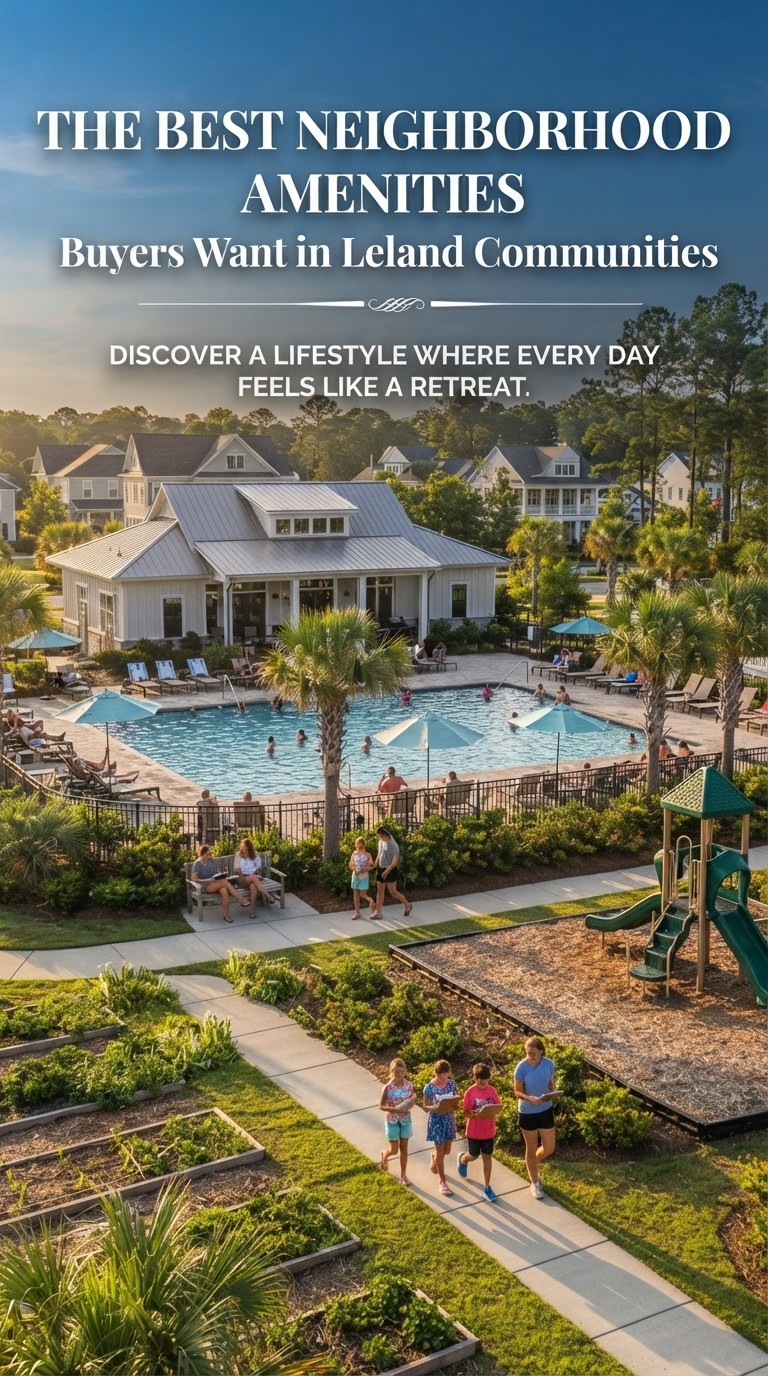
A pool with real seating, lap lanes, and a social area gets used consistently. A pool with limited seating and no social layout gets used seasonally.
Community Events Calendar
Amenities are hardware. The events calendar is the software. Communities that run a real calendar of social, educational, and interest-group events retain resident engagement year-round. Communities that don't often feel quiet even with beautiful facilities.
The Amenities That Look Good but Get Less Use
Full-Scale Golf
Golf is a real amenity for a specific buyer. Golf communities like Brunswick Forest with Cape Fear National attract buyers who play. But for buyers who don't golf, paying HOA and membership costs tied to a course they don't use is money that could have gone elsewhere. Match golf communities to actual golfers.
Tennis Courts
Tennis matters less than it did a decade ago. Communities have added pickleball on top of tennis, and pickleball activity has often outpaced tennis in daily use. Communities that maintained deep tennis without adding pickleball infrastructure lost activity.
Marinas and Kayak Launches
Real value for boaters and paddlers. Cosmetic value only for buyers who don't use the water. Communities with meaningful water access retain waterfront-focused buyers; communities where the marina is more a marketing feature than a used facility rarely convert that into resale premium.
Formal Clubhouse Dining
A great clubhouse restaurant that actually operates well is a genuine amenity. A clubhouse restaurant that struggles with operations, quality, or hours quietly becomes a source of resident frustration.
 Community-by-Community Amenity Notes
Brunswick Forest
Brunswick Forest anchors the Leland amenity market. Cape Fear National golf, extensive fitness center, multiple pools, tennis, pickleball, walking trails, and on-site retail and medical infrastructure. Community events calendar runs year-round. The amenity package fits buyers who want the fullest experience.
Compass Pointe
Compass Pointe delivers gated entry with a strong amenity center. Golf, tennis, pickleball, indoor and outdoor pools, walking trails, and an active social calendar. Slightly more upscale feel than Brunswick Forest for buyers who value that.
Magnolia Greens
Magnolia Greens offers a public-access golf course, walking trails, and established community organizations. Amenity package is more modest than the newer master-planned communities but at more accessible pricing.
Waterford of the Carolinas
Waterford of the Carolinas includes walking trails, water features, a clubhouse, and neighborhood amenities. Amenity package fits buyers who want community infrastructure at moderate HOA dues.
Grayson Park
Grayson Park offers a mid-price-point family-oriented community with newer construction and select amenity features. Fits buyers who want new construction at accessible pricing without the top-tier amenity communities' HOA overhead.
What to Ask About Amenities Before You Buy
What are the current HOA dues, and what have they done over the last three years? Are there separate club membership fees, and are they required or optional? Is there a capital contribution charge at closing? What amenities are actually operational versus planned? What is the reserve fund situation? Are any major capital projects funded?
Ask to see the current budget. Ask to see the reserve study. Ask to see the last twelve months of board meeting minutes. Amenity communities live or die by financial management, and buyers who read the documents make sharper community decisions.
Amenity Costs Buyers Underestimate
HOA dues in Leland amenity communities range from roughly $100 a month at the lower end to $400 or more at the higher end, plus club fees where applicable. Capital contribution charges at closing add several hundred to several thousand dollars. HOA increases in the 3 to 8 percent range annually are common. Budget for continued increases, not the current dues frozen in place.
Match Amenities to Actual Use
Here's the thing. The best amenity is the one you use. Buyers who pay for amenities they never touch are subsidizing their neighbors. Buyers who buy into communities matching their actual daily habits — walkable if they walk, golf-focused if they golf, pool-focused if they swim — get real value from the HOA dues.
Key Takeaways
- Pickleball, fitness centers, walking trails, and a real community events calendar are the highest-use amenities in Leland communities
- Golf, tennis, marinas, and clubhouse dining deliver value for specific buyer profiles but underperform for the broader buyer pool
- Brunswick Forest anchors the full-amenity end; Compass Pointe delivers gated exclusivity; Magnolia Greens offers accessible pricing; Waterford and Grayson Park serve moderate-amenity buyers
- HOA dues, capital contribution fees, and club membership costs should be modeled together — not just the dues number
- Communities live or die by financial management — read the budget, reserve study, and meeting minutes before contract
- The best amenity is the one you actually use — match communities to daily habits, not aspirations
- Expect HOA increases over time; budget for continued 3 to 8 percent annual increases as a baseline
Frequently Asked Questions
Which Leland community has the best amenity package?
Brunswick Forest has the largest amenity offering and the fullest social calendar. Whether it's the "best" depends on whether the buyer will use the full package. Buyers who use everything come out ahead. Buyers who use half often do better in a smaller community with lower HOA.
Are the golf memberships required in Leland communities?
Not usually. Most Leland communities separate the HOA (which typically covers common areas and community amenities) from the golf or club membership (which is optional and charged separately). Verify the specific fee structure for the community you're considering.
How much do HOA dues typically increase each year in Leland?
Increases of 3 to 8 percent per year are common. Insurance renewals on master policies, reserve funding, and operations cost inflation all drive the trend. Buyers should budget for continued increases rather than assuming current dues remain flat.
Are capital contribution fees at closing negotiable?
Typically not. Capital contribution fees are set by the HOA and paid at closing. They fund community reserves and generally can't be negotiated away. Model them as part of the closing cost budget.
Does a pickleball community really matter that much?
For a lot of buyers, yes. Pickleball has become the fastest-growing amenity category in coastal NC retirement communities, and communities with active pickleball infrastructure retain resident engagement more consistently than those without.