Retirees relocating to the coast almost always say they want a walkable community. Then they tour the region and discover walkable is harder to find than the marketing suggests. Most coastal subdivisions are car-dependent by design. Beach towns can be walkable in July and dead in February. True walkable coastal retirement — the kind where you can give up daily driving for errands, dining, and social life — exists in a specific short list of coastal North Carolina towns and neighborhoods.
Here's what I mean. Walkable retirement isn't just about sidewalks. It's about whether groceries, coffee, restaurants, your doctor, your friends, and your church are reachable without a car on an ordinary Tuesday in November. The list of coastal NC communities that actually deliver on that is shorter than you'd expect — and it's exactly the list retirees who want this lifestyle should focus on.
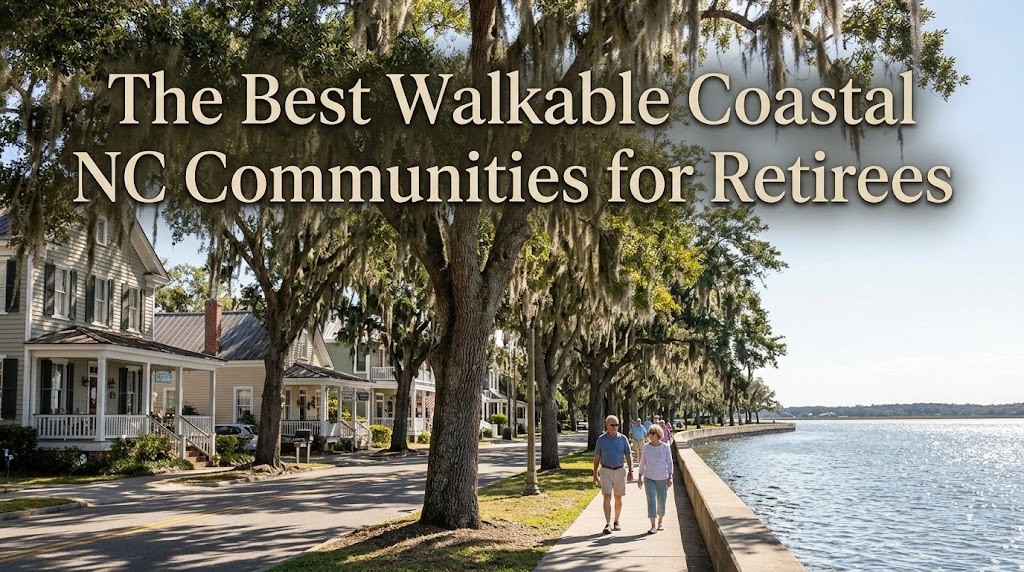
Southport Historic District
Southport's historic district is the most consistently cited walkable retirement option in the region. Howe Street and the surrounding blocks put groceries, restaurants, the waterfront, the marina, and daily services within a tight walkable footprint. Full-time retirees here routinely give up daily driving. Golf-cart living is common. The community rhythm supports it. Historic cottages in and near the district are the specific inventory to focus on.
Sunset Beach Village
Sunset Beach has specific walkable pockets, particularly on the barrier island and in parts of the historic village on the mainland side. Residents can bike or golf-cart to the beach, local restaurants, and small businesses. The town's deliberate scale preservation keeps the walkable sections quiet and functional. Not every Sunset Beach neighborhood is equally walkable — focus on the island itself or the older village streets on the mainland.
Historic Downtown Wilmington
Historic Downtown Wilmington is one of the most walkable urban retirement options on the East Coast at this scale. Riverwalk access. Restaurants, theaters, the Cape Fear Museum, Thalian Hall, and small businesses all within a few hundred blocks of restored 19th-century homes. Retirees who want a small-city walkable urban retirement often find downtown Wilmington is exactly what they wanted. The trade-off is older-home maintenance and the Historic Preservation Commission's role in exterior changes.
Wrightsville Beach Specific Pockets
Wrightsville Beach has walkable pockets, particularly near the center of the island and along specific streets with good sidewalks. Restaurants, the beach, and local shops are reachable on foot from much of the island. Not every Wrightsville street works for daily walkable life — focus on the central island positions. The town is small enough that most locations qualify as walkable in reasonable weather.
Oak Island Yaupon Beach Area
Oak Island's east-end Yaupon Beach area offers meaningful walkability. Beach access, local restaurants, and the Middleton Park Complex sit within walking or golf-cart distance of many homes. Full-time retirees in this section often use carts and bikes for the bulk of local errands. The specific neighborhood matters — not every section of Oak Island supports walkable retirement.
What Walkable Retirement Actually Requires
A grocery store within walking or golf-cart distance. Coffee and dinner options within a few blocks. Daily services — pharmacy, bank, hardware, basic medical — reachable without a long drive. Flat terrain or minimal elevation change. Safe pedestrian infrastructure. A full-time resident community active enough to support local businesses year-round. Each of the communities above delivers meaningfully on these.
What Walkable Retirement Doesn't Include
Most master-planned amenity communities, even great ones, are not walkable in the daily-errand sense. They're walkable within the community but require a car for groceries and services. Retirees who want structured amenity life plus walking should expect to drive for the walkable moments. Retirees who want daily walkable life should prioritize the historic districts and small-town cores on this list.
Practical Considerations
Historic districts carry Historic Preservation Commission oversight on exterior changes. Older homes carry higher maintenance budgets. Property tax overlays apply inside incorporated town limits. Insurance costs on waterfront and beach-adjacent properties are meaningful. Walkable-community premiums are real — walkable homes typically price higher per square foot than equivalent inventory in car-dependent subdivisions.
Compared to Non-Walkable Coastal Alternatives
Leland's master-planned communities, Hampstead, Carolina Beach, Ocean Isle Beach, Holden Beach, and most Brunswick County subdivisions are not walkable in the daily sense. All are reasonable retirement options for other reasons. But retirees who specifically want to give up daily driving should focus on the shorter list above rather than hope a car-dependent community will feel walkable because it has sidewalks.
Long-Term Fit
Walkable retirement works especially well late in life as driving becomes harder. Retirees who choose walkable communities early often appreciate the decision more over time. The specific inventory in these communities tends to be thin, which supports both appreciation and resale liquidity.
Key Takeaways
- Walkable coastal retirement exists in a short list of communities — Southport's historic district, Sunset Beach, Historic Downtown Wilmington, Wrightsville Beach pockets, and Oak Island's Yaupon area
- Walkable means groceries, coffee, dining, and services reachable without a car on an ordinary Tuesday — not just sidewalks
- Most master-planned amenity communities are not walkable in this sense, even when they have internal paths
- Historic district inventory is thin and prices reflect the walkable premium
- Match the walkable community to how you'll actually use the walkability — year-round errands or occasional beach-town visits
Frequently Asked Questions
Which coastal NC community is the most walkable overall?
Southport's historic district is the most consistently cited walkable retirement option. Historic Downtown Wilmington is the most walkable urban option. Both deliver groceries, dining, and services within genuine walking distance.
Can retirees really give up driving in these communities?
Many do, though most still keep a car for regional trips to specialists, airports, or family. Daily errands and dining happen on foot or golf cart in the walkable neighborhoods.
Are walkable communities more expensive than non-walkable alternatives?
Typically yes, per square foot. Walkable inventory is thin and the specific lifestyle supports a premium at purchase and at resale.
What about healthcare — is it walkable too?
Rarely. Primary care, specialists, and hospitals usually require a drive even from walkable communities. Novant Health New Hanover Regional in Wilmington is the regional anchor and is reachable from most of the communities above within thirty minutes.
Does walkability matter for resale?
Yes. Walkable homes in these communities consistently resell well because the buyer pool actively seeks the specific lifestyle. Long-term hold buyers typically do well.