Topsail Island isn't one waterfront market — it's three. Oceanfront, soundside, and canal-front. Each behaves differently, prices differently, and appeals to a different buyer. If you're shopping the island and someone tells you the waterfront market is "hot" without specifying which waterfront, that's not useful information.
Here's the thing. Buyers who understand the three product types before they start touring end up with the right home. Buyers who don't sometimes buy a canal home when they wanted oceanfront and spend the first year wondering why they don't have surf in the yard.
The Three Waterfronts
Oceanfront
Oceanfront on Topsail Island means the property faces the Atlantic with beach access out the back door. Sunrise on the water, surf you can hear from the porch, and no other structure between you and the ocean.
Oceanfront is the top of the market. Rental yields are highest. Storm exposure is highest. Insurance is highest. Buyers who want the pure Atlantic experience and can absorb the higher carrying cost consistently land here.
Soundside
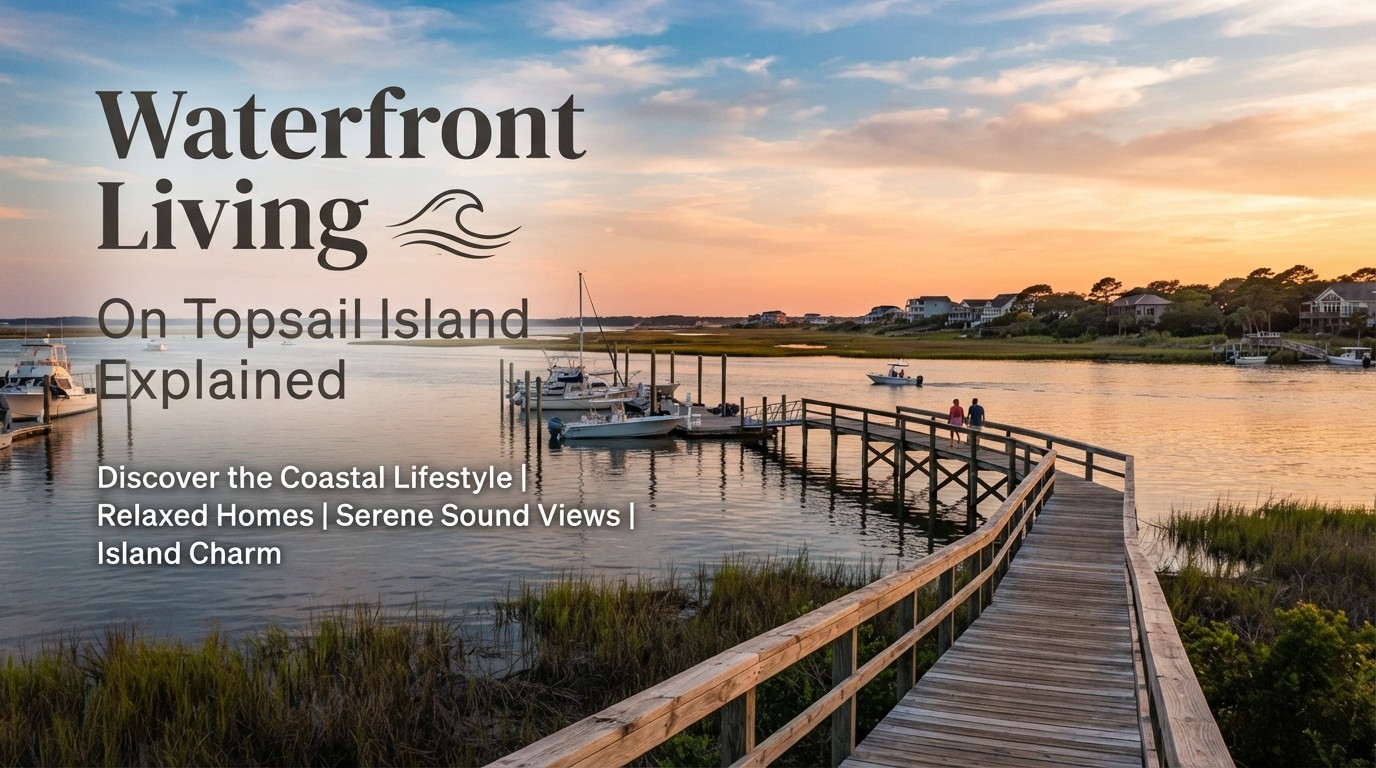
Soundside means the property faces the Intracoastal Waterway or the marsh system on the back side of the island. Sunsets over water — the sun sets behind the island from soundside. Calmer water for kayaking, paddleboarding, and small boats. Dock potential for boaters. A different daily rhythm than oceanfront.
Soundside pricing is typically lower than oceanfront but not dramatically so on the most desirable lots. Insurance costs vary and can sometimes rival oceanfront depending on elevation and flood zone. Boaters who prioritize water access often prefer soundside to oceanfront.
Canal-Front
Canal-front homes sit on the canal systems cut through the interior of Topsail Beach and parts of Surf City. Direct water access, dock potential, and sheltered water year-round. Canal-front is often the value play for buyers who want dock access without paying oceanfront or premium soundside pricing.
Where Each Type Sits on the Island
Topsail Island covers three towns from north to south — North Topsail Beach, Surf City, and Topsail Beach. Each town has different mixes of the three waterfront products.
North Topsail Beach waterfront includes oceanfront and soundside inventory with slightly lower average pricing than the south end of the island. Buyers looking for oceanfront value often start here.
Surf City sits in the middle and offers the strongest commercial infrastructure — restaurants, groceries, town amenities. Waterfront inventory here trades on both sides of the island with a full mix of product types.
Topsail Beach anchors the south end. Family-focused vibe. Some of the most protected soundside pockets. Topsail Beach waterfront inventory pulls a strong second-home and rental buyer pool.
The Insurance Reality
All Topsail Island waterfront properties carry wind, hail, and flood exposure that inland homes don't. Oceanfront homes typically have the highest wind premiums. Soundside homes sometimes carry lower wind exposure but higher flood exposure depending on elevation. Canal-front insurance varies with flood zone and construction era.
Buyers should quote insurance during due diligence on any specific property. Percentage deductibles on wind coverage can produce tens of thousands of dollars of out-of-pocket exposure before the policy pays. Know that number before closing.
Dock Rights and CAMA
Not every waterfront lot on Topsail has dock rights. Dock construction requires state CAMA permitting. Existing docks may be grandfathered. Buyers who intend to keep a boat should verify dock permit status, water depth at low tide, and boat length compatibility before contract. A waterfront home without practical dock access isn't the same product as one with a working dock.
Storm Considerations
Topsail Island is a barrier island and takes hurricane season seriously. Evacuation orders are issued when appropriate. Waterfront homes face wind, wave, and surge exposure that inland homes don't. Full-time and part-time waterfront owners build storm preparation into their annual routine.
Rental Performance
Vacation rental performance on Topsail Island waterfront is strong for well-located properties. Oceanfront rentals typically produce the highest gross yields; soundside and canal-front deliver more moderate but often more stable performance. Property management infrastructure is established, and rental rules should be verified with each specific town and any applicable HOA.
Practical Considerations
Property tax rates on Topsail Island vary by town. Homes inside incorporated Topsail Beach, Surf City, and North Topsail Beach limits carry municipal rates. Unincorporated portions of the corridor pay only the county rate. Verify on the specific address.
Flood zone designations vary meaningfully by lot. Elevation certificates matter on AE and VE zone properties. Always pull the current FEMA determination.
Key Takeaways
Topsail Island waterfront isn't one product — it's three. Oceanfront delivers direct Atlantic exposure at the highest cost and yield. Soundside offers sunset views, calmer water, and dock potential at a lower price. Canal-front is often the value play for boat access without oceanfront pricing. North Topsail Beach, Surf City, and Topsail Beach mix the three products differently. Insurance, dock permits, and flood zone status all deserve diligence on any candidate home.
Frequently Asked Questions
Which is more expensive, oceanfront or soundside on Topsail?
Oceanfront is generally more expensive per square foot, though the gap varies by specific location and lot. Premium soundside lots with deep-water dock potential can approach oceanfront pricing.
Can I put a dock on a soundside or canal-front lot?
Sometimes. Dock construction requires state CAMA permitting and depends on the specific lot's water frontage and existing conditions. Verify dock rights before contract if boating is part of your plan.
Is Topsail Island flood insurance really necessary?
Required by lenders on federally financed mortgages in AE and VE flood zones. Practically necessary on almost any waterfront Topsail property regardless of zone, given the barrier-island exposure to storm surge.
How much do wind premiums cost on Topsail waterfront?
Varies widely by location, home age, roof condition, and coverage. Oceanfront homes commonly quote in the mid-four-figures to low five-figures annually. Soundside and canal-front tend to be lower but still meaningful. Always quote on the specific property.
Are vacation rentals allowed on Topsail Island?
Generally yes, subject to town regulations that vary by community. Verify current rules with the specific town — Topsail Beach, Surf City, or North Topsail Beach — before assuming rental income.