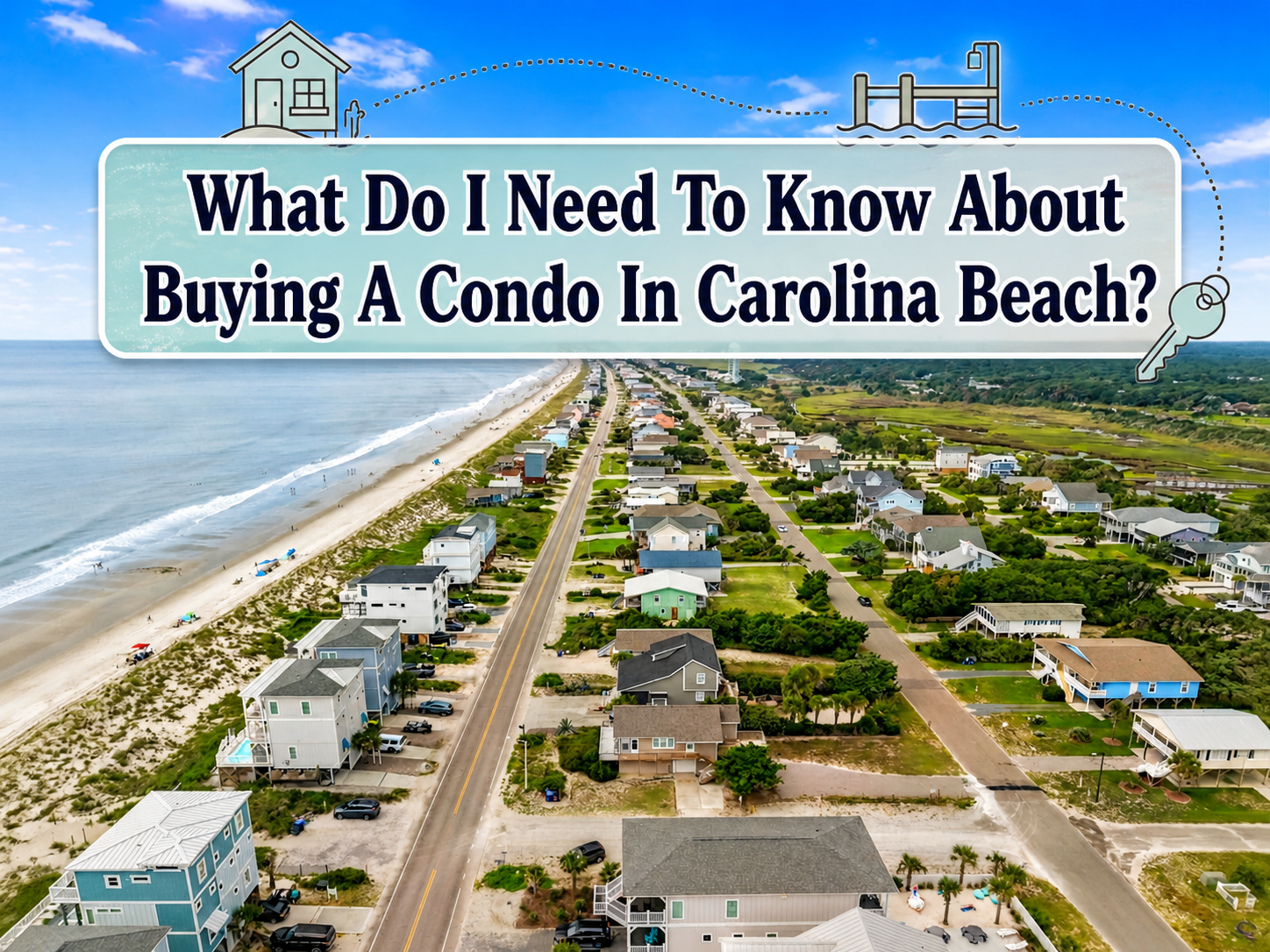
If you live a few states away and you've been daydreaming about a salty-air getaway on the Carolina coast, Carolina Beach has probably already crossed your radar. It's the heart of Pleasure Island, just 15 minutes from downtown Wilmington, and it has carved out a reputation for being one of the more approachable second-home markets in coastal North Carolina. A condo here can give you a turnkey footprint at the beach without the maintenance headaches of a stand-alone house, but buying a condo on a barrier island is a different animal than buying back home. Here's what out-of-state buyers need to understand before signing anything.
Why Buyers from Out of State Choose Carolina Beach
Carolina Beach sits on the north end of Pleasure Island in New Hanover County, surrounded by the Atlantic on one side and the Cape Fear River and Intracoastal Waterway on the other. The town itself is walkable, with a boardwalk, marina, restaurants, and family attractions, and it's small enough that you can know your favorite coffee shop by your second visit. For second-home buyers, the appeal usually comes down to four things: easier access via Wilmington International Airport (ILM) and I-40, a lower entry price than many comparable Florida or Outer Banks markets, a real year-round community rather than a ghost town in winter, and a strong vacation rental demand if you ever want the property to help pay for itself.
Should I Buy a Condo or a Beach House in Carolina Beach?
For someone who lives several hundred miles away, a condo often wins on practicality. You get a lock-and-leave property, exterior maintenance is handled by the association, and many buildings include amenities like pools, elevators, covered parking, and direct beach access that you'd otherwise have to build into a single-family home. Condos also tend to come in at a lower price point than oceanfront houses, which can mean a smaller mortgage, a smaller insurance bill, and more cash left over for furnishings and the inevitable "we forgot a bottle opener" runs. The trade-off: you're sharing walls, sharing decisions with an HOA board, and accepting whatever rules the building has set for renting, pets, parking, and renovations.
How Important Are the HOA and Condo Documents?
Critically important — and this is where out-of-state buyers most often get tripped up. Before you remove your due diligence, you should be reading the declaration, bylaws, rules and regulations, recent meeting minutes, the current budget, and the reserve study if one exists. You're looking for a few specific things: what the monthly assessment covers, how healthy the reserves are, whether any special assessments are pending, what the rules say about short-term rentals and pets, and whether the building has any pending litigation. Coastal condo associations carry the master insurance policy that protects the structure, so you'll also want to confirm the building has adequate wind and flood coverage in place. A weak reserve fund on a 30-year-old oceanfront building is a red flag that a special assessment may be coming, and you'd much rather know that before closing than after.
What About Flood Zones and Insurance?
Carolina Beach is a barrier island, so flood risk is a real planning item, not a footnote. Most properties on the island fall within a FEMA Special Flood Hazard Area, and your lender will almost certainly require flood insurance. The good news for condo buyers is that flood coverage on the building's structure is usually carried by the association's master policy. What you'll typically need on your own is an HO-6 condo unit-owner policy (covering interior finishes, fixtures, and personal belongings) and, depending on the building and your lender, your own contents flood policy. Premiums vary widely by elevation, building construction, and whether you're oceanfront, sound-side, or interior. Get a binding insurance quote in writing during your due diligence period — not after — so there are no surprises.
Can I Rent the Condo Out When I'm Not Using It?
This is the question every second-home buyer should ask before falling in love with a unit. Carolina Beach permits short-term rentals town-wide, but that municipal permission is only half the story. Your specific condo association can — and many do — restrict rentals through its own bylaws. Some buildings allow nightly and weekly rentals freely, some require a minimum stay (often seven days or even 30 days), some cap how many units in the building can be rented at once, and a few prohibit short-term rentals altogether. There may also be local registration and lodging tax requirements at the town, county, and state level. If rental income is part of your math, get the rental rules in writing from the HOA and confirm them with your agent before you commit.
Will I Have Trouble Getting a Mortgage on a Beach Condo?
Sometimes — and it's worth knowing this early. Lenders evaluate the building, not just the buyer, and many oceanfront condos are classified as "non-warrantable" because they have a high percentage of investor-owned units, allow short-term rentals, or have other characteristics that don't fit Fannie Mae or Freddie Mac guidelines. A non-warrantable condo isn't unfinanceable, but you'll typically need a portfolio lender, a larger down payment (often 20 to 30 percent or more), and a strong credit profile, and the rate may be a touch higher than a conventional loan. Talk to a lender who has actually closed Carolina Beach condo loans before, ideally one local to the Wilmington market. Cash buyers can ignore this whole section, of course.
What Else Should Out-of-State Buyers Plan For?
A few practical items that surprise newcomers. First, hurricane season runs June through November, and even a glancing storm can mean evacuations, power outages, and a visit from your property manager rather than you. Have a plan and a local contact. Second, salt air is hard on everything — HVAC coils, appliances, windows, and exterior fixtures wear faster here than they do inland, so budget for replacement, not just upkeep. Third, North Carolina is an attorney-state for real estate closings, and if you can't be in town, your attorney can usually arrange a remote or mail-away closing. Finally, plan a couple of overnight visits before you buy. Carolina Beach in July feels very different from Carolina Beach in February, and the right condo for you depends on which version of the island you'll be using most.
Ready to See What's on the Market?
Carolina Beach condos move quickly when they're priced right, and the inventory is constantly shifting between oceanfront high-rises, sound-side townhome-style condos, and interior buildings a short walk from the beach. The best way to get a feel for what your budget actually buys is to scroll through current listings — and to talk to an agent who lives and works on this stretch of coast. Browse current Carolina Beach condos for sale here, and reach out when you'd like a local set of eyes on a specific building or unit. We help out-of-state buyers all the time and we're happy to walk a property for you, pull HOA documents, and give you the unfiltered take before you ever book a flight.