Everyone visiting Bald Head Island for the first time asks the same question at some point during the weekend — could I actually live here full time? The answer is more nuanced than the ferry-ride marketing suggests. Full-time life on Bald Head Island is a specific kind of daily rhythm, with real trade-offs alongside real rewards. A subset of buyers find it to be one of the best decisions they ever made. Another subset discovers within a year that the ferry-only lifestyle wears on them. Which one you are is worth knowing before the closing table, not after. Here is the honest story of what it actually looks like to live on Bald Head Island year-round.
The Daily Setup
Bald Head Island is accessible only by passenger ferry, freight ferry, or private boat. No cars. Residents get around by golf cart, bike, or on foot. The island is roughly 12,000 acres, roughly half of that permanently protected as conservancy and maritime forest, and the remaining developable acreage supports around 2,000 homes and condos. Most of the year, the population is small enough that residents know each other's names and cart colors.
The village on the harbor side of the island houses the shops, restaurants, the market, the post office, and the ferry terminal. Residents walk or cart to the village for daily needs, meet friends at the coffee shop, and pick up dinner at one of the family-run kitchens. The pace is unhurried in a way that is genuinely rare on the East Coast.
What Full-Time Residents Consistently Love
The Absence of Cars
The single most cited benefit of Bald Head living is what is missing — the sound of traffic, the pace of a car-centered daily life, the aggression of highway driving. Full-time residents describe the car-free environment as one of the most restorative aspects of the move.
The Community Is Real
Because the island is small and residents see each other regularly, the community feels more like a small town than a subdivision. Coffee-shop conversations turn into dinner parties. Neighbors help with hurricane prep. The social infrastructure is stronger than most communities of its size.
The Beach and the Forest
The east-end beaches are largely undeveloped and open to residents throughout the year. The maritime forest is one of the most intact ecosystems on the Southeast coast. Full-time residents spend more time outside than most Americans, and the natural environment is a large part of why.
The Clubs
The Bald Head Island Club and Shoals Club anchor the island's amenity infrastructure. Golf, tennis, croquet, pickleball, oceanfront pool, dining, and a full social calendar make full-time membership meaningful. Most serious full-time residents carry membership in at least one, often both.
Sunsets and Small Ceremonies
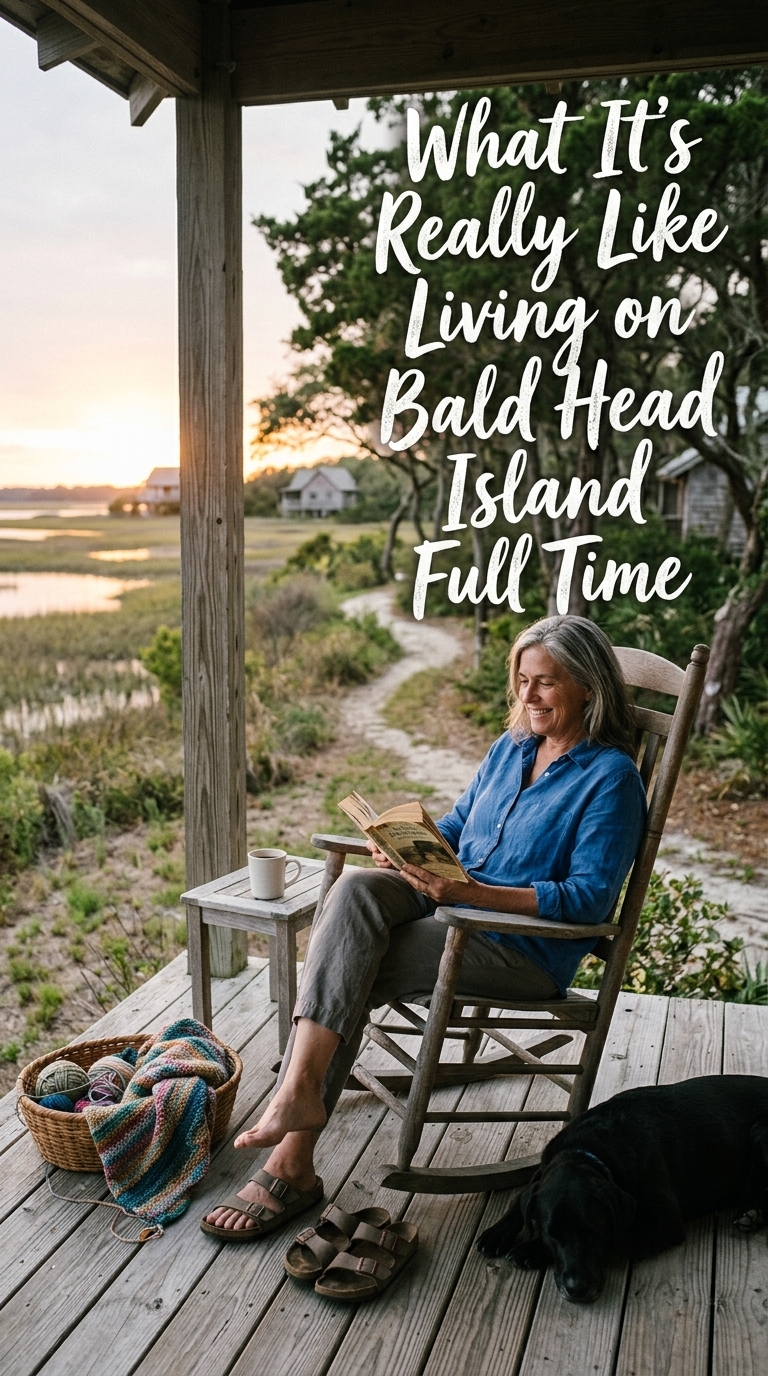
Full-timers describe the small daily rituals — sunset on Old Baldy, morning walks at low tide, coffee on the porch overlooking marsh or ocean — as the parts of the year they remember most. The island rewards attention to detail in a way that busier lifestyles do not.
 What Full-Time Residents Plan For
Ferry Logistics
Every off-island trip starts and ends with the ferry. Residents build their week around ferry schedules. Doctor appointments, grocery runs, visits with family, contractor visits, and package deliveries all happen through the ferry system. Most full-timers develop a rhythm around it within their first six months.
Getting Furniture and Materials Over
Home construction and renovation materials come by freight barge. Furniture deliveries schedule around the freight schedule. Contractors who work on Bald Head build the logistics premium into their pricing. It is manageable but real.
Health Care
Routine health care requires trips to Southport or Wilmington. Emergency response on the island includes an air-lift protocol for genuinely serious situations. Most residents build a mainland primary care and specialist team into their plan.
Weather and Storms
Hurricane preparation is more intense on an island than on the mainland, both physically and psychologically. Residents evacuate when ordered. Homes need to be secured with real care. Insurance costs reflect the exposure.
Cost of Living
Everything on the island costs slightly more — groceries, restaurants, contractors, deliveries — because of the freight overhead. Property taxes, HOA dues, and club fees add up. Full-timers describe the island as reasonable if they went in with realistic expectations and expensive if they did not.
Winter Quiet
Bald Head has a real winter season during which the population thins, some restaurants scale back hours, and the island is at its most quiet. For residents who came for the quiet, this is one of the best times of year. For residents who need external stimulation, winter can feel isolating.
Who Thrives Full-Time on Bald Head
People who genuinely value quiet over convenience, community over anonymity, and the outdoors over screens. Retirees who have earned the right to move slowly. Remote workers with truly flexible schedules who can absorb the logistical premium. Multi-generational families who use the island as a gathering point. Boaters and beach walkers who spend serious time outdoors. Each of these consistently thrives here.
Who Struggles Full-Time on Bald Head
People who require frequent big-city amenities, restaurants, or entertainment. People who work in mainland jobs with rigid schedules. Full-time professionals who need same-day access to specialists. Anyone who chose the island for the summer feel without evaluating the winter reality. Anyone who dislikes the specific pace and logistics of island life.
The Financial Picture
Home Costs
Homes on Bald Head range widely. Luxury inventory anchors the high end. Condos and smaller cottages offer more accessible entry points. Waterfront and oceanfront homes command premiums. Full-timers should model total carrying cost including club membership, HOA, insurance, and freight-inflated maintenance.
Utilities and Services
Standard water and sewer, standard electricity, satellite and fiber internet options, garbage service. Utility costs run somewhat higher than mainland norms but not dramatically so.
Insurance
Wind, hail, and flood premiums are meaningful. Full-time residents should quote coverage carefully and understand deductibles.
How Full-Time Bald Head Compares to Alternatives
Vs. Southport or Wrightsville Beach
Both offer coastal-town living without the ferry. Full-timers seeking a walkable town without island logistics may prefer these. But neither delivers the specific car-free, small-community feel of Bald Head.
Vs. Other Ferry-Access Islands
Bald Head is one of few East Coast destinations that combines the ferry-only lifestyle with real amenity infrastructure. Comparable ferry-access communities elsewhere often lack the club infrastructure and consistent full-time community that Bald Head has built.
What to Do Before Committing
Rent for a week in each season if possible — summer, fall, winter, spring. Attend community events. Meet current full-time residents. Understand the ferry schedule for your specific plans. Verify healthcare logistics for your specific situation. Model total carrying cost honestly. Each of these is manageable and prevents the mismatch that occasionally sends new residents back to the mainland within a year.
Key Takeaways
- Full-time life on Bald Head Island is a specific kind of daily rhythm — car-free, ferry-anchored, community-scaled, and outdoors-oriented
- Residents consistently love the absence of cars, the strong community feel, the beach and forest access, and the amenity infrastructure of the Bald Head Island Club and Shoals Club
- Full-timers plan around ferry logistics, freight-based material delivery, mainland healthcare routines, hurricane preparation, and a real winter quiet season
- The lifestyle rewards people who value quiet and community over convenience and mainstream amenities
- Buyers who need immediate big-city access, restaurants, or professional infrastructure often struggle full-time on Bald Head
- Financially, full-time ownership requires realistic modeling of home costs, club fees, HOA, insurance, and the freight-inflated maintenance premium
- The best way to evaluate fit is to spend time on the island across multiple seasons before committing