North Carolinians move around North Carolina — that is not new. What is worth pointing out is that moving from the Triangle, the Triad, or Charlotte to the coast is not a lateral move. It is a real change in daily life, weather, cost structure, and rhythm. Some of the differences are obvious. Others are subtle enough that buyers do not notice them until they have lived through a season or two on the coast. Buyers who go in understanding what actually changes make sharper decisions. Buyers who assume the move is simply "same North Carolina, different zip code" often spend the first year adjusting expectations they could have adjusted before packing. Here is an honest look at what makes coastal Wilmington, Leland, and the beach towns genuinely different from inland North Carolina.
The Weather Is Genuinely Different
The Triangle and inland North Carolina experience four full seasons — real winter, hot summer, distinct spring and fall. The coast experiences a modified version of the same seasons with milder winters, more humid summers, and a longer overall shoulder season. Coastal winters see occasional frosts but no lasting snow. Coastal summers stay hotter longer into the fall than inland areas. The overall usable-outdoor-weather calendar runs about a month longer than the Triangle's.
The other weather difference is hurricane season. Inland NC feels the effects of storms as rain and wind, sometimes serious. The coast bears direct exposure. Preparation, insurance, and community rhythm are meaningfully different because of it.
Salt Air and Environmental Wear
Inland homes weather in one direction. Coastal homes weather in another. Salt air accelerates corrosion on HVAC equipment, roofs, hardware, exterior paint, decks, and outdoor materials. Coastal homes typically need more frequent maintenance and material replacement than equivalent inland homes. Buyers relocating from the Triangle to the coast are often surprised by the salt-air maintenance cycle within the first two years of ownership.
Insurance Costs
Inland North Carolina homes carry homeowners insurance similar to national averages. Coastal North Carolina homes carry homeowners plus separate wind and hail plus often flood insurance. Combined premiums can run several thousand dollars a year higher than inland equivalents. This is real recurring cost that buyers should factor into their carrying-cost math well before signing a contract.
Property Taxes Behave Similarly
North Carolina property tax rates are moderate statewide, with variations by county and municipality. Coastal counties are competitive with inland counties on rate. The bigger difference at the coast is the municipal overlay in beach town limits, which adds meaningfully to the annual bill for homes inside town versus outside. Inland homeowners face similar municipal-versus-unincorporated math in their own counties.
Daily Lifestyle Rhythm
Recreation
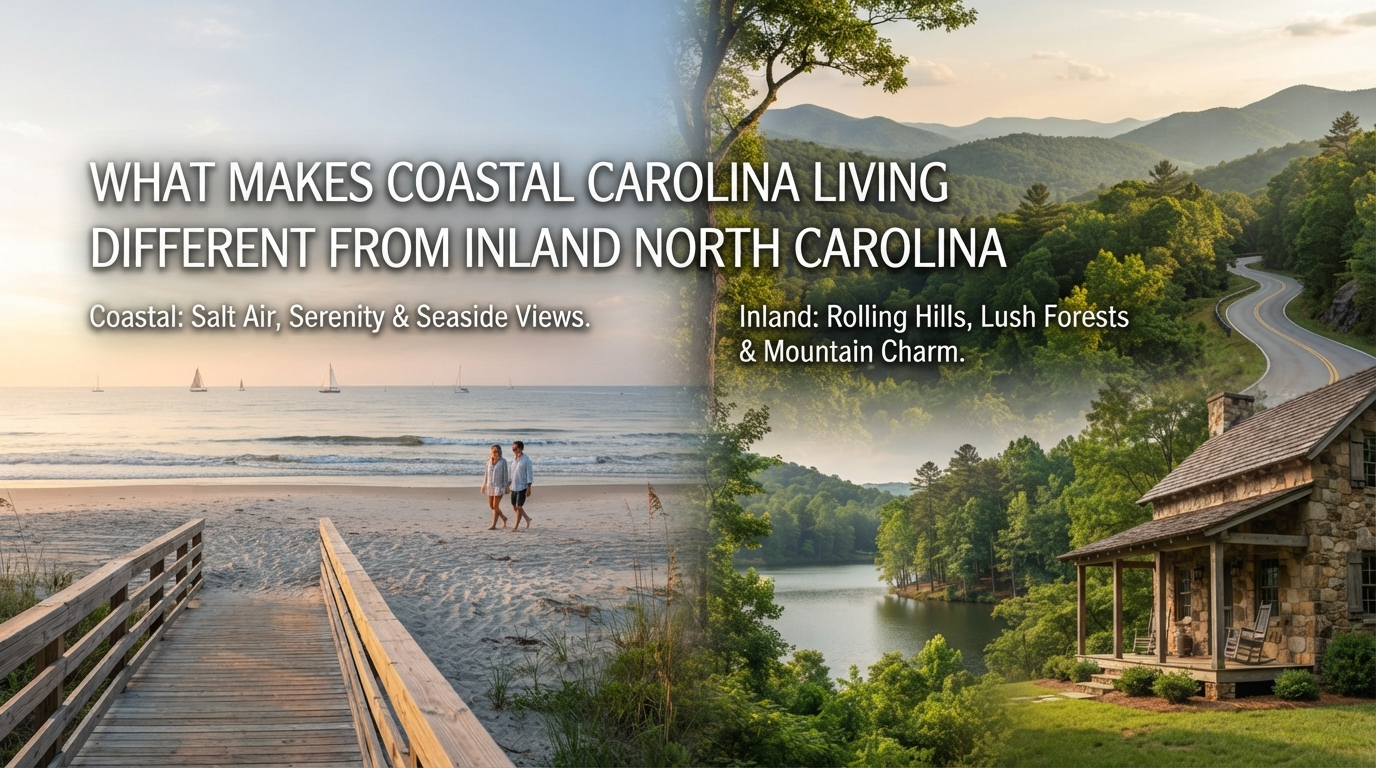
Inland lifestyle centers on the outdoors accessible inland — the Blue Ridge Mountains, the Piedmont trails, lakes, and rivers. Coastal lifestyle centers on the ocean, the ICW, and the marsh systems. Boating, fishing, beach walking, kayaking, paddleboarding, and coastal wildlife are all part of the daily rhythm. Buyers who genuinely enjoy water are the ones who thrive coastally; buyers who prefer mountains and forests may find the coast delivers less of what they actually want.
Pace
Coastal towns generally operate at a slower pace than the Triangle or Charlotte. Meetings run later. Contractors arrive when they arrive. Restaurants close between lunch and dinner. This is a feature for the buyers who want it and a source of frustration for those who do not.
Community Feel
Coastal small towns and even coastal cities like Wilmington retain more small-town social structure than most Triangle or Charlotte neighborhoods. Neighbors know each other. Community events are attended by residents rather than passing through. This can be a strong positive or a slight uncomfortable close-quarters feel depending on the buyer's preferences.
Home Construction and Materials
Coastal homes are built to withstand different conditions than inland homes. Hurricane straps, impact-rated windows on newer construction, higher elevation requirements in flood zones, and coastal-rated materials all show up in newer coastal construction. Inland homes rarely need these features. Buyers moving from inland should expect to think about home hardening in ways they never had to before.
Cost of Living Beyond Insurance
Most everyday costs — groceries, dining, services, utilities — are similar between coastal NC and inland North Carolina. Home prices vary by market on both sides. The coastal insurance premium is the single most meaningful ongoing cost difference. Coastal homes also carry higher maintenance budgets on average due to salt-air wear.
Access to Healthcare and Services
The Triangle and Charlotte offer among the strongest healthcare and specialty-service infrastructure in the country. Coastal NC is functionally strong but at smaller scale. Novant Health New Hanover Regional in Wilmington is a full trauma center, and the broader network is solid. But for specific specialty care, some coastal residents travel to Raleigh or Chapel Hill for procedures they might have received at home in a larger inland market. This is manageable and worth planning for.
Airport Access
The Triangle has RDU, Charlotte has CLT, and both are major hubs. Wilmington has ILM, which is meaningfully smaller but connects to several East Coast hubs. Coastal residents who travel frequently sometimes drive to RDU (about two hours) for broader options. Coastal residents who travel less often find ILM adequate.
Schools
Both coastal and inland North Carolina have strong and weak school systems. Specific assignments matter more than county reputations on either side. Coastal buyers should verify school assignments the same way inland buyers do — by specific address, not by general area.
Long-Term Real Estate Behavior
Coastal real estate has appreciated faster than most inland real estate over the last decade, driven by in-migration, second-home demand, and structural inventory limits in premium coastal markets. That said, the coastal market is more volatile — storm exposure, insurance shifts, and interest-rate sensitivity all affect it more than the inland Triangle market. Buyers should plan for both the upside and the variability.
Who the Coast Suits
People who genuinely love the water. Retirees seeking a slower coastal lifestyle. Remote workers who value coast plus cost. Multi-generational families for whom a coastal home becomes the gathering point. Boaters, beach walkers, and outdoor recreation enthusiasts. Each of these consistently thrives after the move.
Who Stays Inland
People who need major-metro amenities, deep specialty care networks, or professional sports and big-city cultural infrastructure. People who prefer mountains and forests to water. Households whose careers require in-office presence in the Triangle or Charlotte. Buyers who dislike hurricane season or the associated insurance carrying cost. All of these often stay where they are and visit the coast rather than moving there.
What to Do Before Making the Move
Rent for 30 to 90 days if possible before committing. Visit in multiple seasons. Quote insurance on a specific property early. Verify healthcare access for your specific needs. Test the commute if any household member will commute inland. Talk to current coastal residents about what the transition was like for them. Each of these is inexpensive and prevents the most common mismatch.
Key Takeaways
Moving from inland North Carolina to the coast is not a lateral move. The weather, the salt-air maintenance cycle, the insurance math, the daily rhythm, and the community feel all shift meaningfully. Coastal winters are milder and coastal summers hotter longer. Coastal homes wear faster and cost more to insure. Coastal towns operate at a slower pace and often deliver stronger small-town community than inland suburban neighborhoods. Coastal recreation centers on the water instead of mountains and forests. Healthcare, airports, and specialty services are functionally strong but smaller in scale than the Triangle or Charlotte. Real estate has appreciated well but with more variability. Buyers who genuinely value water access and slower coastal rhythm consistently thrive after the move. Buyers who prefer big-city amenities and full four-season inland weather often stay where they are and visit the coast for weekends. Coastal North Carolina rewards buyers who move here because they actually want the coast — not because it looked nice on a vacation. Understanding the differences before signing a contract is the difference between falling in love with the coast in year one and quietly missing the Triangle by year three.