Coastal North Carolina keeps landing on national relocation lists for a reason. And the buyers I'm working with in 2026 aren't a coincidence — they're the leading edge of a longer migration pattern that started years ago and hasn't slowed. If you're evaluating whether coastal NC deserves a spot on your shortlist, the honest answer is that the specific combination this region delivers has become genuinely hard to find elsewhere on the East Coast.
Here's what I mean. It's not any single thing. It's the stack. Climate, cost, coastal access, community, medical infrastructure, airport connectivity, walkability options, and enough diversity of towns that most buyers find a fit. That stack is what keeps pulling relocators from the Northeast, Midwest, coastal Florida, and increasingly the Triangle.
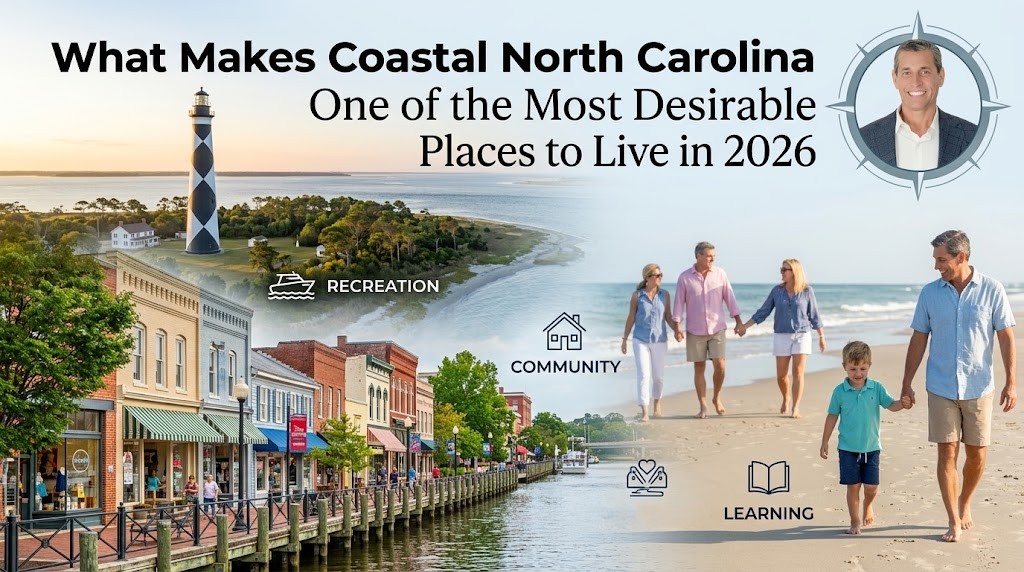
The Climate That Actually Works
Eight to nine months of usable outdoor weather a year. Mild winters that don't require snow shovels. Warm but bearable summers tempered by ocean breeze. Long spring and fall seasons that are among the best on the East Coast. Buyers moving from harder climates consistently name this as one of the top reasons the move worked out.
The Cost Math
Coastal North Carolina remains meaningfully cheaper than coastal California, coastal Florida, and the Northeast. Housing runs meaningfully below Charleston and Savannah for comparable inventory. Property taxes are moderate. Insurance costs are real but manageable. Daily cost of living sits close to national averages. Retirees stretching a fixed income and remote workers earning higher-market salaries both benefit from the math.
The Diversity of Coastal Options
Wilmington delivers small-city infrastructure with beach access. Southport delivers walkable small-town living on the Cape Fear. Leland delivers master-planned amenity communities at Brunswick County pricing. Wrightsville Beach delivers walkable barrier-island living twenty minutes from Wilmington. Each of the Brunswick beaches, Hampstead, the Topsail corridor, and communities like Burgaw and Winnabow serve specific buyer profiles. Very few coastal regions offer this range of options within a single hour's drive.
Real Infrastructure
Novant Health New Hanover Regional in Wilmington is a level II trauma center serving the region. Brunswick Novant, Pender Memorial, and specialty practices across the region cover most needs. Wilmington International (ILM) connects to major East Coast hubs. Raleigh-Durham is a two-hour drive for broader travel. Cultural infrastructure — theaters, music venues, restaurants, UNCW — has grown alongside the population.
Coastal Access That's Actually Usable
Beach access exists at every price point. Boating access exists across multiple towns. Waterfront living exists from modest bulkheaded canal-front cottages up through Bald Head Island luxury. Fishing, kayaking, paddleboarding, and sunset walks are part of the daily rhythm rather than annual vacation activities. That everyday accessibility to the coast is what most buyers actually came for.
Community That Feels Like Community
Small-town social infrastructure survived here in a way it hasn't in a lot of the coastal Southeast. Church groups, civic organizations, community events, farmers' markets, and volunteer boards actually operate year-round. Newly relocated households can build real social lives within a few months if they engage. That's a specific and increasingly rare product.
Manageable Distance to Family
Wilmington sits within a day's drive of much of the East Coast. Boston to Miami are all reachable by car in one to two days. ILM connects to enough hubs for practical family travel. Grandkids visit for weekends. Family remains reachable. That geographic middle-ground role is one of the underrated reasons the region wins over alternatives.
The Migration Numbers Tell the Story
Continued in-migration from the Northeast, Midwest, coastal Florida, and the Triangle keeps pushing the market. Retirees. Remote workers. Military-adjacent households. Second-home buyers. Families with school-age kids. The specific mix rotates year to year, but the total continues to grow.
What Coastal NC Doesn't Offer
Major-metro amenity density. Deep specialty medical infrastructure at the scale of the largest East Coast markets. Big-city cultural scale. If those are non-negotiable for your daily life, coastal NC will feel small. If they're occasional needs you can travel for, the region delivers a specific quality of life that big-city alternatives can't match.
Long-Term Outlook
The base case for the next several years is continued in-migration, continued modest home price appreciation, and continued expansion of the local commercial and cultural infrastructure. Insurance costs will remain a variable. Traffic on the main corridors will remain a variable. Neither is likely to change the fundamental appeal of the region.
Key Takeaways
Coastal North Carolina keeps landing on desirability lists because the stack — mild climate, competitive cost math, diverse coastal community options within an hour's drive, real medical and airport infrastructure, and daily coastal access — has become genuinely hard to find elsewhere on the East Coast. Wilmington, Southport, Leland, Wrightsville Beach, and the surrounding communities each serve specific buyer profiles. Continued in-migration supports the market. Buyers who match the specific town to how they want to live consistently thrive.