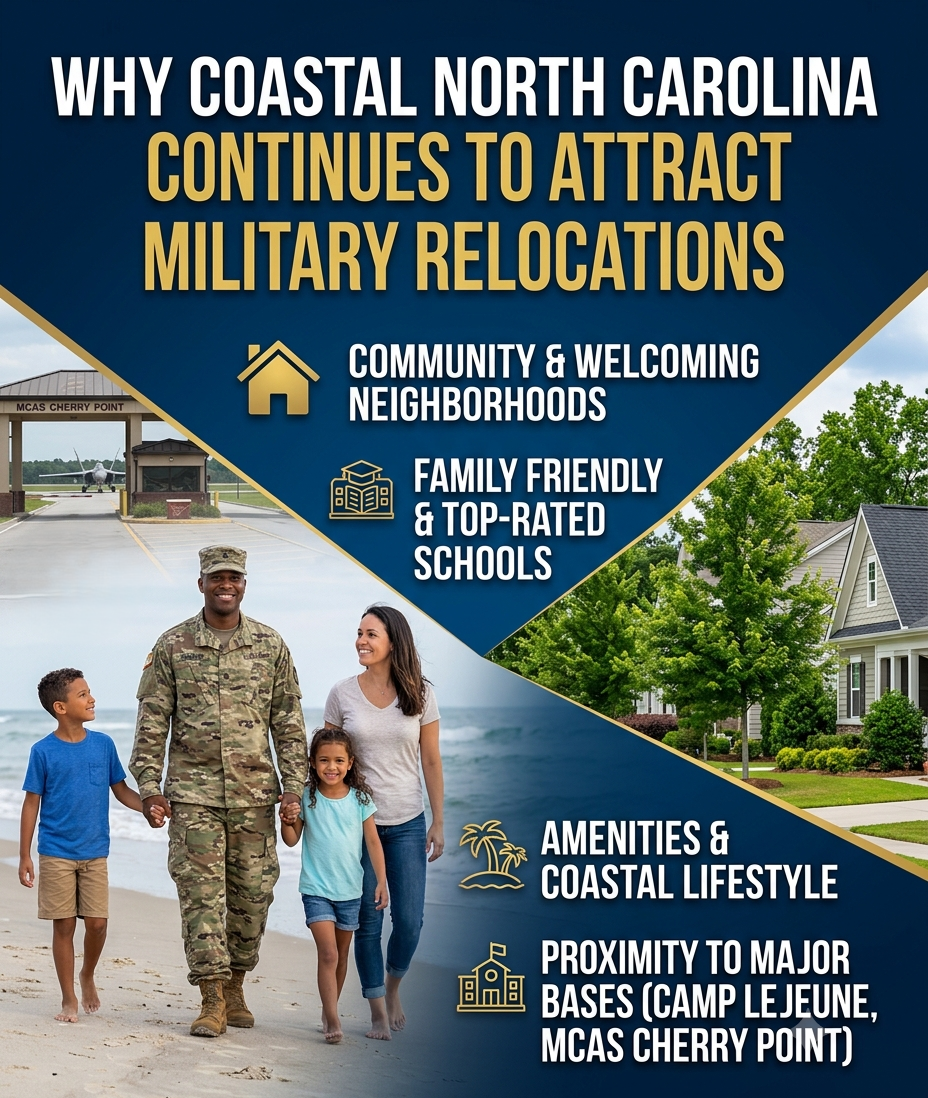
Few buyer pools shape coastal North Carolina real estate the way military families do. Camp Lejeune, Marine Corps Air Station New River, Fort Liberty (formerly Fort Bragg), Seymour Johnson, and the Coast Guard installations along the coast together send a steady, year-round wave of buyers into this region. The relocation cycle does not slow down for the broader market the way other buyer pools do, and in 2026 it is still one of the most consistent demand engines on this coast.
Here is why the pattern continues, where military families are landing, and what makes coastal NC a practical, long-term fit for service members and their families.
The Reasons the Pattern Holds
Proximity to Major Installations
Camp Lejeune and MCAS New River sit just north of the Wilmington area. Coast Guard stations operate up and down the coast. Fort Liberty is a long drive west, but the trip is doable for families who want a coastal lifestyle and a paying spouse who can work remotely. Service members stationed at Lejeune routinely look for homes in Jacksonville, Sneads Ferry, Holly Ridge, Hampstead, and even further down into the Wilmington area.
Lifestyle Match
Military families tend to want the same coastal qualities other buyers want — beach access, boating, outdoor recreation, decent schools, and a community that feels rooted. Coastal NC delivers on all of that without the cost-of-living shock of Southern California or coastal Virginia.
VA Loan Strength
The VA loan continues to be one of the most powerful financing tools on the market. No down payment requirement, no PMI, competitive rates, and seller-paid closing cost flexibility make it a real advantage in markets where every dollar matters. Most coastal NC sellers are familiar with VA contracts, and lenders in this region close them on schedule.
Resale-Friendly Markets
Service members move on a schedule the broader market does not control. A home that resells reliably is a real asset when orders change. The coastal NC markets military buyers tend to choose — Jacksonville, Sneads Ferry, Holly Ridge, Hampstead, parts of Wilmington — have established turnover and consistent demand, which makes the eventual exit easier.
Where Military Families Are Actually Landing
Jacksonville
The Jacksonville market is the most direct fit for Camp Lejeune and MCAS New River families. Short commute, established military-friendly inventory, strong VA-loan acceptance, and price points that work on a single income. Neighborhoods around the base get heavy demand, and resale moves quickly when orders change.
Sneads Ferry
Sneads Ferry gives families a different version of the same proximity story — slightly more coastal feel, more water access, more single-family options on land, and an easy commute to the base. Boating families and outdoor-recreation families lean Sneads Ferry over Jacksonville.
Holly Ridge
For families willing to drive a little further for newer construction and lower price-per-square-foot, Holly Ridge has become one of the steadier military-favored markets on this corridor. New construction inventory, proximity to Topsail Island, and a reasonable Lejeune commute have kept the demand strong.
Hampstead
Families who want a Wilmington-side lifestyle with reasonable access to the base often land in Hampstead. Better schools, ICW access, and a slightly longer commute trade-off make sense for families who can take a longer drive in exchange for the community feel.
Wilmington
Wilmington itself attracts a meaningful share of senior enlisted, officer, and post-service families. The commute is longer, but the lifestyle is fuller, and many service members planning to retire on the coast use a Wilmington-area purchase as the long-term home they will keep after their service ends.
What Makes a Home VA-Loan Friendly
Condition
VA appraisers and inspectors look for habitability items. Roof condition, peeling paint on older homes, exposed wiring, plumbing issues, missing handrails, and water intrusion can all create repair requirements before closing. Sellers who are open to addressing these items make their listings significantly more attractive to military buyers.
Pricing Realism
VA loans appraise like any other loan. A seller who overprices a home and assumes the VA buyer will simply absorb a gap usually loses the contract. Pricing within the comparable-sales range matters here.
HOA Acceptance
Some condo projects require VA approval before a VA loan can close on a unit. Buyers and sellers should confirm project approval status early in the process, not the week before closing.
The Spouse Factor
The buyer search rarely belongs to the service member alone. Military spouses are often the primary driver of the home decision, especially in dual-income households or households where the spouse works remotely. Schools, the daily commute for the spouse, walkable amenities, and the longer-term community feel often outweigh the service member's preference for proximity to the base.
This is the quieter reason markets like Hampstead, Holly Ridge, and Sneads Ferry continue to pull families further from the gate. The spouse's daily quality of life is doing more of the deciding than the on-base commute.
Resale Strategy
Military families should plan the eventual resale before they buy. Two or three years can pass quickly between orders, and the home that was easy to fall in love with at purchase needs to be easy to sell at exit. That means choosing a community with strong school assignment, a reasonable HOA, predictable inventory turnover, and a price point that matches the broader buyer pool — not just the next military buyer.
Working with an agent who understands PCS timing, VA loan logistics, and how to position a coastal home for both military and civilian buyers makes the exit far smoother when it comes.
Key Takeaways
- Camp Lejeune, MCAS New River, and the broader military presence make coastal NC one of the most consistent military relocation markets in the Southeast
- Jacksonville, Sneads Ferry, Holly Ridge, Hampstead, and Wilmington each serve a different slice of the military buyer pool
- VA loans give military buyers real leverage, and most coastal NC sellers and lenders are well-versed in the process
- VA appraisals and inspections look for specific condition items — sellers who address them up front close more deals
- Spouses often drive the home decision more than the on-base commute, which is why families settle further from the gate than expected
- The resale plan should be part of the purchase plan — pick communities with broad buyer appeal, not just military demand
Frequently Asked Questions
Are VA loans available for second homes or investment properties?
No. VA loans are reserved for the buyer's primary residence. Service members buying a vacation home or rental property would use conventional financing for that purchase.
Can a military buyer use a VA loan more than once?
Yes. The VA loan entitlement can be restored and reused, and many service members use it multiple times across a career. The specifics depend on remaining entitlement and timing. Lenders who specialize in VA loans handle this routinely.
How quickly can a VA loan close in coastal NC?
Most VA loans in this market close in roughly 30 to 45 days from contract, in line with conventional timelines. Sellers familiar with VA contracts treat them similarly to any other financed offer.
Which coastal NC towns are most welcoming to military families?
Jacksonville, Sneads Ferry, Holly Ridge, and Hampstead all have established military-family communities, military-friendly schools, and businesses that recognize the service. Wilmington has a strong military presence as well, particularly among retiring and post-service families.
Should I rent or buy if I am only stationed here for a few years?
The answer depends on the specific market, the price point, and the family's plans. In stable coastal NC markets with predictable resale, buying often beats renting on a three-year horizon. Buyers who may need to leave quickly should weigh the closing costs and the risk of a soft selling window against the equity build.