The remote work migration into coastal North Carolina is one of the quieter but more consequential real estate shifts of the last five years. Between 2020 and 2026, tens of thousands of full-time remote and hybrid professionals traded the Northeast, the Midwest, and coastal Florida for the Wilmington region. The wave has slowed slightly from its 2021 peak but has not reversed. In 2026, remote workers remain one of the three largest buyer pools in this market alongside retirees and military families. Here is why the pattern continues, where remote workers are landing, and what makes coastal NC unusually well suited to the way remote work actually plays out day to day.
The Fundamentals Line Up
Real Internet Infrastructure
Coastal NC is not a rural bandwidth desert. Fiber and gigabit cable service is broadly available in Wilmington, Leland, Hampstead, and the master-planned communities. Even smaller towns like Southport, Shallotte, and Burgaw have workable service. Remote workers who care about upload speeds for video calls and file transfers can find the bandwidth they need in most markets.
Cost of Living That Actually Works
A remote worker earning a Northeast or California salary while living in Brunswick or Pender County lives well below their income. Housing costs less. Property taxes are moderate. Everyday services are meaningfully cheaper than the buyer's origin market. The financial math is a real driver, not just a marketing pitch.
Coastal Lifestyle Without a Long Weekend
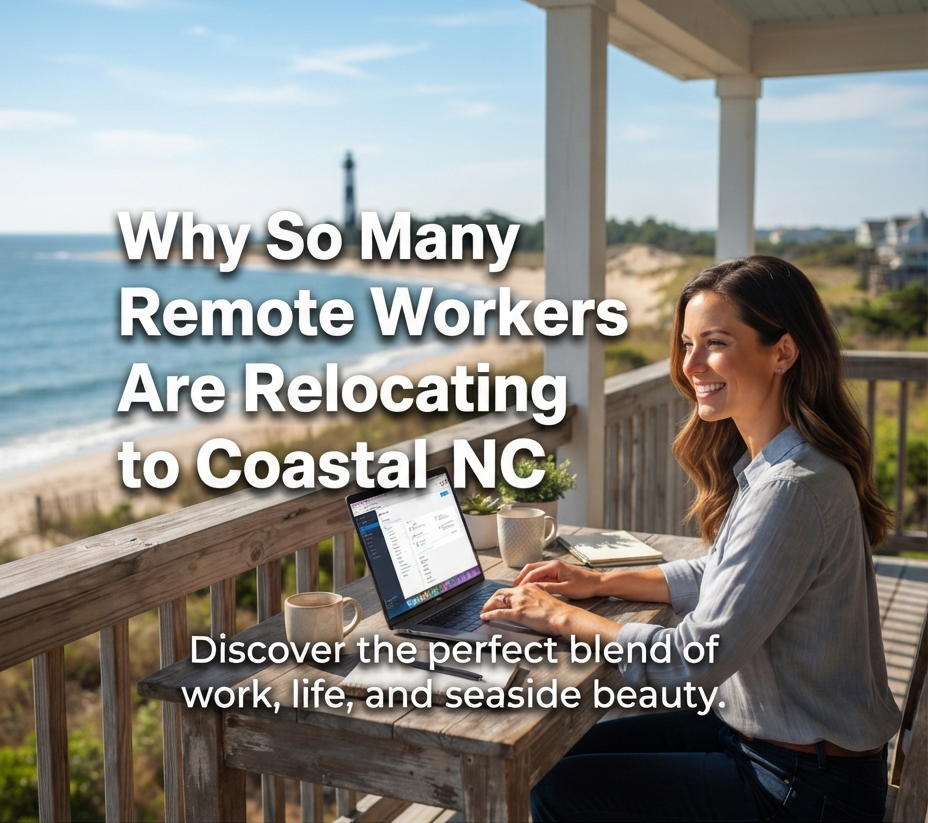
For remote workers, the biggest lifestyle upgrade is that the coast is not somewhere they visit — it is where they live. Morning runs on the beach, kayaking at lunch, sunset from the deck. The commute is from the coffee pot to the desk. That everyday accessibility to the coast is the single most cited reason remote workers say they made the move.
Airport and Travel Access
Wilmington International Airport (ILM) connects to major East Coast hubs, and Raleigh-Durham (RDU) is a two-hour drive. Remote workers who travel occasionally for team offsites or client visits can get where they need to go without living near a hub.
Where Remote Workers Are Actually Landing
Wilmington Proper
Downtown Wilmington, Mayfaire, and the Wrightsville-adjacent neighborhoods draw remote workers who want small-city amenities, walkable coffee shops and restaurants, and quick beach access. The historic district in particular has attracted younger professionals who want character over new construction.
Leland and Brunswick County Amenity Communities
Brunswick Forest, Compass Pointe, and Magnolia Greens serve remote workers who want more space, newer construction, and amenity-rich living at lower price points than Wilmington proper. The demographic mix skews slightly older but is trending younger every year.
Hampstead
Hampstead's location between Wilmington and the Topsail beaches — plus its schools, waterfront access, and Pender County tax structure — pulls remote workers who want the community feel without giving up beach access or a manageable commute for the occasional in-office day.
Burgaw
Burgaw serves the remote worker who wants land, quiet, and small-town character. The trade-off is a longer drive to Wilmington-area services, but for the right buyer, the peace is the point.
Beach Towns
Full-time remote workers are increasingly settling in beach towns — Oak Island, Carolina Beach, Sunset Beach, Topsail — that used to be dominated by vacation homes. The beach lifestyle plus year-round residency is a specific choice that a subset of remote workers make and love.
Who These Buyers Are
The remote worker buyer pool is broader than the stereotype. Software developers and engineers are heavily represented, as are marketing professionals, consultants, financial services professionals, creative professionals, healthcare administrators, and academics. Ages range widely — many are in their thirties and forties, though remote-eligible professionals of any age are moving. Many are dual-income households where one or both partners work remotely.
What Remote Workers Actually Want in a Home
A Real Home Office
A dedicated home office with a door, natural light, and space for a proper desk setup is not optional. Buyers routinely walk homes with a specific room in mind for this. Bonus rooms, dedicated dens, and even converted garages all fit.
Outdoor Living
Remote workers use outdoor space more than any other buyer pool. A screened porch that fits a laptop for morning calls, a deck for lunch breaks, a small yard for a coffee walk — all matter more than they do to a commuting buyer.
Fast, Reliable Internet
Buyers should confirm the specific provider, plan, and typical speeds at the exact address. Marketing claims about "gigabit available" do not always mean the home in question is served at gigabit levels.
Quiet and Layout
Homes on quiet streets and layouts that let a remote worker close a door on video calls consistently outperform open-plan layouts that force meetings to compete with household noise.
The Second-Wave Buyer
An interesting recent trend is the "second-wave" remote worker — the person who moved to a smaller town during 2020 to 2022, discovered they missed some urban infrastructure, and is now relocating a second time to coastal NC because it delivers coast, culture, and cost balance in a way their first move did not. Wilmington in particular is benefiting from this second-wave migration.
Common Mistakes Remote Workers Make
Buying too far from services or infrastructure they will actually use. Overestimating how often they will fly home and picking a home far from the airport. Underestimating hurricane season practical impacts. Choosing a home without a real office space. Skipping the fiber verification. Each is fixable in advance and painful to fix in year two.
Key Takeaways
- Coastal NC has become one of the top remote-work relocation destinations on the East Coast because internet infrastructure, cost of living, coastal lifestyle, and travel access all line up
- Wilmington proper draws remote workers who want small-city amenities and walkability; Leland and other Brunswick amenity communities draw those who want more space and lower cost
- Hampstead balances coast plus city access; Burgaw serves the buyer who wants space and quiet; beach towns work for full-time coastal living
- The remote worker buyer pool is broad — software, marketing, finance, creative, healthcare, academia — and dual-income households are common
- A dedicated home office, real outdoor living space, fast verified internet, and a quiet layout matter more to remote workers than to other buyer pools
- Second-wave remote workers — those making a second post-pandemic move — are an increasingly common buyer profile in Wilmington
- Common mistakes are geographic — buying too far from services, the airport, or the infrastructure the worker will actually use
Frequently Asked Questions
How fast is home internet in coastal NC?
Gigabit fiber is available in most established Wilmington-area, Leland, and Hampstead neighborhoods, and in select master-planned communities across the region. Rural and beach town coverage is variable — buyers should confirm speeds at the specific address.
Is there a co-working scene in Wilmington?
Yes. Several co-working locations operate in Wilmington and Leland, and many coffee shops cater to remote workers. Meetup groups for remote professionals also run in the region for those who want in-person community.
Do remote workers usually keep or sell homes in their previous city?
Both patterns are common. Buyers who plan to visit their previous city often rent it out; buyers who are cleanly relocating usually sell. Tax implications differ, and a CPA conversation before selling is often useful.
How does hurricane season affect remote work in coastal NC?
Most storms pass without a work impact. Serious storms can cause power outages and internet disruptions for one to several days. Remote workers should plan for a backup workspace and consider a small generator or UPS for critical equipment.
Is there a remote-worker community in coastal NC?
An informal one, yes, and growing. Many neighborhoods now have multiple remote-worker households, and community groups increasingly include remote workers as core members. The social infrastructure is real without being labeled.