Wilmington NC Real Estate Blog | Market Trends & Relocation Guides

Stay informed on the Wilmington, NC real estate market with our latest blog updates. From detailed relocation guides and neighborhood spotlights to expert investment strategies and local market forecasts, we provide the essential information you need to navigate the coastal Carolina lifestyle with confidence. Explore our recent posts to start your journey toward finding the perfect home in the Port City.

July 1, 2026

Relocating to Wilmington, NC: A Coastal Lifestyle Guide for 2026

There is a reason Wilmington, North Carolina keeps landing on lists of the best places to live in the Southeast. This historic port city on the Cape Fear River pairs a walkable, riverfront downtown with miles of nearby beaches, a mild coastal climate, and a growing economy. If you are thinking about relocating to the Wilmington area in 2026, here is what makes it special and what to keep in mind as you plan your move.

The coastal lifestyle that draws people in

Wilmington offers a rare blend of small-city charm and genuine coastal living. The Riverwalk along the Cape Fear anchors a historic downtown full of restaurants, breweries, galleries, and live music, while three distinct beaches — Wrightsville Beach, Carolina Beach, and Kure Beach — sit just a short drive away. Residents spend weekends boating on the Intracoastal Waterway, fishing, paddleboarding, and golfing nearly year-round thanks to the region's temperate climate. It is a place where an after-work swim or a sunset cruise is part of everyday life.

Neighborhoods for every lifestyle

Buyers also routinely look just outside Wilmington into Leland and Hampstead for newer construction, larger lots, and reasonable access back into the city.

One of Wilmington's strengths is the variety of places to call home. Downtown and the Historic District appeal to those who want walkability and character, with restored homes and easy access to the riverfront. Families often gravitate toward master-planned communities like Riverlights or the established neighborhoods near Mayfaire, which offer parks, trails, and convenient shopping. Buyers seeking luxury and water access look to gated communities such as Landfall and Waterstone or the sound-front and oceanfront enclaves of Wrightsville Beach and Figure Eight Island. Whether you want a low-maintenance patio home or a custom waterfront estate, there is a fit.
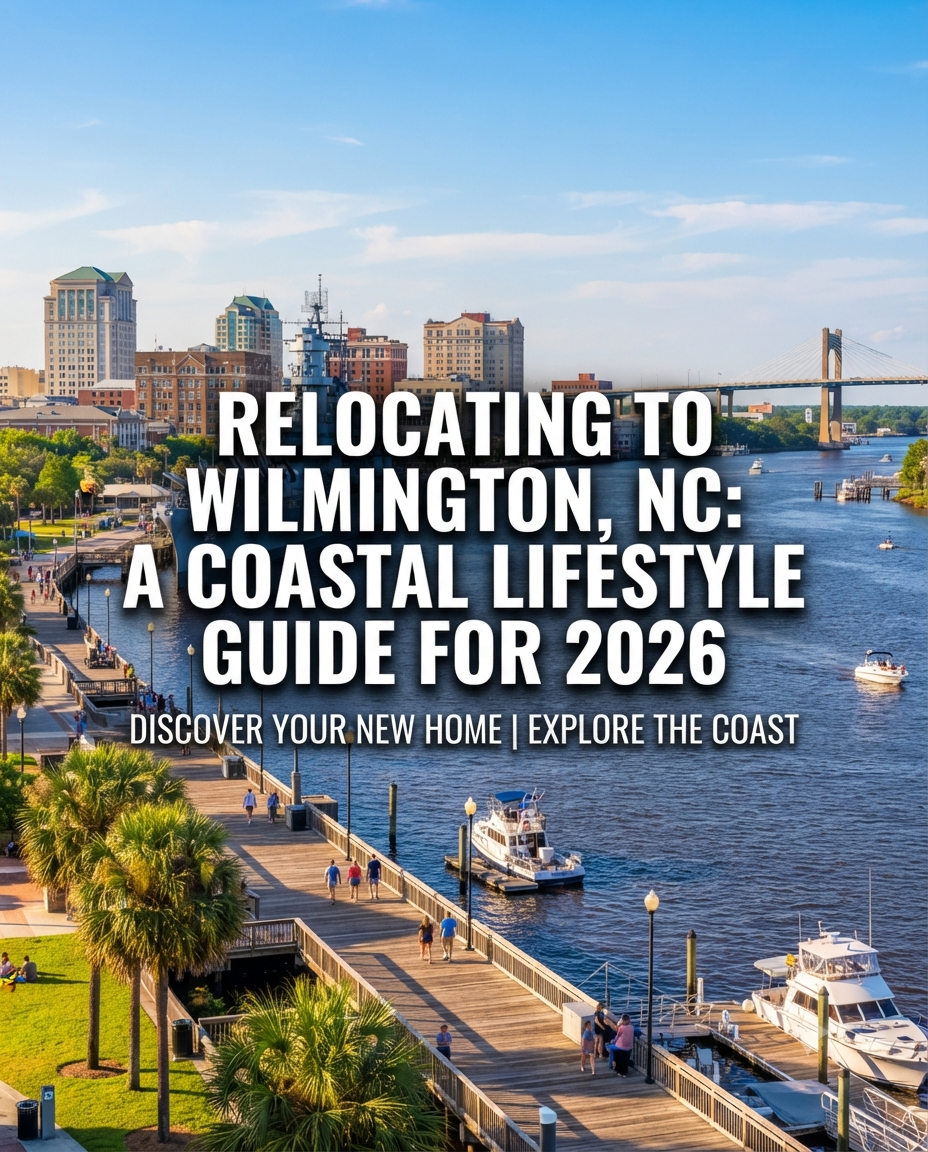
Relocating to Wilmington, NC A Coastal Lifestyle Guide for 2026

A growing economy and job market

Wilmington's economy has diversified well beyond its tourism roots. Healthcare, education, port logistics, film and television production, and a growing technology and professional-services sector all contribute to a steady job market. The presence of a major regional hospital system and the University of North Carolina Wilmington adds stability and a steady influx of new residents. For remote workers, the city's quality of life and relative affordability compared to larger coastal metros make it an especially attractive base.

Cost of living and housing

Wilmington is more affordable than many coastal cities in the Northeast or on the West Coast, though prices have risen meaningfully in recent years. The median home price now sits in the mid-$400,000s, with luxury and waterfront properties commanding well into the seven figures. Buyers relocating from higher-cost markets often find they get more home and more lifestyle for their money here, while those moving from lower-cost areas should budget carefully, particularly for coastal insurance. Renting first is a popular strategy for newcomers who want to learn the neighborhoods before they buy.

Practical things to know before you move

Living near the coast comes with a few practical considerations. Hurricane season runs from summer into fall, so it is worth understanding flood zones, insurance requirements, and a home's storm history before you buy. Traffic around the beaches picks up in peak summer months, and the most desirable neighborhoods can be competitive, so connecting with a local agent early helps. On the upside, North Carolina's overall tax climate and the region's lower cost of living relative to other coastal destinations are frequent pleasant surprises for newcomers.

Getting around and day-to-day life

Wilmington International Airport offers convenient regional connections, and the city is within a few hours' drive of Raleigh, Charlotte, and the mountains for weekend getaways. Day to day, residents enjoy a strong dining scene, farmers markets, a vibrant arts community, and an outdoor-oriented culture built around the water. The pace is relaxed without feeling sleepy, and the sense of community is one of the things newcomers mention most often.

Make your move with local guidance

Relocating to a new city is a big step, and the Wilmington area rewards those who plan ahead. Understanding the neighborhoods, the coastal considerations, and the local market will help you land in the right home for your lifestyle and budget. The payoff is a life lived close to the water, in a city that balances history, growth, and natural beauty in a way few places can match.

If you are planning a move to Wilmington in 2026, our team would be glad to be your local guide. Reach out for neighborhood recommendations, a relocation consultation, or a personalized home search tailored to your timeline and goals.

Key Takeaways

  • Wilmington pairs a walkable historic downtown with quick access to three distinct beaches and a manageable city scale
  • Newcomers typically choose between historic in-town living, master-planned communities near Mayfaire and Porters Neck, beach towns like Wrightsville and Carolina Beach, or Brunswick County suburbs like Leland
  • The local economy is anchored by healthcare, the Port of Wilmington, the film industry, UNCW, and a growing remote-work population
  • Cost of living is moderate compared to the Northeast and many Florida coastal markets, with insurance and property taxes worth budgeting carefully
  • Hurricane preparedness, flood zones, and salt-air maintenance are real coastal living factors — not deal-breakers, but part of homeownership here
  • Most relocating buyers benefit from one or two scouting trips before settling on a neighborhood, since the lifestyle differences across submarkets are larger than they look on a map

Frequently Asked Questions

What is the cost of living like in Wilmington compared to other coastal cities?

Wilmington is generally more affordable than coastal Florida, Charleston, or the Northeast. Housing is the largest single line item, and varies widely by neighborhood. Insurance and property taxes are moderate, and daily expenses sit close to the national average.

Which Wilmington neighborhood is best for families relocating with kids?

Mayfaire, Porters Neck, and the broader Ogden area are popular with families because of the schools, walkable retail, and proximity to Wrightsville Beach. Across the river, Leland's master-planned communities also draw a strong family demographic.

Is Wilmington a good place to live as a remote worker?

Yes. Fiber and high-speed internet are widely available, the airport (ILM) connects to major hubs, and the cost of living and lifestyle balance suits remote-eligible professionals well. Many local coffee shops and co-working spaces cater to remote workers.

What are the property tax and insurance costs in Wilmington?

New Hanover County and the City of Wilmington combined property tax bills are moderate. Insurance varies based on flood zone, wind exposure, and roof age. Buyers should always quote homeowners, wind and hail, and flood insurance during due diligence on any specific home.

How does hurricane risk affect day-to-day life in Wilmington?

Most years pass without a significant storm event. Residents follow a routine preparation rhythm — trees pruned, insurance renewed, roof inspected, supplies stocked before peak season. The risk is real but manageable with consistent prep.
Posted in Carolina Lifestyle
June 30, 2026

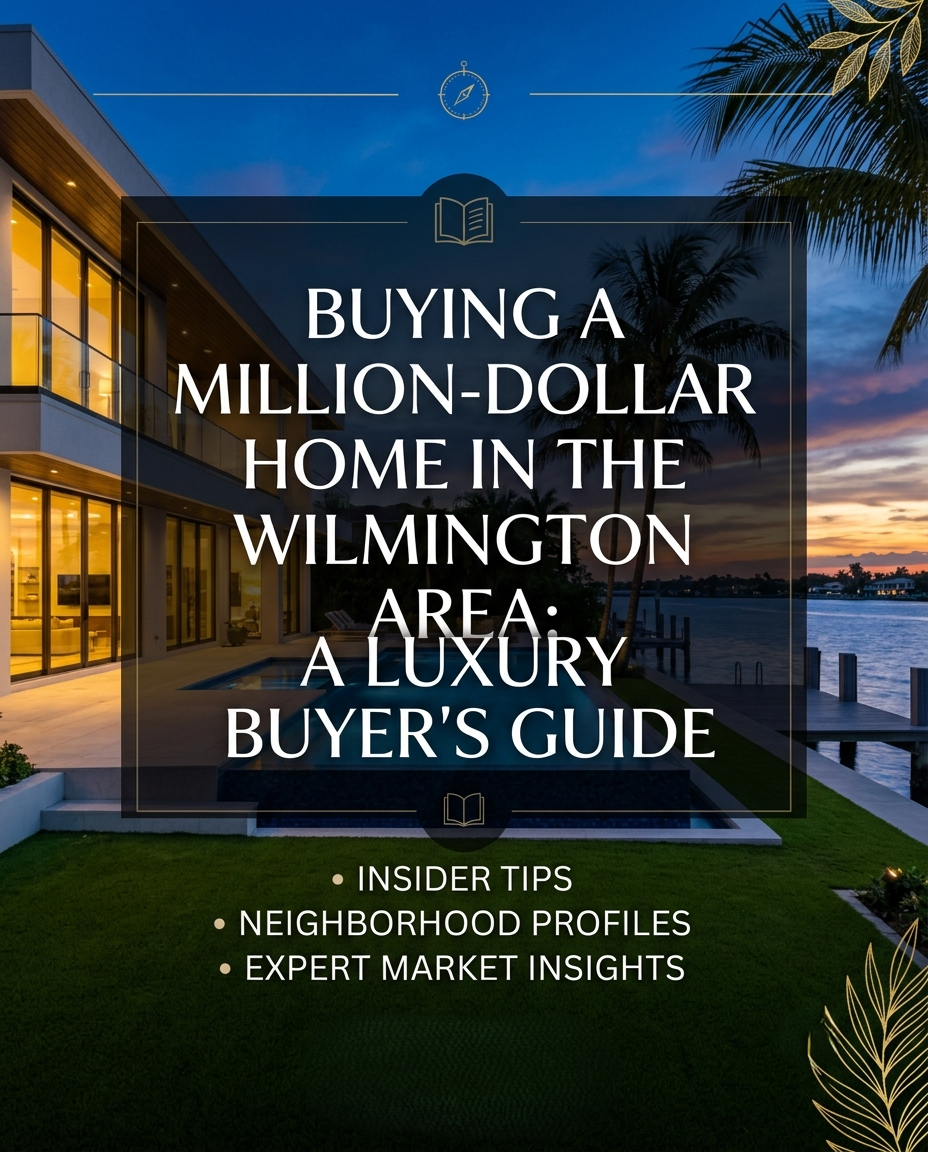
Buying a Million-Dollar Home in the Wilmington Area: A Luxury Buyer's Guide

The luxury market in and around Wilmington, North Carolina has matured into one of the most compelling on the Southeast coast. From waterfront estates on the Intracoastal Waterway to custom golf-course homes and private island retreats, the area offers an exceptional range of properties priced above $1 million. If you are considering a move into this tier, here is what you should know before you begin your search.

What a million dollars buys near Wilmington

In the Wilmington area, the $1 million threshold opens the door to genuine luxury rather than simply a larger home. At this level, buyers can expect waterfront or water-access locations, custom architecture, high-end finishes, and resort-style community amenities. Depending on the neighborhood, that might mean a deep-water dock on the Intracoastal, a fairway view in a gated golf community, or an oceanfront perch on one of the barrier islands. Premier communities like Landfall, Wrightsville Sound, and Waterstone routinely feature homes in this range, and the luxury segment has shown more resilience than the broader market, often holding value well over time.

Where to focus your search

Each luxury pocket around Wilmington has its own personality. Landfall offers gated security, championship golf, and a full slate of amenities just minutes from Wrightsville Beach. Wrightsville Sound and Figure Eight Island deliver classic coastal prestige with private docks and direct water access. Waterstone and Riverlights blend luxury with low-maintenance, amenity-rich living. Beyond Wilmington proper, nearby communities along the coast — from Carolina Beach to the quieter stretches of the Cape Fear — offer their own luxury opportunities. Defining the lifestyle you want, whether that is boating, golf, beach access, or downtown proximity, is the first step to narrowing the field.

Understand the true cost of coastal luxury ownership

Buying at this level involves more than the purchase price. Coastal properties carry insurance considerations that inland buyers rarely face, including flood and windstorm coverage that can be significant on waterfront homes. Property taxes, HOA dues, and club or marina memberships also factor into the long-term cost of ownership. For waterfront homes, it is wise to understand dock permits, bulkhead maintenance, and how the property has weathered past storms. A knowledgeable local agent and a thorough inspection are invaluable in surfacing these details before you commit.

Buying a Million-Dollar Home in the Wilmington Area A Luxury Buyer's Guide

Financing a luxury purchase

Homes above $1 million typically require jumbo financing, which comes with stricter qualification standards, larger down payments, and more documentation than a conventional loan. Many luxury buyers also purchase with cash or a substantial down payment to strengthen their offers. Whatever your approach, it pays to line up financing or proof of funds early. In the luxury tier, sellers and listing agents pay close attention to a buyer's ability to close, and a well-prepared offer carries real weight.

The luxury market moves differently

The high end of the Wilmington market does not always behave like the rest of it. Inventory can be thinner, individual homes are more unique, and pricing is less formulaic because true comparable sales are harder to find. The best properties sometimes sell quietly, off-market or before they are widely advertised. This is where local relationships matter most: an agent embedded in Wilmington's luxury communities can alert you to opportunities you would never find on a public search and can help you accurately value a one-of-a-kind home.

Tips for a confident luxury purchase

Start by getting clear on your must-haves versus your nice-to-haves, especially around water access, privacy, and amenities. Get pre-approved or assemble proof of funds before you tour homes. Lean on professionals who specialize in the luxury and coastal market, including an experienced agent, a real estate attorney familiar with North Carolina coastal property, and a qualified inspector. Take your time evaluating each property's location, construction quality, and resilience to coastal conditions. And do not hesitate to negotiate — even in the luxury tier, there is often room to discuss price, terms, and what conveys with the home.

Begin your luxury home search

Buying a million-dollar home near Wilmington is as much about lifestyle as it is about real estate. The reward is a home that reflects the very best of coastal North Carolina living, whether your ideal evening involves docking your boat at sunset, teeing off on a private course, or walking to the beach from your front door.

If you are ready to explore luxury homes above $1 million in the Wilmington area, our team can provide a curated, confidential look at the listings and communities that match your vision. Reach out today to begin your search.

Key Takeaways

The Wilmington-area luxury market in 2026 offers genuine value above the $1 million line — waterfront, golf, private-island, and high-end estate inventory all sit on the board. Buyers should expect to evaluate the home as a long-term asset, not just a residence, with attention to flood and wind insurance, HOA structures, dock and water rights, and the carrying cost of coastal upkeep. Cash and jumbo financing both work in this market, and the right lender matters. The luxury tier moves more slowly than the broader market, which gives prepared buyers real negotiating room and the chance to take time on diligence without losing the home. Buyers who pair a clear lifestyle plan with a local agent who understands the specific community dynamics consistently land in the right home for the right price.

Frequently Asked Questions

How long does a luxury purchase typically take to close?

Luxury closings in the Wilmington area generally run 30 to 60 days from contract, depending on financing and due diligence. Cash transactions can close faster, but most buyers use the extra time to complete thorough inspections, flood and insurance reviews, and survey work.

Are jumbo loans readily available in this market?

Yes. Most regional and national lenders write jumbo loans in the Wilmington market. Rates and terms vary, and the strongest pricing usually comes from lenders who specialize in coastal luxury financing. Buyers should compare at least two or three lenders before locking.

How much should I budget for ongoing costs above $1 million?

Plan for 3 to 5 percent of the purchase price per year for property taxes, insurance, HOA, maintenance, and reserves. Waterfront and oceanfront homes typically run the higher end of that range because of insurance and salt-environment maintenance.

Is now a good time to buy a luxury home in Wilmington?

Inventory in the luxury tier has loosened from the pandemic-era extremes, and buyers can take time to evaluate options without losing the property in a single weekend. Pricing remains supported by structural inventory limits in the top neighborhoods, so this is a buyable market for patient, prepared buyers.

What should I look for in a luxury-focused agent?

Direct experience above the $1 million price point, deep familiarity with specific communities like Landfall, Figure Eight, Wrightsville Beach, and Porters Neck, a clean negotiating record, and a marketing approach that respects buyer privacy. The luxury market is small enough that the right relationships matter as much as the technical real-estate work.

Posted in For Buyers
June 29, 2026

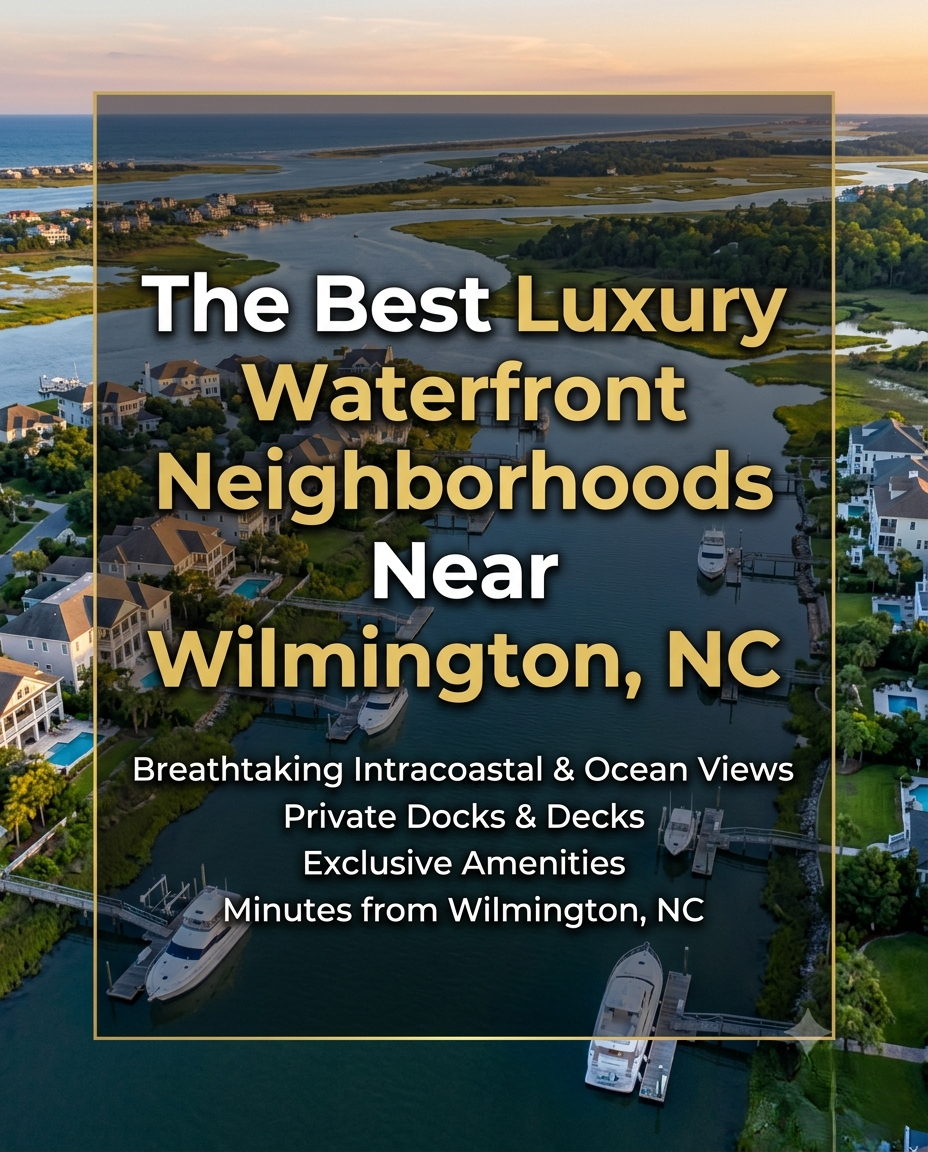
The Best Luxury Waterfront Neighborhoods Near Wilmington, NC

Few places along the North Carolina coast offer the combination of natural beauty, refined living, and water access that defines the Wilmington area luxury market. For buyers drawn to life on the Intracoastal Waterway, the Cape Fear River, or a short golf-cart ride from the beach, the region's luxury waterfront neighborhoods deliver some of the most desirable real estate in the state. Here is a closer look at the communities that consistently top buyers' lists.

Landfall

Landfall is widely regarded as Wilmington's premier luxury community. Spread across roughly 2,200 acres off Military Cutoff and Eastwood Roads, this gated enclave features more than 2,000 home sites woven among 29 miles of private roads, mature live oaks, and manicured fairways. Residents enjoy championship golf, a sports center, tennis and pickleball, and a private clubhouse, all just minutes from Wrightsville Beach and the shops of Mayfaire. Homes here span elegant custom estates and refined coastal designs, with many properties in the upper price tiers of the local market. For buyers who want resort-style amenities behind the security of a gated community, Landfall is hard to beat.

Wrightsville Sound

Perched along the Intracoastal Waterway, Wrightsville Sound is consistently one of the most expensive and sought-after neighborhoods in Wilmington. The area blends grand waterfront estates with charming coastal cottages, many offering private docks and direct access to the water. Its appeal is simple: you are moments from Wrightsville Beach yet tucked into an established, tree-lined community with deep local roots. Buyers here are paying for location, water access, and a lifestyle centered on boating, paddleboarding, and sunset views over the sound.

Waterstone

Waterstone has earned its place among Wilmington's most prestigious addresses. Located near the Intracoastal Waterway, this community features single-family and patio homes with prices that often start in the upper price ranges of the market. Residents enjoy picturesque water views, a day dock, kayak and paddleboard racks, a luxurious community pool, a pickleball court, and roughly a mile and a half of multi-purpose trails. Waterstone strikes a balance between low-maintenance luxury living and genuine water access, making it especially popular with buyers who want amenities without the upkeep of a large waterfront estate.

Riverlights

For buyers who love the idea of a vibrant, master-planned community on the water, Riverlights is a standout. Set along the Cape Fear River south of downtown Wilmington, Riverlights is built around a 38-acre freshwater lake and a riverfront boardwalk with sweeping views of the river and natural marsh. The community includes an interconnected network of parks and trails and a Marina Village commercial node with dining, fitness, and retail right inside the neighborhood. With a range of home styles and a true sense of community, Riverlights appeals to buyers who want luxury living paired with walkable amenities and an active outdoor lifestyle.

Figure Eight Island and the Wrightsville Beach communities

No discussion of waterfront luxury near Wilmington is complete without the barrier-island communities. Figure Eight Island, a private gated island just north of Wrightsville Beach, is among the most exclusive coastal addresses in North Carolina, prized for its privacy and oceanfront and soundfront estates. Wrightsville Beach itself offers a mix of oceanfront homes and Intracoastal properties for buyers who want to live steps from the surf. These communities represent the pinnacle of coastal living for those seeking direct ocean or sound access.

What to know before you buy waterfront

Buying a luxury waterfront home is different from a typical purchase. Water access varies widely — some properties offer deep-water docks suitable for larger boats, while others provide community piers or kayak launches, so it is worth clarifying exactly what comes with the home. Insurance, including flood and wind coverage, plays a larger role in coastal ownership and should be factored into your budget early. It also pays to understand each community's HOA, amenities, and any membership requirements for golf or club facilities.

Just as important is timing and representation. The best waterfront and luxury homes in the Wilmington area often move quickly and sometimes change hands before they are widely marketed, so working with an agent who knows these specific communities can give you a meaningful edge.

  The Best Luxury Waterfront Neighborhoods Near Wilmington, NC

Find your place on the water

From the gated fairways of Landfall to the sound-front cottages of Wrightsville and the riverfront energy of Riverlights, the Wilmington area offers a waterfront neighborhood for nearly every taste and lifestyle. Each community has its own character, amenities, and price point, and the right fit depends on how you want to live near the water.

If you would like a personalized tour of Wilmington's luxury waterfront communities — or a confidential look at homes that match your wish list — reach out to our team. We would be glad to help you find your place on the North Carolina coast.

Key Takeaways

  • Landfall remains Wilmington's flagship luxury community, with gated access, golf, and proximity to Wrightsville Beach driving consistent demand
  • Wrightsville Sound, Waterstone, and Riverlights offer different versions of waterfront living, each tied to a specific buyer profile
  • Figure Eight Island remains one of the most exclusive coastal addresses in North Carolina, with limited inventory and strong long-term value
  • Wrightsville Beach itself anchors the oceanfront and ICW luxury market within minutes of Landfall and downtown Wilmington
  • Buyers should evaluate flood zones, dock rights, master HOA structures, and insurance early in due diligence on any waterfront purchase
  • Inventory in the top luxury and waterfront communities is structurally thin, which keeps pricing resilient even when the broader market loosens

Frequently Asked Questions

What is the typical price range for Landfall homes?

Landfall inventory ranges widely depending on lot, view, and home age. Most homes trade between the upper $700,000s and the mid-$2 millions, with marsh-front and golf-front custom homes reaching higher. Buyers should expect a country-club-membership conversation alongside the home purchase.

Can you buy on Figure Eight Island year-round?

Yes. Figure Eight is a private bridge-access barrier island with strong year-round residency and a tight second-home community. Inventory is intentionally limited and turnover is low, which is part of what supports its luxury pricing.

How do flood zones affect waterfront purchases in this area?

Flood zone designation drives flood insurance requirements and, in some cases, foundation and elevation rules for renovations. Buyers should obtain the FEMA flood determination and a flood insurance quote during due diligence on any waterfront property.

Are dock rights guaranteed with a waterfront home?

Not always. Dock access depends on the property's specific water frontage, state CAMA permitting, and any HOA or community rules. Some waterfront homes have grandfathered docks, others have shared dock arrangements, and some have no dock rights at all. Always verify before contract.

How does Wrightsville Beach compare to Figure Eight Island for luxury buyers?

Wrightsville Beach delivers oceanfront and Banks Channel luxury with restaurants, walkability, and a livelier community feel. Figure Eight is more private, quieter, and harder to access. Buyers usually choose based on whether they want a coastal village feel or a true private-island lifestyle.

Posted in For Buyers
June 26, 2026

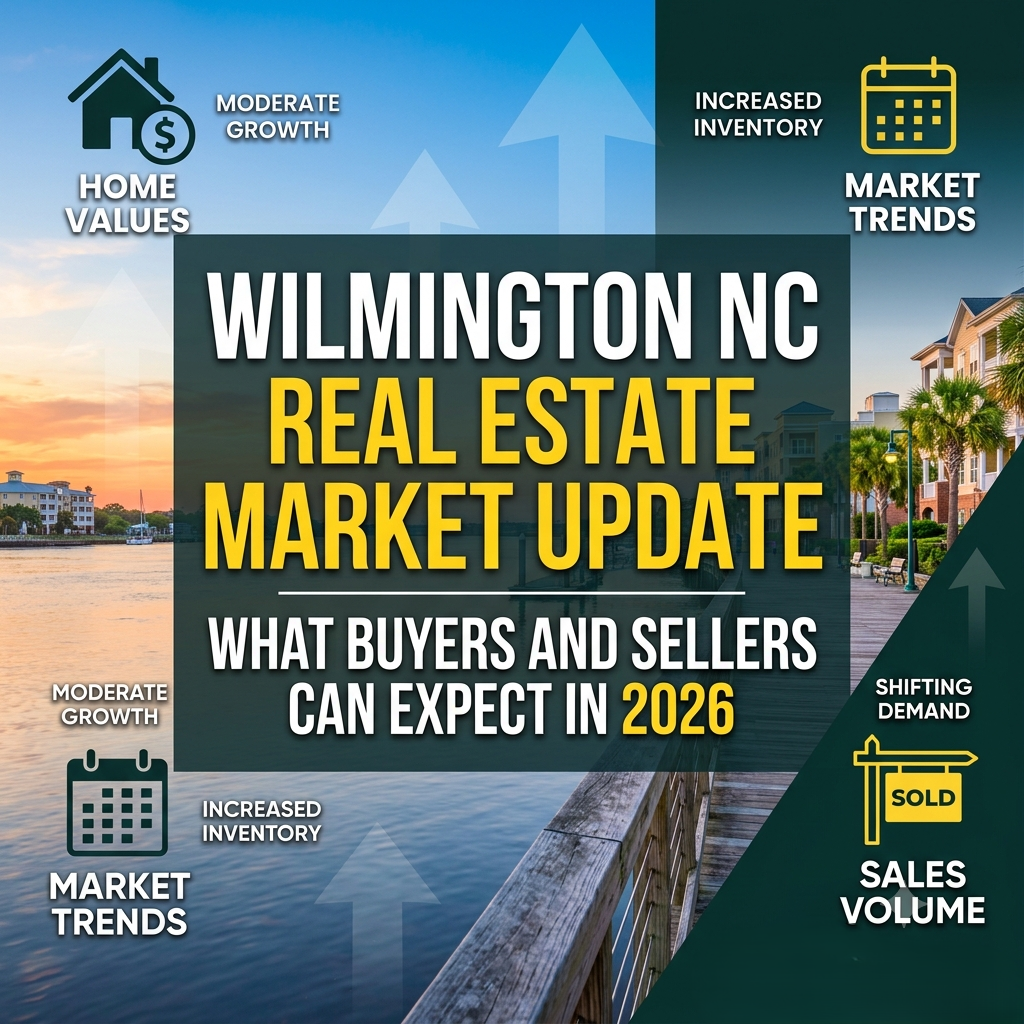
Wilmington NC Real Estate Market Update: What Buyers and Sellers Can Expect in 2026

The Wilmington, North Carolina real estate market enters 2026 in a more balanced place than it has been in years. After a long stretch of fast-rising prices and fierce competition, the coastal market around the Cape Fear is settling into a steadier rhythm. For both buyers and sellers, that shift creates real opportunity — if you understand what is actually happening on the ground.

Home prices are still rising, but more gently

Wilmington home values have continued to climb, though at a far more sustainable pace than during the pandemic-era surge. The median sale price in the city has moved into the mid-$400,000s, up modestly over the past year rather than by double digits. Most local forecasts call for additional appreciation in the low single digits through 2026 — a sign of a healthy market returning to normal rather than one that is overheating.

This matters because slower, steadier growth tends to reward patient buyers and well-prepared sellers alike. Homes that are priced correctly and presented well are still selling, while overpriced listings are sitting longer than they would have a year or two ago.

Inventory is improving for buyers

One of the most welcome changes for 2026 is the gradual rise in available inventory. For several years, a shortage of listings forced buyers into bidding wars and waived contingencies. Now, with more homes coming to market, buyers across much of the Wilmington area have more selection and a little more room to negotiate.

That said, Wilmington has not flipped into a buyer's market. It remains a softer seller's market, where desirable, move-in-ready homes in sought-after neighborhoods still attract strong interest. The difference is that buyers no longer have to make split-second decisions on every listing, and reasonable negotiation has returned to many transactions.

Where demand is concentrated

Demand in the Wilmington metro has shifted noticeably toward the mid-market. More buyers are landing in the $300,000 to $600,000 range than a year ago, drawn by the region's lifestyle, growing job base, and coastal appeal. Meanwhile, the entry-level segment below $300,000 continues to thin out as affordable options become scarcer.

At the upper end, the luxury and waterfront market remains resilient. Premier communities such as Landfall, Wrightsville Sound, and Waterstone continue to command premium prices, and well-located waterfront and golf-course properties often hold their value better than the broader market. Buyers in this tier are typically motivated by lifestyle and long-term ownership rather than short-term timing, which keeps competition for the best homes steady.

What rising rates and affordability mean

Mortgage rates remain a central factor in 2026. While rates have eased somewhat from their recent peaks, they are still meaningfully higher than the historic lows many buyers remember. Affordability is a genuine consideration in Wilmington, where prices have outpaced local incomes in recent years. Buyers are responding by being more deliberate, getting pre-approved earlier, and focusing on homes they can comfortably afford for the long term.

For buyers, the practical takeaway is to get your financing in order before you shop and to factor in insurance and property taxes, which carry extra weight in a coastal market. For sellers, it means pricing realistically from day one, since today's buyers are more rate-sensitive and less willing to stretch.

Advice for buyers in 2026

If you are buying this year, the improved inventory works in your favor. Take the time to compare neighborhoods, from the historic downtown riverfront to the beach communities of Wrightsville and Carolina Beach to the master-planned developments along the Intracoastal Waterway in Leland. Secure a strong pre-approval, lean on a local agent who knows the micro-markets, and do not be afraid to negotiate on price, repairs, or closing costs. The frenzy has cooled enough that thoughtful buyers can find genuine value.

Advice for sellers in 2026

Sellers still hold a solid position, but the days of naming any price and watching offers pour in have passed. Presentation and pricing are everything now. Invest in cleaning, decluttering, and small repairs, price your home in line with recent comparable sales, and use professional photography to stand out online, where nearly every buyer's search begins. Homes that check these boxes are still moving at strong prices.

Wilmington NC Real Estate Market Update What Buyers and Sellers Can Expect in 2026

The bottom line

The 2026 Wilmington real estate market is defined by balance: prices rising gently, inventory improving, and both sides of the transaction able to act with more confidence. The region's enduring draws — its riverfront downtown, its beaches, its mild coastal climate, and its steady population growth — continue to support long-term demand. Whether you are planning to buy your first home, move up to a waterfront estate, or sell and relocate, the key is preparation and local expertise.

If you are thinking about making a move in the Wilmington area this year, reach out to our team for a personalized look at your neighborhood, your price range, and your timing. We would be glad to help you navigate the 2026 market with confidence.

Key Takeaways

Wilmington's 2026 market is finally returning to a healthy, sustainable rhythm. Prices are still rising but at low single digits rather than double digits. Inventory has loosened enough that buyers can negotiate, compare, and inspect without losing the home over a one-day window. Sellers still have a strong position when they price realistically and present the home well. The neighborhoods that continue to anchor demand are the historic riverfront downtown, the Wrightsville and Carolina Beach corridors, and the master-planned communities just over the bridge in Leland and Brunswick County. Buyers and sellers who treat 2026 like the normalized market it is, rather than chasing 2021 conditions, will come out ahead.

Frequently Asked Questions

Is now a good time to buy a home in Wilmington, NC?

Yes, for buyers who are ready. Inventory has loosened, days on market are reasonable, and well-priced homes still move quickly. Buyers willing to use the negotiating window have meaningful leverage on price, closing costs, and repairs that did not exist two years ago.

Are home prices in Wilmington expected to drop in 2026?

A broad price drop is not the base case. Most local indicators point to continued modest appreciation in the low single digits through 2026, supported by steady migration from out of state and the structural shortage of waterfront and historic inventory.

How long are homes sitting on the market in Wilmington right now?

Well-priced and well-presented homes generally trade within thirty to sixty days, depending on price point and neighborhood. Overpriced listings sit much longer, which is the single biggest reason a Wilmington home does not sell in 2026.

What should sellers focus on in this market?

Three things — pricing to current comparable sales rather than last year's headlines, presenting the home professionally (photos, video, staging), and being responsive on the first thirty days of activity. Those three together drive most outcomes in this market.

Which Wilmington-area neighborhoods are seeing the most buyer activity?

Historic Downtown, Mayfaire, the Wrightsville and Carolina Beach corridors, Porters Neck, Landfall, and the Brunswick County master-planned communities are all pulling strong demand. The mix of in-town walkability, beach access, and amenity-rich communities continues to drive most of the activity.

Posted in Market Updates
June 25, 2026

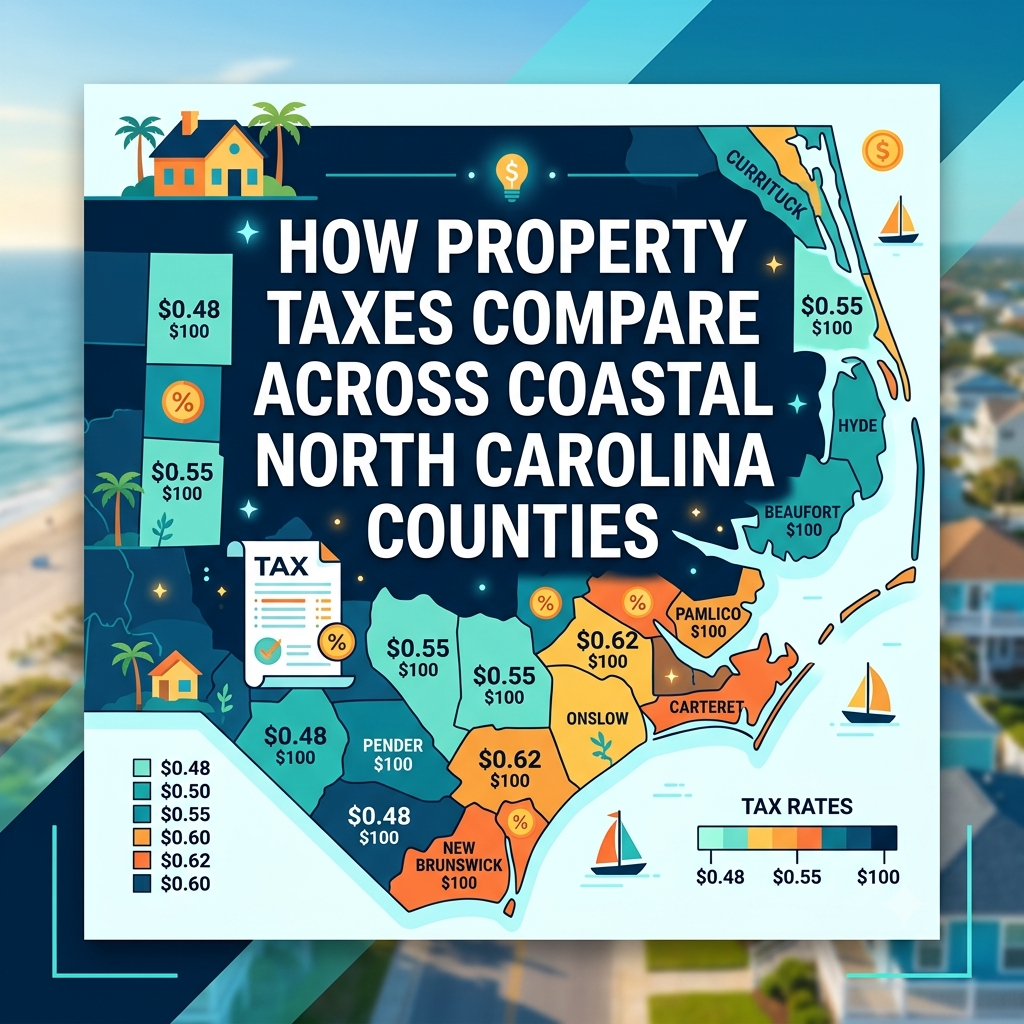
How Property Taxes Compare Across Coastal North Carolina Counties

Property taxes look simple on a one-page comparison sheet and complicated on the actual tax bill. The headline county rate is only one piece of what a coastal North Carolina homeowner pays. Municipal overlays, fire district taxes, school district contributions in some areas, and special assessments all stack on top. Buyers shopping across Wilmington, the Brunswick beaches, the Topsail corridor, and Jacksonville should run the full annual bill on a specific home rather than relying on the county headline.

Here is how the major coastal NC counties actually compare in 2026, and where the real money lives.

The Big Picture

Coastal North Carolina property taxes are generally moderate compared to the Northeast and Midwest, and competitive compared to coastal Florida once you factor in insurance differences. Within the region, the spread between the lowest-cost and highest-cost county is meaningful but not enormous. The bigger spread shows up between properties inside city limits and properties just outside them, where the municipal tax overlay adds up.

New Hanover County

New Hanover County is the home of Wilmington, Wrightsville Beach, Carolina Beach, and Kure Beach. The county rate is on the higher end of the regional comparison, and properties inside the City of Wilmington carry an additional municipal rate on top of that.

For a $500,000 home in the City of Wilmington proper, the combined annual tax bill typically lands several hundred dollars higher than the same home in unincorporated New Hanover County or just across the river in Brunswick County. The bills on the beach towns — Wrightsville, Carolina, and Kure — add their own municipal rates, but the totals are still reasonable compared to comparable beach properties in many other states.

Brunswick County

Brunswick County is one of the biggest reasons buyers cross the bridge from Wilmington. The county rate is competitive, and the absence of a city overlay in unincorporated portions of the county can produce meaningful monthly savings on the same home value.

Within Brunswick County, municipal rates apply in Oak Island, Holden Beach, Sunset Beach, Ocean Isle Beach, Southport, Shallotte, Calabash, Bald Head Island, and Leland's incorporated areas. Each town sets its own rate, and the spread between them is real. Bald Head Island and several beach towns carry higher municipal rates because the towns deliver more direct services to a smaller tax base.

For a $500,000 home in unincorporated Brunswick County near Leland, the total tax bill can run several hundred to over a thousand dollars less per year than the same home in Wilmington city limits. That difference compounds over a long holding period.

Pender County

Pender County serves Hampstead, Burgaw, Surf City and Topsail Beach, and most of the Topsail-corridor inventory. The county rate sits in a competitive position relative to New Hanover.

Hampstead in particular benefits from unincorporated status across most of its area, meaning many homes there carry only the county rate plus the relevant fire district. Surf City and Topsail Beach add their own municipal rates, and the beach towns carry higher rates than mainland Hampstead. Burgaw is incorporated as a town, and a Burgaw town property carries the town tax in addition to the county rate.

Onslow County

Onslow County covers Jacksonville, Sneads Ferry, Holly Ridge, and the area around Camp Lejeune. The county rate is competitive, and a substantial portion of the housing stock sits in unincorporated areas without a city overlay. For military families and other buyers shopping the corridor, the tax math is often a meaningful advantage compared to closer-in coastal counties.

Jacksonville and Holly Ridge both have their own municipal rates that apply inside town limits.

Fire Districts and Special Assessments

Coastal NC counties commonly collect fire district taxes that vary by district. The amount is usually small relative to the overall bill, but the rate does vary, and two homes a few miles apart can carry different fire district rates. Some areas also carry special improvement district or downtown municipal services district taxes that buyers in particular neighborhoods should expect.

This is one of the reasons the right answer is always to look at the actual annual tax bill on a specific home, not the published county rate.

What the Differences Look Like in Practice

For a typical $500,000 single-family home, the annual property tax bill across coastal NC counties tends to fall in a roughly $2,500 to $4,500 range depending on location, with the lower end showing up in unincorporated Brunswick or Onslow counties and the higher end showing up in incorporated beach towns and Wilmington city limits. Those numbers move with reappraisal cycles and rate adjustments, but the relative ordering has been stable for years.

The differences are real. They are not the kind of differences that should drive a buyer's entire purchase decision, but they should be part of the carrying-cost math when comparing two homes across county or municipal lines.

How Property Taxes Compare Across Coastal North Carolina Counties

Reappraisal Cycles

Each North Carolina county runs its own reappraisal cycle, usually every four to eight years. Reappraisal years can move tax values significantly, particularly for homes that have appreciated faster than the broader county average. Buyers should understand where each county sits in its cycle and what the most recent revaluation did to the local tax base.

Homestead and Other Exemptions

North Carolina offers a property tax homestead exemption for qualifying senior or disabled homeowners with income below a state-set threshold. There is also a circuit-breaker deferral program for qualifying owners and a separate exemption for disabled veterans. None of these apply to investment or second-home properties.

Owners who may qualify should apply through their county tax assessor's office. The savings can be meaningful.

Key Takeaways

  • The county headline rate is only one part of a coastal NC property tax bill — municipal overlays, fire districts, and special assessments stack on top
  • Brunswick County is generally the lowest-cost option for a $500,000 home in this region, especially in unincorporated areas near Leland
  • Pender County, particularly unincorporated Hampstead, is also competitive
  • Onslow County around Jacksonville and Holly Ridge offers strong tax math for military and value buyers
  • New Hanover County, especially inside City of Wilmington limits, carries the higher end of the regional bill
  • Beach town municipal rates can add meaningful cost compared to unincorporated areas — Bald Head Island and the Brunswick beaches are the clearest examples
  • Reappraisal cycles, fire districts, and homestead exemptions all change the real number — always run the actual bill on a specific property

Frequently Asked Questions

Do North Carolina property taxes increase automatically each year?

Not automatically. Taxes increase when a county or municipality raises its tax rate, when a reappraisal raises the assessed value of a property, or when a special assessment is added. Many years pass with no change to the individual rate, but rates can and do move.

How often does coastal NC reappraise property values?

State law requires reappraisal at least every eight years. Most coastal NC counties run a four- or five-year cycle. New Hanover, Brunswick, and Pender counties have each run reappraisals in recent years that moved assessed values significantly in waterfront and high-demand areas.

Can I appeal my property tax assessment?

Yes. Each county runs a formal appeal process after a reappraisal, with deadlines and required documentation. Owners who believe their assessed value is materially higher than market value can present comparable sales data and request an adjustment. The process is well-defined and worth using when the assessment is clearly off.

Are property taxes higher on waterfront homes?

Almost always, because the assessed value is higher. The rate itself is the same as other homes in the same jurisdiction, but the value the rate applies to is much larger. Waterfront owners should expect a higher dollar bill even when the rate is identical to inland properties.

What is the practical impact of municipal versus unincorporated tax status?

On a $500,000 home, being inside city or town limits often adds $700 to $2,000 per year compared to an unincorporated equivalent. The benefit of the municipal overlay is the additional services — police, parks, sidewalks, sometimes utilities. The benefit of unincorporated status is the lower bill. Both are legitimate trade-offs depending on what the buyer values.

Posted in For Buyers
June 24, 2026

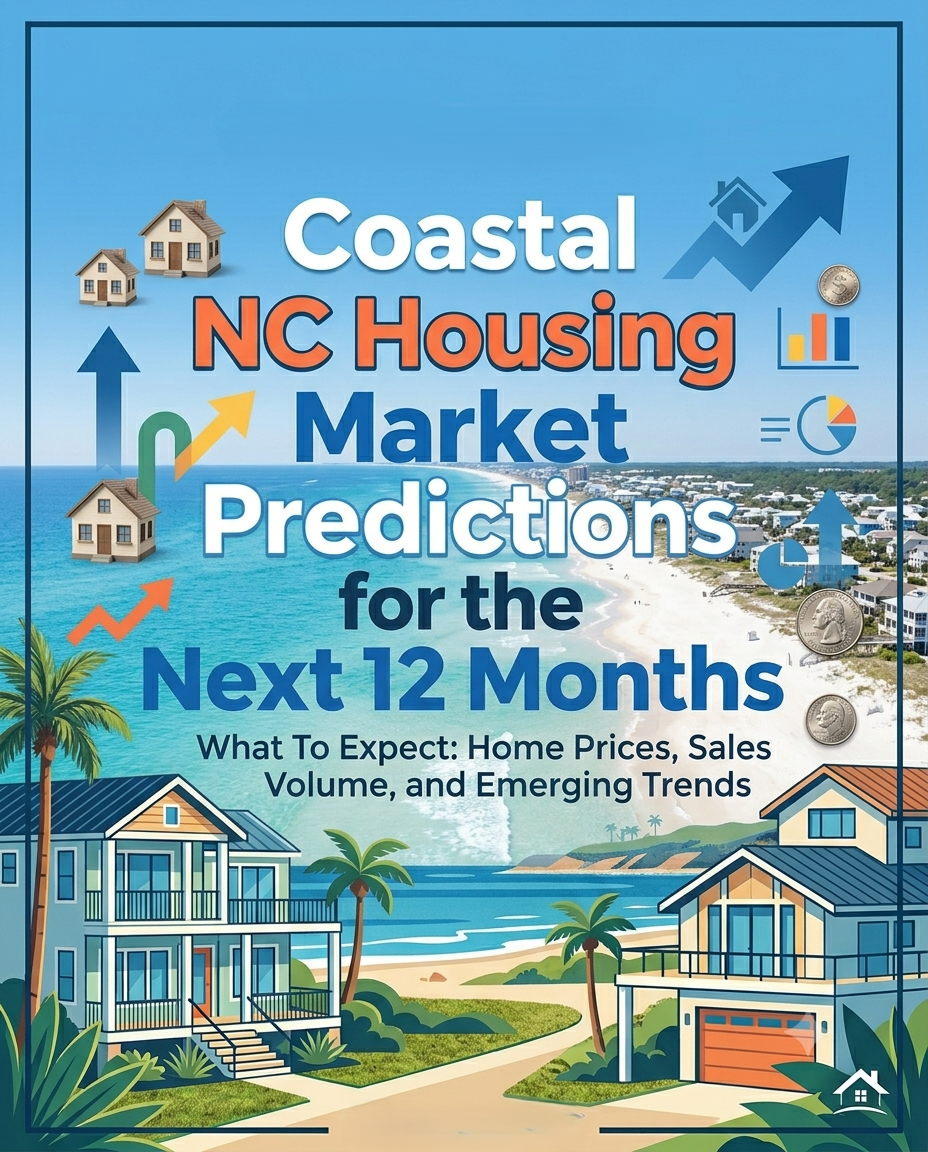
Coastal NC Housing Market Predictions for the Next 12 Months

The coastal North Carolina market in mid-2026 is the most balanced it has been since 2019. Inventory has loosened. Prices have held. Days on market have stabilized. The frantic pandemic-era bidding cycles are gone, and the slower, more cautious 2023 environment is gone too. What we are looking at now is a market that behaves more like the historical norm — and that gives us a usable foundation for predicting the next twelve months.

Here is the honest read on where this market is most likely to head from now through mid-2027, by category, with the caveats that always apply when anyone tries to forecast real estate.

Inventory: Expect Gradual Normalization

Active listings across the Cape Fear region crossed 4,100 in April 2026, one of the highest readings in years. The next twelve months are likely to see inventory hold near current levels or rise modestly through the spring 2027 buying season. Builders continue to deliver new product across Leland, Hampstead, and the broader Brunswick County corridor. Resale inventory will tick up as homeowners who delayed listing during the rate-shock years finally come to market.

The exception is the established beach corridors. Wrightsville Beach, Carolina Beach, and the historic core of Southport will likely stay tight. There is no new land to develop in those markets, and the owners who hold there tend to hold for a long time.

Pricing: Modest Appreciation, Not a Cooling

The base case for the next twelve months is a 2 to 5 percent year-over-year increase in the median sales price across the broader coastal NC market, with meaningful variation by submarket. The factors pointing up are continued migration into the region, a structural shortage of waterfront and historic inventory, and steady demand from retirees and remote workers.

The factors pulling against appreciation are the loosening inventory picture, the higher carrying costs imposed by insurance and rates, and the continued affordability ceiling that some Wilmington-area buyers have hit. Those forces will likely keep appreciation modest rather than letting it accelerate the way it did in 2021 and 2022.

Mortgage Rates: Range-Bound, Not Plunging

Rates are likely to trade in a range rather than break sharply in either direction over the next year. Inflation pressures, employment data, and the broader bond market will move the number around, but the era of sub-4 percent fixed mortgages is unlikely to return in this twelve-month window. Buyers who have been waiting for a dramatic rate drop should plan around a rate that lands in the 6 to 7 percent range, with refinance options open later if the market shifts.

The buyers winning right now are the ones who decided that the right house is worth more than the right rate. Sellers benefit when buyers stop waiting.  

Coastal NC Housing Market Predictions for the Next 12 Months

Insurance: The Most Important Variable Almost Nobody Forecasts

Coastal NC insurance is the single biggest uncertainty over the next year. Wind and hail markets are tighter than they were five years ago, and flood insurance continues to reprice under federal NFIP changes. The base case is more of the same: gradual premium increases, stricter underwriting on older roofs and coastal-exposed homes, and tighter availability for owners with prior claims.

A sharp shift here — either a major storm season or a meaningful exit by carriers — could change the carrying-cost math fast. This is the variable that could meaningfully affect coastal pricing if the worst-case scenarios play out.

Migration: Still a Net Inflow

Coastal North Carolina remains a net-inflow market. Buyers from Florida, New Jersey, New York, Ohio, Pennsylvania, Virginia, and the Carolinas continue to relocate here for the lifestyle, the cost of living, and the climate. Retirees, remote workers, and military families are the three biggest pools, and none of them are slowing down.

This is the structural tailwind behind the modest appreciation forecast. As long as the inflow continues, the market floor stays supported.

By Submarket

Wilmington Proper

Expect modest price appreciation, slightly more inventory, and stable demand. Luxury and waterfront pockets will continue to outperform the broader market. The middle market will see the largest negotiating window for buyers.

Brunswick County

Leland will continue to lead the growth story. New construction will keep delivering. Pricing will likely appreciate at the higher end of the regional range because demand is broad and supply is constrained by land availability and HOA-controlled build pace.

Pender County

Hampstead remains one of the most competitive submarkets. Burgaw will continue to attract value-conscious and remote-work buyers. Both markets should see modest appreciation and steady absorption.

Brunswick Beaches

Oak Island, Holden Beach, Sunset Beach, and Ocean Isle Beach will likely see the biggest divergence between strong-performing oceanfront and softer pricing on interior or canal inventory. The investor-driven rental market should remain healthy.

Topsail and Surf City Corridor

Continued demand, modest appreciation, and tight inventory in waterfront and oceanfront homes. Inland properties along the corridor will absorb at a slower pace.

The Risks

Three things could derail the base case. A major hurricane that does significant damage in the region. A sharp insurance market dislocation. A national recession deep enough to pull demand. None of these are predicted with certainty, but each is a real possibility on a twelve-month horizon, and buyers and sellers should know the risks they are carrying.

What This Means for Buyers

The next twelve months are a reasonable window to buy. Inventory is up, negotiating room is real, and the pricing environment is not running away from buyers. The buyers who win in this market are the ones who treat it like a buying market — which it is — without expecting the kind of distress pricing that does not exist here. Sellers are still selling at strong values, and the right house is still moving quickly.

What This Means for Sellers

The market still rewards correct pricing and excellent presentation. The market does not reward overpricing and waiting. The first thirty days remain the most important window of any listing. Sellers who price to the actual comps, present the home well, and respond quickly to offers will continue to get strong outcomes. Sellers who price to last year's headlines and wait for the market to come to them will sit.

Key Takeaways

The coastal North Carolina housing market through mid-2027 is most likely to deliver modest price appreciation, gradually rising inventory, range-bound mortgage rates, and continued in-migration. The biggest unknown is insurance — both the year's storm activity and the market's continued repricing pressure. Within the region, Leland and Hampstead remain the most competitive growth markets, Wilmington proper continues to anchor the upper end, the Brunswick beaches stay split between strong oceanfront and softer interior pricing, and the Topsail and Surf City corridor holds tight on waterfront. Buyers have a real window to negotiate without expecting any kind of crash. Sellers who price and present correctly continue to do well. The market in mid-2026 is the most normal it has been in years, and the next twelve months are likely to look more like the long-term historical norm than like any of the last five.

Posted in Market Updates
June 23, 2026

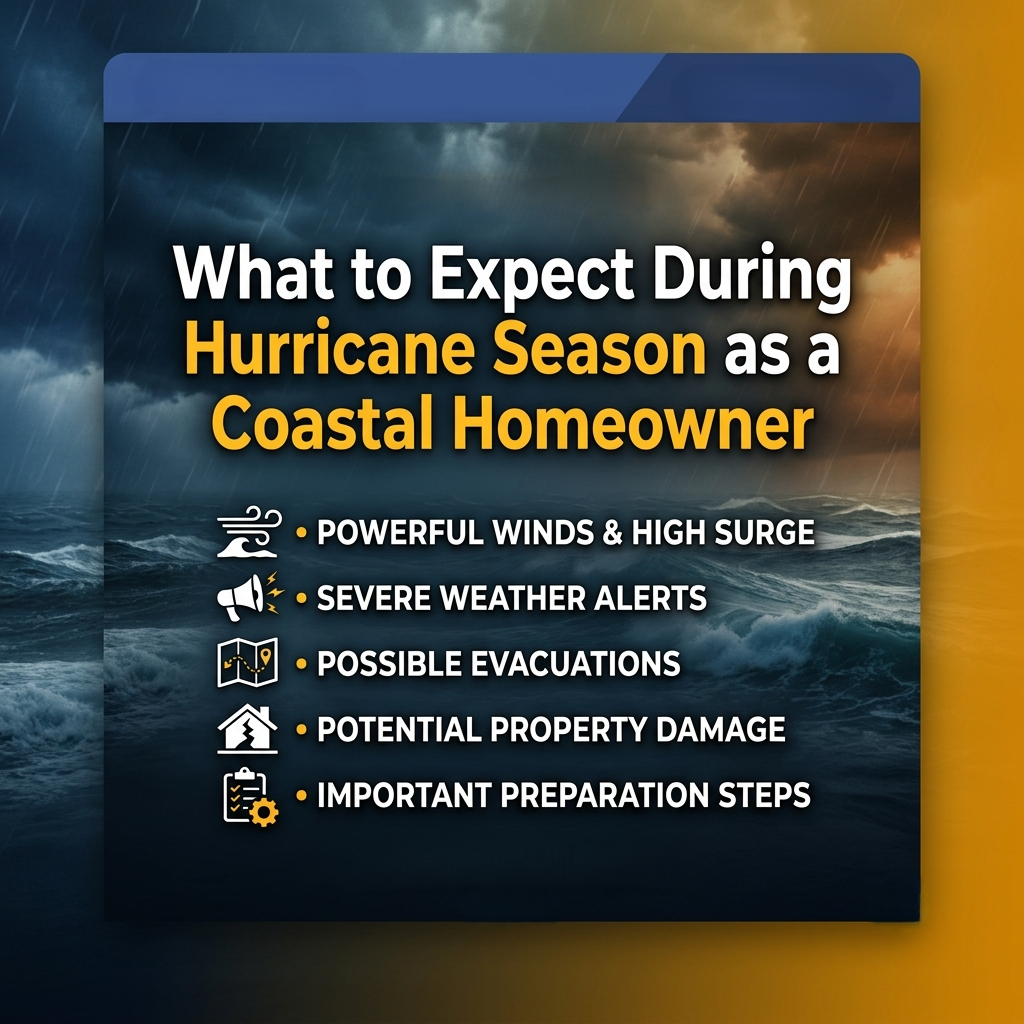
What to Expect During Hurricane Season as a Coastal Homeowner

Hurricane season runs from June 1 through November 30 on the North Carolina coast. Most years pass with two or three named systems that affect the region in minor ways, a handful of close calls, and the occasional storm that genuinely tests the community. After thirty years in this market, the pattern is familiar — and the difference between homeowners who weather it well and homeowners who do not almost always comes down to preparation done long before the first storm name shows up on the National Hurricane Center map.

Here is a practical look at what to expect from hurricane season as a coastal homeowner in Wilmington, the Brunswick beaches, and the Topsail and Surf City corridor, and what actually matters.

The Season Calendar

June and July are typically quiet months for our coast, though early-season systems do happen. August through mid-October is the heart of the season. Late October and November still bring late systems, often weakening as they approach. The single most active stretch for coastal North Carolina is typically late August through the third week of September. Owners who finish their prep by July are in much better shape than owners who start in late August.

Insurance Should Be Settled Before June

Wind and Hail

Standard homeowners policies on the coast often carry a separate wind and hail policy or wind endorsement. The deductible is usually a percentage of the dwelling coverage rather than a flat dollar amount, and it can run 1 to 5 percent depending on location. On a $500,000 home, that is $5,000 to $25,000 out of pocket before the policy pays the first claim dollar. Owners should know this number before the storm, not after.

Flood Insurance

Flood coverage is separate from homeowners. The National Flood Insurance Program writes most coastal NC flood policies, with private flood markets filling in. Policies have a 30-day waiting period before coverage activates. Buying a policy when the storm is offshore is not an option — the policy needs to be in force well before the season starts. Wrightsville Beach, Carolina Beach, Holden Beach, and other low-lying communities should treat flood insurance as a baseline expectation.

Document Everything Now

Walk through the home with a phone camera before June and again before each named storm. Open closets, drawers, garages, attics. Photograph appliance serial numbers, art, electronics, and high-value items. A video walkthrough takes ten minutes and can shave weeks off a claim if it ever becomes necessary.

The Pre-Season Prep Owners Skip

Trees

The biggest preventable storm damage on coastal NC homes is tree damage. A tree-and-limb inspection in May or early June, followed by professional pruning of any branches over the house, the driveway, or the power lines, is one of the highest-value annual investments a coastal homeowner makes.

Roof and Flashing

Roof condition gets exposed by storm winds before anything else. A roof inspection before the season, with replacement of any damaged shingles, sealing around flashing and chimneys, and confirmation that gable vents are secure, prevents a lot of downstream damage.

Gutters, Drains, and Downspouts

Clogged gutters and clogged storm drains do more flooding damage in coastal NC than people realize. Clean them in May. Clean them again in August.

Shutters or Plywood

Decide before the season whether the home has storm shutters, accordion shutters, or pre-cut plywood ready to deploy. Whatever the solution, it should be staged and rehearsed before the first storm watch goes up. The Home Depot run the day before landfall is not a plan.

When a Storm Is Named

Three to Five Days Out

Watch the National Hurricane Center cone, not the social-media chatter. Three days out is when serious owners start running their checklist — top off the fuel tank, fill prescriptions, check that the generator runs, and confirm the family or property manager has a clear plan if evacuation becomes necessary.

Forty-Eight Hours Out

This is when shutters or plywood go up, outdoor furniture comes in, the boat gets moved or secured, and the freezer gets bagged ice. If the family is evacuating, the bags are packed, important documents are scanned to cloud storage or copied to a USB drive, and the pet plan is set.

The Day Before Landfall

Decisions on evacuation should already be made before this point. Brunswick County and New Hanover County issue evacuation orders that residents should take seriously, particularly for barrier-island and low-lying communities. Owners staying through the storm should fill bathtubs for utility water, charge every device, and set the freezer and refrigerator to the coldest setting.

What to Expect During Hurricane Season as a Coastal Homeowner

During and Immediately After

Stay inside during the storm. The brief calm of an eye passing overhead is not a window to step outside. After the storm has fully passed, watch for downed power lines, gas leaks, and standing water before walking the property. Take photos of all damage before any cleanup begins. Insurance adjusters appreciate pre-cleanup photos and they speed claims.

If the home is uninhabitable, additional living expense coverage in most homeowners policies can pay for hotel or temporary housing while repairs are completed. Open the claim quickly and document everything.

The Brunswick and Topsail Reality

Brunswick County beaches and the Topsail and Surf City corridor are exposed differently than mainland Wilmington. Barrier islands generally see higher wind speeds and more storm surge risk. Owners on Oak Island, Holden Beach, Topsail Island, and Sunset Beach should plan their evacuation route in advance and know which bridges close at which wind speeds.

Mainland Wilmington tends to face tree damage, power outages, and inland flooding more than direct storm surge. The risks are different and the prep adjusts accordingly.

Storms Are Not the Whole Story

Most years on the North Carolina coast pass without a major storm event. Owners who run a sane annual checklist — insurance, trees, roof, gutters, shutters, documentation — generally come out fine. The owners who get caught are the ones who waited.

Hurricane season is not a reason to fear coastal ownership. It is a reason to do the small preparation work that turns a stressful week into a manageable one.

Key Takeaways

Hurricane season as a coastal North Carolina homeowner is a year-round preparation cycle, not a six-month event. Insurance has to be in place well before June, flood policies in particular require a 30-day waiting period before they activate, and trees and roofs are the two highest-value pre-season jobs every owner should run before the heart of the season. Once a storm is named, the timeline tightens fast, and the difference between a smooth ride and a difficult one is how much was already done before the cone first appeared. Evacuation decisions for barrier-island and low-lying communities should be taken seriously every time. Mainland Wilmington owners face a different risk mix, dominated by tree damage and inland flooding. The owners who treat the season as a routine annual checklist consistently come out the other side intact and rarely have to file a major claim.

Frequently Asked Questions

When does hurricane season actually peak on the North Carolina coast?

The most active stretch is typically late August through the third week of September, with some lingering risk into October. June, July, and November are usually quieter, though early- and late-season storms do happen.

Do I need flood insurance if I am not in a FEMA flood zone?

It is still worth strong consideration. Many of the most expensive coastal NC flood claims come from properties outside the highest-risk zones. Flood insurance is generally affordable for properties in lower-risk zones, and the 30-day waiting period means there is no last-minute option.

What is the wind and hail deductible on a typical coastal NC policy?

Most coastal policies carry a percentage-based wind and hail deductible — typically 1 to 5 percent of the dwelling coverage. On a $500,000 home, that is $5,000 to $25,000 of out-of-pocket exposure before the policy pays. Confirm the exact figure on your specific policy.

Should I install a whole-home generator?

For owners who live here full-time and care about food, medical equipment, or the ability to ride out an extended power outage, a permanent generator is usually a strong investment. For seasonal second-home owners, a smaller portable generator and a freeze-monitor system are often the more economical choice.

If I evacuate, when can I come back?

Re-entry decisions are made by county officials based on road conditions, utility status, and structural assessments. Barrier islands typically open later than the mainland. Owners should monitor local emergency management channels rather than national news for accurate re-entry timing.

Posted in For Buyers
June 22, 2026

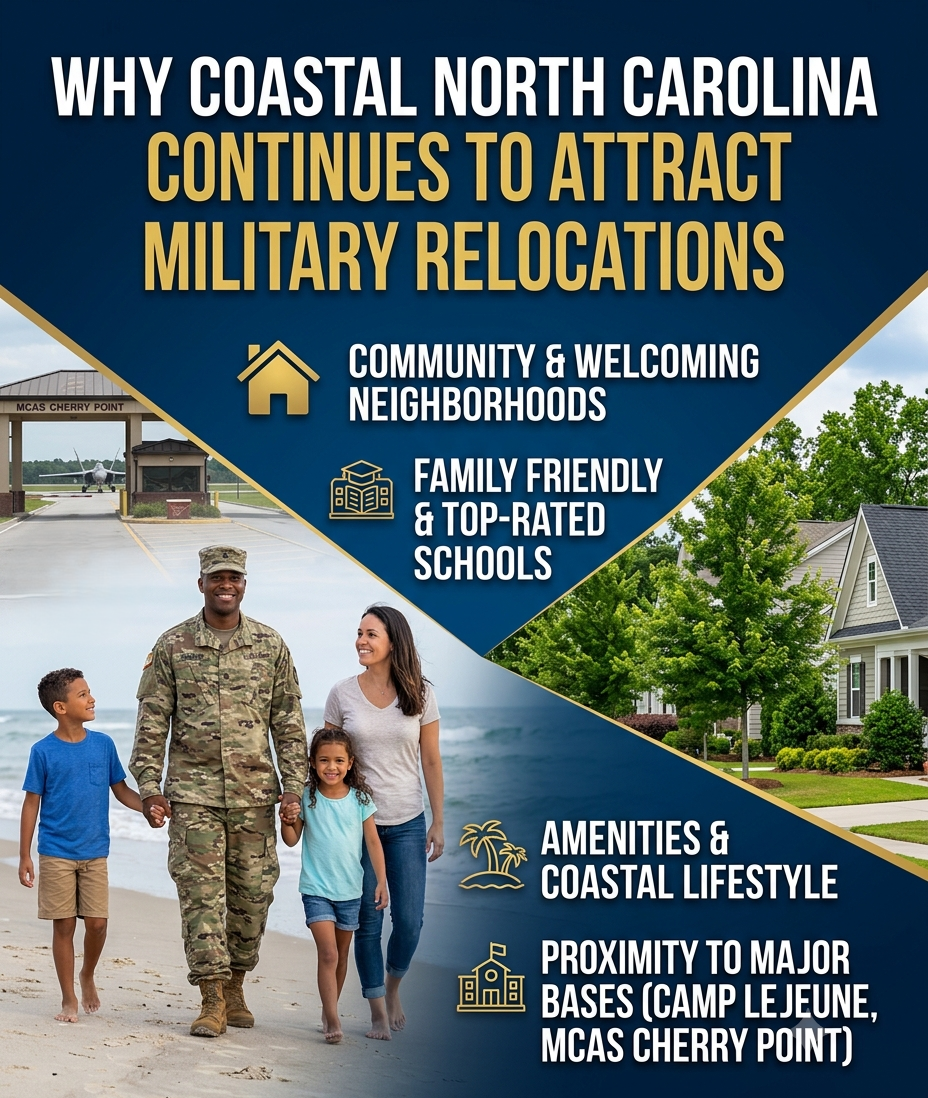
Why Coastal North Carolina Continues to Attract Military Relocations

Few buyer pools shape coastal North Carolina real estate the way military families do. Camp Lejeune, Marine Corps Air Station New River, Fort Liberty (formerly Fort Bragg), Seymour Johnson, and the Coast Guard installations along the coast together send a steady, year-round wave of buyers into this region. The relocation cycle does not slow down for the broader market the way other buyer pools do, and in 2026 it is still one of the most consistent demand engines on this coast.

Here is why the pattern continues, where military families are landing, and what makes coastal NC a practical, long-term fit for service members and their families.

The Reasons the Pattern Holds

Proximity to Major Installations

Camp Lejeune and MCAS New River sit just north of the Wilmington area. Coast Guard stations operate up and down the coast. Fort Liberty is a long drive west, but the trip is doable for families who want a coastal lifestyle and a paying spouse who can work remotely. Service members stationed at Lejeune routinely look for homes in Jacksonville, Sneads Ferry, Holly Ridge, Hampstead, and even further down into the Wilmington area.

Lifestyle Match

Military families tend to want the same coastal qualities other buyers want — beach access, boating, outdoor recreation, decent schools, and a community that feels rooted. Coastal NC delivers on all of that without the cost-of-living shock of Southern California or coastal Virginia.

VA Loan Strength

The VA loan continues to be one of the most powerful financing tools on the market. No down payment requirement, no PMI, competitive rates, and seller-paid closing cost flexibility make it a real advantage in markets where every dollar matters. Most coastal NC sellers are familiar with VA contracts, and lenders in this region close them on schedule.

Resale-Friendly Markets

Service members move on a schedule the broader market does not control. A home that resells reliably is a real asset when orders change. The coastal NC markets military buyers tend to choose — Jacksonville, Sneads Ferry, Holly Ridge, Hampstead, parts of Wilmington — have established turnover and consistent demand, which makes the eventual exit easier.

Where Military Families Are Actually Landing

Jacksonville

The Jacksonville market is the most direct fit for Camp Lejeune and MCAS New River families. Short commute, established military-friendly inventory, strong VA-loan acceptance, and price points that work on a single income. Neighborhoods around the base get heavy demand, and resale moves quickly when orders change.

Sneads Ferry

Sneads Ferry gives families a different version of the same proximity story — slightly more coastal feel, more water access, more single-family options on land, and an easy commute to the base. Boating families and outdoor-recreation families lean Sneads Ferry over Jacksonville.

Holly Ridge

For families willing to drive a little further for newer construction and lower price-per-square-foot, Holly Ridge has become one of the steadier military-favored markets on this corridor. New construction inventory, proximity to Topsail Island, and a reasonable Lejeune commute have kept the demand strong.

Hampstead

Families who want a Wilmington-side lifestyle with reasonable access to the base often land in Hampstead. Better schools, ICW access, and a slightly longer commute trade-off make sense for families who can take a longer drive in exchange for the community feel.

Wilmington

Wilmington itself attracts a meaningful share of senior enlisted, officer, and post-service families. The commute is longer, but the lifestyle is fuller, and many service members planning to retire on the coast use a Wilmington-area purchase as the long-term home they will keep after their service ends.

Why Coastal North Carolina Continues to Attract Military Relocations

What Makes a Home VA-Loan Friendly

Condition

VA appraisers and inspectors look for habitability items. Roof condition, peeling paint on older homes, exposed wiring, plumbing issues, missing handrails, and water intrusion can all create repair requirements before closing. Sellers who are open to addressing these items make their listings significantly more attractive to military buyers.

Pricing Realism

VA loans appraise like any other loan. A seller who overprices a home and assumes the VA buyer will simply absorb a gap usually loses the contract. Pricing within the comparable-sales range matters here.

HOA Acceptance

Some condo projects require VA approval before a VA loan can close on a unit. Buyers and sellers should confirm project approval status early in the process, not the week before closing.

The Spouse Factor

The buyer search rarely belongs to the service member alone. Military spouses are often the primary driver of the home decision, especially in dual-income households or households where the spouse works remotely. Schools, the daily commute for the spouse, walkable amenities, and the longer-term community feel often outweigh the service member's preference for proximity to the base.

This is the quieter reason markets like Hampstead, Holly Ridge, and Sneads Ferry continue to pull families further from the gate. The spouse's daily quality of life is doing more of the deciding than the on-base commute.

Resale Strategy

Military families should plan the eventual resale before they buy. Two or three years can pass quickly between orders, and the home that was easy to fall in love with at purchase needs to be easy to sell at exit. That means choosing a community with strong school assignment, a reasonable HOA, predictable inventory turnover, and a price point that matches the broader buyer pool — not just the next military buyer.

Working with an agent who understands PCS timing, VA loan logistics, and how to position a coastal home for both military and civilian buyers makes the exit far smoother when it comes.

Key Takeaways

  • Camp Lejeune, MCAS New River, and the broader military presence make coastal NC one of the most consistent military relocation markets in the Southeast
  • Jacksonville, Sneads Ferry, Holly Ridge, Hampstead, and Wilmington each serve a different slice of the military buyer pool
  • VA loans give military buyers real leverage, and most coastal NC sellers and lenders are well-versed in the process
  • VA appraisals and inspections look for specific condition items — sellers who address them up front close more deals
  • Spouses often drive the home decision more than the on-base commute, which is why families settle further from the gate than expected
  • The resale plan should be part of the purchase plan — pick communities with broad buyer appeal, not just military demand

Frequently Asked Questions

Are VA loans available for second homes or investment properties?

No. VA loans are reserved for the buyer's primary residence. Service members buying a vacation home or rental property would use conventional financing for that purchase.

Can a military buyer use a VA loan more than once?

Yes. The VA loan entitlement can be restored and reused, and many service members use it multiple times across a career. The specifics depend on remaining entitlement and timing. Lenders who specialize in VA loans handle this routinely.

How quickly can a VA loan close in coastal NC?

Most VA loans in this market close in roughly 30 to 45 days from contract, in line with conventional timelines. Sellers familiar with VA contracts treat them similarly to any other financed offer.

Which coastal NC towns are most welcoming to military families?

Jacksonville, Sneads Ferry, Holly Ridge, and Hampstead all have established military-family communities, military-friendly schools, and businesses that recognize the service. Wilmington has a strong military presence as well, particularly among retiring and post-service families.

Should I rent or buy if I am only stationed here for a few years?

The answer depends on the specific market, the price point, and the family's plans. In stable coastal NC markets with predictable resale, buying often beats renting on a three-year horizon. Buyers who may need to leave quickly should weigh the closing costs and the risk of a soft selling window against the equity build.

Posted in For Buyers
June 19, 2026

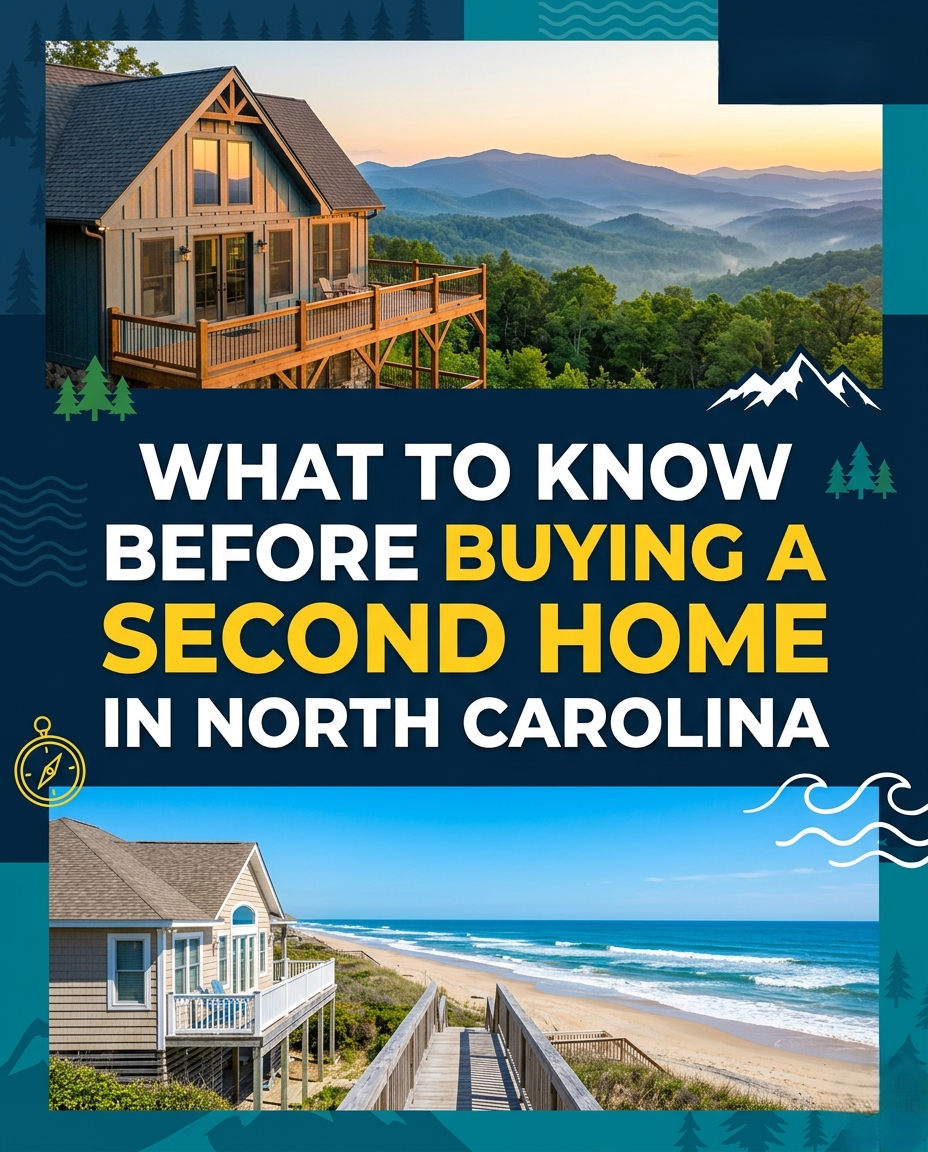
What to Know Before Buying a Second Home in North Carolina

A second home on the North Carolina coast is one of those purchases that sounds simple until you start the math. The mortgage rules, the insurance picture, the tax treatment, and the maintenance reality all behave differently than the primary residence you already own. Buyers who walk in with realistic expectations come out of the process happy. Buyers who do not tend to learn things in the first year they would rather have learned before closing.

Here is the honest checklist after years of helping buyers move into second homes from Wrightsville Beach down through the Brunswick beaches.

Financing a Second Home Looks Different

Conventional second-home loans typically require a higher down payment than a primary residence — usually 10 to 20 percent, depending on the lender and the buyer's profile. Rates also tend to run modestly higher than primary-home rates. Buyers should plan for that in their pre-approval conversation, not at the closing table.

The lender will ask how the property will be used. There is a meaningful underwriting difference between a true second home, which is for the owner's personal use, and an investment property that will be rented out most of the year. Misrepresenting that distinction is a problem. Buyers who plan to short-term rent the home should ask their lender for a non-owner-occupied or investment loan from the start.

The Insurance Picture on the Coast

Insurance for a second home on the North Carolina coast is its own conversation. You will likely need a homeowners policy, a separate wind and hail policy, and often flood insurance. Each is priced separately, and each has its own deductible. A buyer touring a beautiful Wrightsville Beach condo should run insurance quotes during due diligence, not the week before closing.

Second homes occupied part-time also have additional underwriting rules. Some carriers require water shut-off, freeze monitoring, or property checks during long absences. Read the binder. The cost of skipping a freeze inspection is real.

Property Taxes and Income Tax

Property Taxes

North Carolina property taxes on a second home are not eligible for the homestead exemption that applies to a primary residence. Tax bills are based on county and municipal rates and the assessed value. Buyers comparing Oak Island waterfront with Bald Head Island, for example, should run the full annual tax bill on each candidate, not the headline rate.

Income Tax

If you rent the home, the IRS rules around personal use, days rented, and deductible expenses get specific quickly. Renting fewer than 14 days a year keeps the rental income tax-free under current rules, but most second-home owners exceed that threshold once they list on Airbnb or a vacation rental manager. Talk to a CPA before you list.

Short-Term Rental Rules Are Local

Short-term rental rules differ from town to town across the coast. Some Brunswick beach towns are friendly to weekly vacation rentals. Wrightsville Beach has tightened its rules over the last several cycles. Some communities and condo HOAs prohibit short-term rentals entirely.

Always confirm the town ordinance and the HOA or condo association rules in writing before relying on rental income to justify the purchase. A buyer who counts on rental cash flow that the HOA prohibits will be unhappy by month three.

Maintenance Is Not Optional

Salt air, sun, wind-driven rain, and high humidity are relentless on coastal homes. Exterior paint, decks, screens, HVAC components, and appliances do not last as long here as they do inland. A second home that sits empty most of the year still ages, and in some ways ages faster than a home that is lived in.

Plan for a real maintenance budget — usually 1 to 3 percent of the home's value annually, depending on the build, the proximity to open water, and whether the home is rented. Identify a property manager, an HVAC company, and a handyman before you close, not after.

What to Know Before Buying a Second Home in North Carolina

What Use Are You Actually Buying?

One question separates the second-home buyers who love the purchase from the ones who quietly resent it: how many weeks per year will you actually use this home?

If the answer is six or fewer, a second home may be the wrong vehicle. A weekly rental for those weeks is often cheaper than ownership over a five-year horizon. If the answer is twelve or more, ownership starts to make real sense, and the math typically favors a second home over hotel and rental costs.

For buyers between those numbers, the right answer often involves a rental-friendly community and a strong property manager so the home generates income during the weeks you do not use it. Markets like Holden Beach and Sunset Beach have mature rental ecosystems that can support that model.

Resale Liquidity

Not all second-home markets sell with the same speed. Established beach markets with strong rental demand and clear inventory categories tend to trade more reliably than niche or remote sub-markets. If you ever expect to need to sell quickly, buy the kind of home and the kind of location that will be liquid.

That does not mean you cannot buy a quieter market. It means going in with eyes open about how long it might take to find the next buyer when you are the seller.

Key Takeaways

  • Second-home loans require higher down payments and slightly higher rates than primary-home loans
  • Insurance on coastal NC second homes typically combines homeowners, wind and hail, and flood policies — quote them during due diligence
  • Property taxes do not get the homestead exemption a primary residence receives in North Carolina
  • Income tax rules for rental use kick in fast — work with a CPA before listing the home
  • Short-term rental rules vary by town and by HOA — confirm in writing before you commit
  • Maintenance on the coast is relentless and unavoidable — budget for it and line up a property manager early
  • Match the home to how many weeks you will actually use it — rent when use is low, own when use is high, rent it out when you fall in between
  • Plan for resale before you buy — choose markets with established liquidity unless you can hold long-term

Frequently Asked Questions

Can I use rental income to qualify for my second-home mortgage?

It depends on the loan program. A second-home loan typically does not allow rental income to qualify the borrower because the property is treated as personal use. An investment property loan can use projected rental income, but at a higher rate and tougher underwriting. Ask your lender to compare both before you choose.

How much should I budget for ongoing costs beyond the mortgage?

A useful rule of thumb is 4 to 6 percent of the purchase price per year for property taxes, insurance, HOA dues, maintenance, and management combined. Coastal homes lean toward the higher end of that range. Run the actual numbers on a specific property rather than relying on the rule of thumb.

Is a condo a smarter second-home buy than a single-family beach house?

It depends on use case and tolerance for HOAs. A condo offers lower individual maintenance and easier lock-and-leave ownership. A single-family beach house gives more privacy and rental flexibility but more direct exposure to maintenance and storm prep. Both work — they just match different buyer profiles.

Are short-term rentals still profitable in coastal North Carolina?

In the right town, yes — especially in markets with a developed vacation rental ecosystem and predictable summer demand. Holden Beach, Sunset Beach, Oak Island, and Topsail-area properties continue to perform when priced and marketed well. Returns depend heavily on location, condition, and the property manager.

When is the best time of year to buy a second home on the coast?

Fall and winter tend to be the most negotiable seasons for buyers. Spring inventory rises but so does competition. Investors and rental-focused buyers often try to close before the summer season so the home is in service for the highest-demand weeks. Personal-use buyers can shop the entire year.

Posted in For Buyers
June 18, 2026

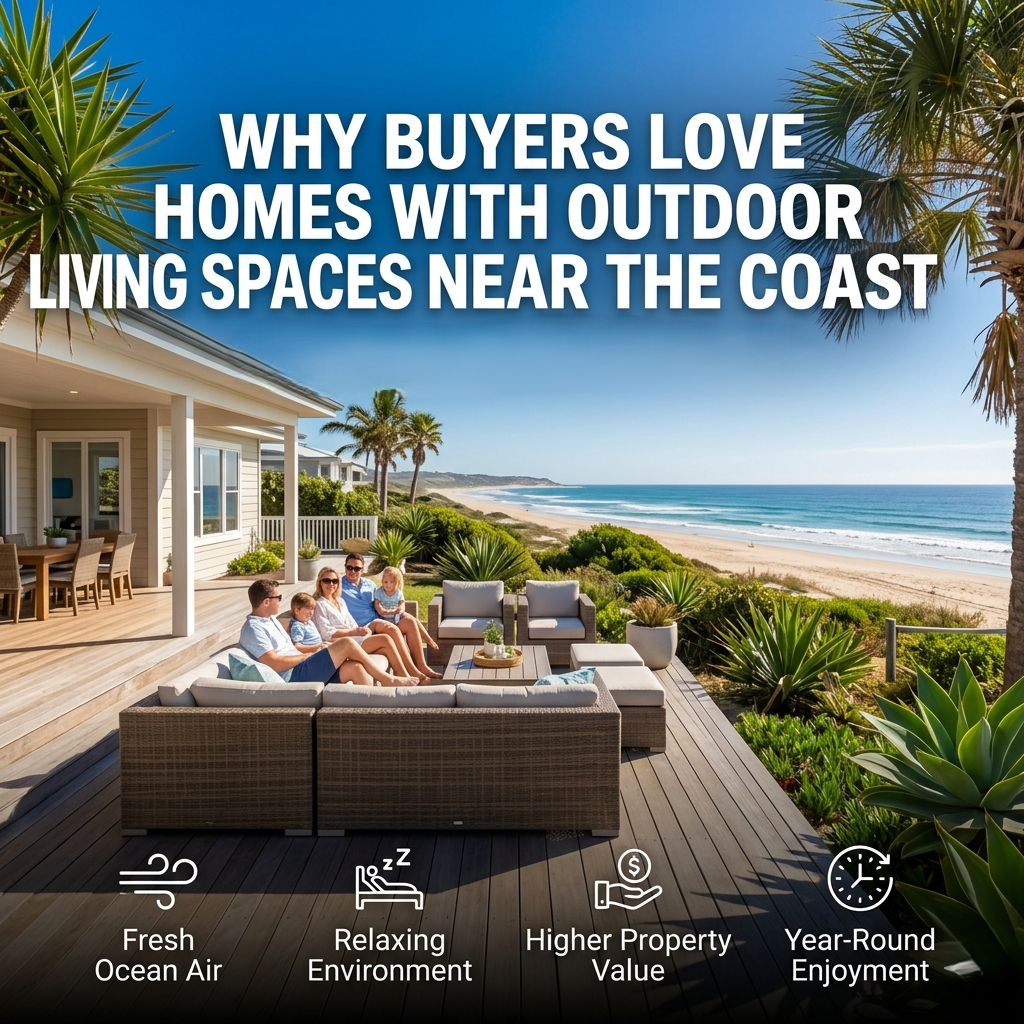
Why Buyers Love Homes With Outdoor Living Spaces Near the Coast

The single most undervalued part of a coastal North Carolina home is also the part buyers actually live in: the porch, the deck, the screened room, the outdoor kitchen, the firepit, the dock. After thirty years showing homes from Wilmington down through the Brunswick beaches, I can tell you the homes that move fastest and sell highest are the ones that take outdoor living seriously. The homes that struggle are usually the ones that treat the porch as an afterthought.

Here is why outdoor living matters so much in this market, what buyers are actually looking for, and where the value lands.

The Climate Is the Reason

Coastal North Carolina gives owners a long, livable outdoor season. April through November is generally porch and deck weather. Summer evenings are warm but breezy on the coast, fall stays comfortable well into November, and even the milder winter weeks invite a fire pit and a sweater. Owners who do not have a real outdoor space end up watching that climate from inside the house.

Buyers tour homes here with a specific question in mind, whether they realize it or not: where am I going to spend my evenings? If the answer is not obvious within the first walk-through, the home loses points.

What Buyers Want

Screened Porches

The screened porch is the single highest-value outdoor feature in coastal NC. Mosquitoes and gnats are part of life here. A screened porch turns the marginal summer evenings into the best ones. Buyers will pay for a well-built screened porch — full ceiling fans, durable flooring, weather-resistant furniture, ideally a clear path to the kitchen for serving food.

The screened porch that is plumbed for an outdoor sink, wired for a TV, and large enough to seat a real dinner table is a deal-closer. The screened porch that is six feet deep and barely fits two rocking chairs is forgotten by the time the buyer leaves.

Outdoor Kitchens

A real outdoor kitchen — built-in grill, side burner, sink, beverage fridge, prep counter under a roof — is a luxury feature that earns its place in this market because the climate supports using it. Buyers cook outside here from April through October, and a real outdoor kitchen extends that meaningfully.

Not every home needs a full outdoor kitchen. Many do better with a covered grilling area and a serving counter. The point is that the home has a logical outdoor cooking plan, not that it has the most expensive appliance package on the block.

Pools and Hot Tubs

Pools matter more in some submarkets than others. In Wrightsville Beach, Carolina Beach, and the higher-end Wilmington luxury market, a well-built pool is a meaningful selling feature. In smaller-lot beach towns and master-planned communities with shared pools, an individual pool is often optional and sometimes a maintenance liability for the buyer.

Hot tubs are easier — lower cost, lower maintenance, easier to remove if a buyer does not want one. They tend to be a small positive across the market.

Fire Pits and Outdoor Fireplaces

A real outdoor fireplace or a built-in fire pit extends the season into the cooler months and turns a deck into a destination. Gas fire pits with a real flame, a real surround, and seating around them are one of the highest-impact additions a homeowner can make for the cost.

Decks and Docks

Waterfront and water-access buyers care about the dock as much as they care about the kitchen. A well-built dock with a covered slip, a boat lift, and a sitting area can change the value of the entire property. Buyers searching Oak Island or Hampstead waterfront inventory often filter their search around the dock first and the house second.

Inland from the water, the back deck with a clear view, comfortable seating, and a real path to the yard does similar work for the buyer's imagination.

Why Buyers Love Homes With Outdoor Living Spaces Near the Coast

What Sellers Should Know

Staging Matters Even More Outside

An empty porch is invisible. A porch with a real seating arrangement, fans running, plants in pots, and a small table set for two becomes the photo that sells the listing. Same for the deck, the dock, and the outdoor kitchen. Sellers who skip the outdoor staging leave money on the table.

Maintenance Reads on Camera

Salt, sun, and humidity are hard on outdoor wood, screens, and metal hardware. A coastal porch that has not been refreshed in a few years reads as deferred maintenance in photos. A quick pressure wash, a fresh coat of paint or stain, new cushions, and new screens can turn a tired porch into a feature.

The First Photo

For waterfront and high-amenity outdoor homes, the first listing photo should be the outdoor space, not the front of the house. Buyers click on what they want to feel, and what they want to feel here is the porch, the dock, or the view.

Submarket Notes

Beach Towns

Oceanfront and oceanview homes lean on rooftop decks, multiple porch levels, and outdoor showers. The outdoor shower is small in dollar terms and large in buyer perception.

Wilmington Proper

Wilmington historic homes lean on wraparound porches and rear gardens. Mayfaire-area, Landfall, and other newer construction homes lean on covered patios, outdoor kitchens, and saltwater pools.

Brunswick County Master-Planned Communities

Communities like Brunswick Forest, Compass Pointe, and St. James Plantation lean on screened porches, fenced backyards, and proximity to community amenities. Owners who add a real outdoor living investment to a base-model home often capture more of that investment at resale than equivalent indoor improvements.

Hampstead and the Topsail Corridor

Boating-focused buyers prioritize the dock, the boat lift, and the deck overlooking the water. The indoor kitchen often matters less than the boat slip.

The ROI Picture

Outdoor living investments tend to recover well at resale in coastal NC. A well-built screened porch addition, a quality outdoor kitchen, a refreshed deck and dock, and a thoughtful fire pit area routinely return a meaningful portion of their cost when the home sells, and just as importantly, they shorten time on market. Buyers who can picture their evenings on the porch tour the home with a different mindset than buyers who cannot.

The trick is to build quality and avoid overbuilding for the price point. A $40,000 outdoor kitchen on a $400,000 home rarely earns back its cost. A $10,000 screened porch refresh on a $600,000 home almost always does.

Key Takeaways

Outdoor living is the highest-leverage feature category in coastal North Carolina homes because the climate gives owners eight or nine months of usable outdoor time a year, and buyers tour with the question of where they will spend their evenings. Screened porches, real outdoor kitchens, fire pits and outdoor fireplaces, quality docks and decks, and saltwater pools each pull weight in the markets where they fit. Sellers who stage the outdoor space, maintain it well, and lead the photo grid with it consistently outperform sellers who treat the porch as an afterthought. Buyers who care about how a coastal home actually lives should look past square footage and pay close attention to what is outside the back door. Outdoor space is not a finish detail in this market. It is the room people use.

Posted in For Buyers