Wilmington NC Real Estate Blog | Market Trends & Relocation Guides

Stay informed on the Wilmington, NC real estate market with our latest blog updates. From detailed relocation guides and neighborhood spotlights to expert investment strategies and local market forecasts, we provide the essential information you need to navigate the coastal Carolina lifestyle with confidence. Explore our recent posts to start your journey toward finding the perfect home in the Port City.

June 17, 2026

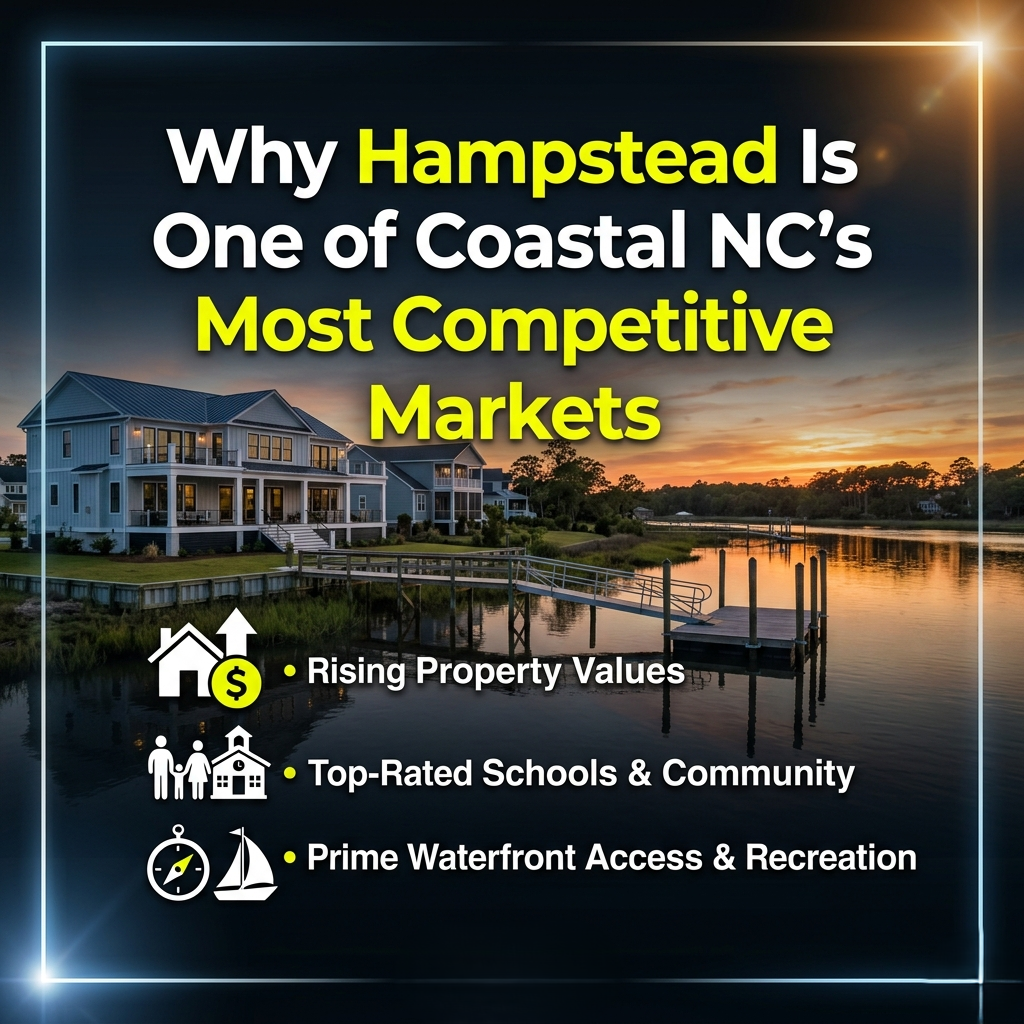
Why Hampstead Is One of Coastal NC's Most Competitive Markets

If you have shopped the Wilmington area in the last two years, you have noticed that Hampstead moves differently than its neighbors. Listings hit the market and contract quickly, multiple offers still happen on the right house, and the pricing has held even as inventory has loosened in other parts of the coast. Hampstead is doing something the rest of the Wilmington area is not, and the reasons are stacking on top of each other.

Here is what is actually making Hampstead one of the most competitive markets in coastal NC right now.

The Location Sweet Spot

Hampstead sits in Pender County along Highway 17, between Wilmington to the south and Surf City and Topsail Island to the north. That position gives buyers something no other Wilmington-area market quite matches: a fifteen-minute drive to the beach in one direction and a thirty-minute drive to downtown Wilmington in the other.

For buyers who want both — coastal lifestyle and city access — Hampstead is often the answer. Leland gives buyers the Wilmington commute. Surf City and Topsail give buyers the beach. Hampstead is one of the few markets that puts both within reasonable reach from the same driveway.

Waterfront Access That Buyers Will Pay For

Hampstead's waterfront story is bigger than people realize. The Intracoastal Waterway runs the length of the area, and several creeks and inlets give buyers boat access without paying oceanfront prices. Hampstead waterfront homes have been one of the most consistently in-demand inventory categories in coastal NC for several years.

Boating buyers searching the broader Wilmington area routinely end up in Hampstead because of the combination of dock-able water, reasonable pricing, and quick access to open water at Topsail Inlet or down the ICW. Buyers who would have settled for water view in Wilmington proper can often land actual water access in Hampstead.

Schools

Pender County Schools serve Hampstead, and the local elementary, middle, and high schools have a strong reputation among relocating families. Topsail High School in particular gets named regularly by buyers as a reason they chose Hampstead over alternatives.

Combined with proximity to private and charter options, Hampstead has become a real consideration for family buyers who care about school assignment as much as house features. That demographic pulls inventory off the market quickly during the spring buying season.

Pricing That Still Makes Sense

Hampstead is not cheap. It is, however, still meaningfully cheaper than waterfront Wrightsville Beach, Carolina Beach, or downtown Wilmington luxury inventory at the same square footage and similar water access. Buyers who price-shop Wilmington proper, recoil at the number, then look north often find Hampstead delivers the lifestyle for less.

The Pender County tax structure adds to the math. The combined tax bill on a Hampstead home is typically lower than the equivalent home inside Wilmington city limits, and the savings show up monthly.

The Buyer Pool Is Broad

Wilmington-Area Move-Ups

Families who outgrew their starter home in Wilmington often look north to Hampstead for more space, larger lots, and water access they could not afford closer in.

Out-of-State Relocations

Buyers relocating from the Northeast, the Midwest, and increasingly from Florida land in Hampstead when they want a coastal lifestyle plus quick access to a larger city for medical infrastructure, airport access, and dining variety.

Boating and Outdoor-Recreation Buyers

The waterfront access is enough on its own to drive a meaningful share of demand. Boaters from across the region target Hampstead specifically.

Military Families

Hampstead is on the southern reach of the Camp Lejeune commute. Families willing to drive a little longer for better schools, better waterfront access, and a more relocation-friendly housing stock often land here.

Four different buyer pools competing for the same inventory is why Hampstead listings move quickly.

The Inventory Reality

Hampstead's land is finite. Highway 17 is the spine, the ICW is the eastern boundary, and the developable corridor is narrower than it looks on a map. New construction is meaningful but constrained, and resale inventory has stayed tight relative to demand.

That supply-demand imbalance is the simplest explanation for why Hampstead has remained competitive even as inventory has loosened in other coastal NC markets. Builders are delivering homes here, but not fast enough to flood the market.

Why Hampstead Is One of Coastal NC's Most Competitive Markets

What Could Slow It Down

Two things would change the Hampstead picture. First, traffic. The Highway 17 corridor has rush-hour pinch points that get worse every year. State infrastructure investment is being planned, but a fix is years out. Second, insurance trends. Hampstead waterfront homes face the same wind and flood underwriting pressure as other coastal NC waterfront markets, and any sharp shift in availability or pricing would affect the carrying-cost math.

Neither is breaking the market today. Both are worth tracking.

Who Should Be Shopping Hampstead

Hampstead fits buyers who want the coastal lifestyle with city access, families who care about Topsail-area schools, boaters who want water access without paying for oceanfront, and relocating buyers from out of state who want a market with active inventory and broad buyer interest at resale. Buyers who want a quiet, slower small-town feel may find Hampstead's growth pace a poor fit and should look at Burgaw or Surf City instead.

Key Takeaways

  • Hampstead's location between Wilmington and the Topsail-area beaches gives buyers fast access to both a city and the coast from one address
  • The Intracoastal Waterway and creek system make waterfront and boat-access homes a defining feature of the market
  • Pender County Schools, particularly the Topsail-area assignments, draw a strong family buyer pool
  • Pricing is meaningfully lower than Wilmington proper or Wrightsville Beach for comparable square footage and water access
  • Four buyer pools — local move-ups, out-of-state relocations, boating buyers, and military families — compete for the same inventory
  • Land along the developable corridor is finite, which keeps supply tighter than demand
  • Traffic on the Highway 17 corridor and coastal insurance trends are the two factors most likely to shape Hampstead's next chapter
Posted in Market Updates
June 16, 2026

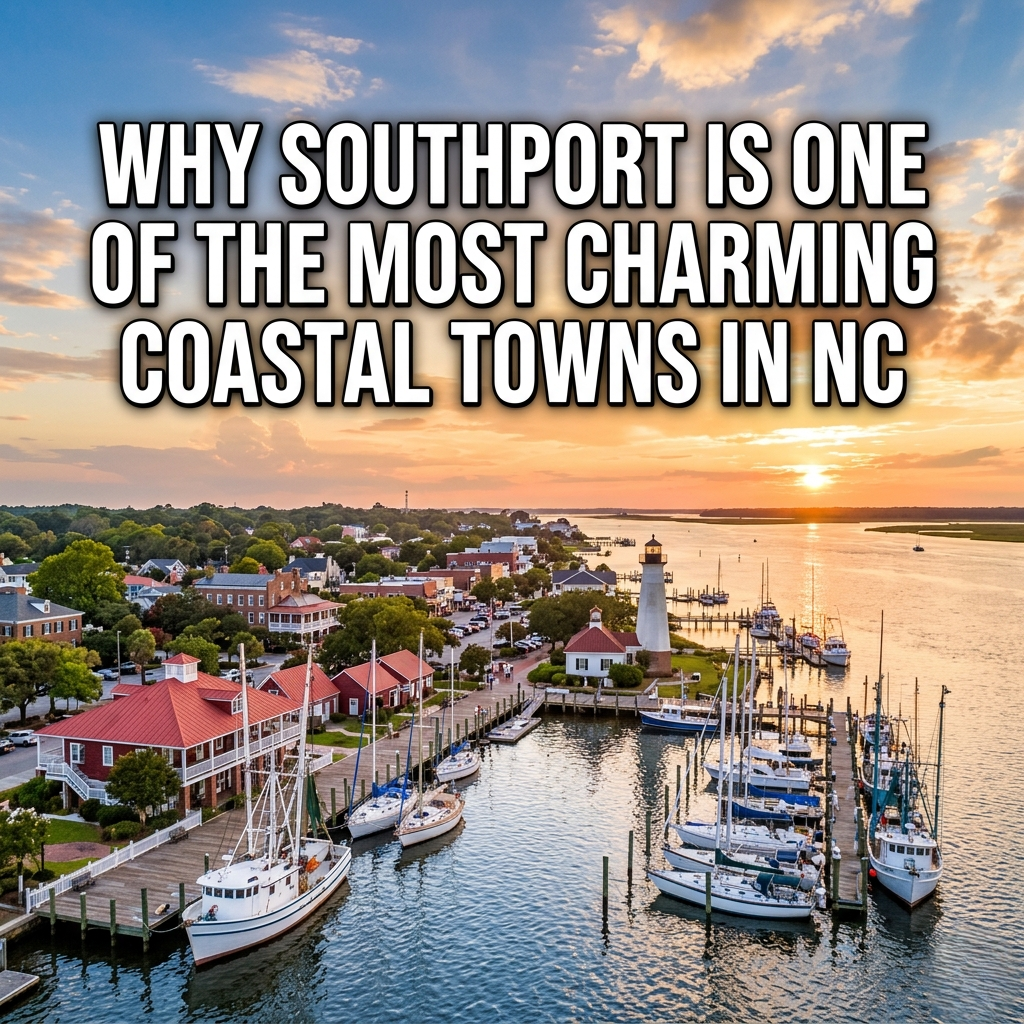
Why Southport Is One of the Most Charming Coastal Towns in NC

Some coastal towns try hard to be charming. Southport does not have to. The river is right there, the live oaks shade the streets, the porches actually get used, and the working waterfront still has shrimp boats coming in. For buyers who want a coastal North Carolina town that feels like a place people have lived for two hundred years — because they have — Southport sits at the top of a short list.

Here is what makes Southport different from the other Brunswick County coastal markets, and why it keeps showing up on buyer shortlists from across the country.

The Setting

Southport sits at the mouth of the Cape Fear River, where the river meets the Atlantic. The town overlooks the deepwater channel that brings cargo ships up to Wilmington, with the Oak Island Lighthouse blinking across the water on clear nights. Bald Head Island is fifteen minutes away by ferry. Oak Island is a short bridge crossing. The Intracoastal Waterway runs right past the town docks.

You can stand on the riverfront at Waterfront Park and watch sailboats, shrimp boats, and the Bald Head ferry move in front of you while a southerly breeze comes off the water. There is a reason film crews keep coming back to Southport — the visual is real.

The Historic Heart

The Southport historic district is the town's calling card. Tree-lined streets, restored 19th-century cottages, gracious wraparound porches, and walking distance to most of what residents need. Howe Street and the surrounding blocks deliver a downtown that you can actually live in without moving the car.

The architecture leans coastal Carolina cottage and Lowcountry — heart pine floors, deep porches, transoms, and tin roofs. Many of the homes have been carefully restored and the rest are protected by historic district guidelines, which is part of why the streetscape has not lost its character. Buyers who want to live in something that was already there in 1900 can usually find it within a few blocks of the waterfront.

Why Southport Is One of the Most Charming Coastal Towns in NC

The Lifestyle

Walking, Biking, and Front Porches

Southport is one of the most walkable coastal towns in the Carolinas. The grocery, the post office, the coffee shops, the restaurants, the riverfront, and the marina all sit within a tight footprint. Most residents end up walking or biking far more than they drive once they settle in. Front porches are not decorative here — they get used.

Boating

Southport is a boating town. The town marina, deepwater access to the Cape Fear and the Atlantic, easy access to the ICW, and a handful of yacht clubs make it one of the more practical year-round boating locations on the Carolina coast. Many residents own boats and use them.

Festivals and Events

The town's Fourth of July Festival is the biggest event on the calendar and one of the largest July 4 celebrations in the state. Beyond July 4, the calendar includes the Wooden Boat Show, regular concerts at Franklin Square Park, the Christmas by the Sea events, and a steady run of farmers' markets and gallery walks. None of it is on the scale of Wilmington's events, but most of it is walkable from anywhere in town.

The Real Estate Profile

Historic District Cottages

The character buys in Southport are the cottages and small Victorian homes in the historic district. Restored, walkable, and protected by district rules, they hold value extremely well. Inventory is thin because owners rarely sell, and pricing reflects the scarcity.

Waterfront and Riverfront Homes

Waterfront and riverfront homes around the town and just outside it are the next tier. Direct dock access, river views, and proximity to the marina drive the price. The luxury inventory in Southport almost always sits on or near the water.

St. James Plantation

Just outside Southport proper, St. James Plantation is one of the largest and most popular master-planned communities in the area. Multiple golf courses, a private beach club at Caswell Beach, marinas, an extensive amenity center, and a wide range of single-family and townhome inventory make it one of the most-searched communities for relocating buyers. St. James is what many buyers ultimately choose when they want Southport access plus full country-club amenities.

Condos and Townhomes

For buyers who want walkable Southport without the maintenance of a historic single-family home, Southport condos and townhomes near the waterfront are the easiest entry point. Lock-and-leave ownership, lower maintenance, and the same downtown access make them popular with retirees and second-home buyers.

Who Is Moving to Southport

The Southport buyer skews toward retirees, second-home buyers, and remote-eligible professionals who have done their research. This is not a casual coastal-shopping market. Buyers who land here usually toured Wilmington, Wrightsville, Bald Head, and Oak Island first and chose Southport for the small-town feel they could not find in the others.

The buyer profile keeps the community stable, the participation in local events high, and the streets feeling like a real neighborhood rather than a turnover zone.

What to Know Before You Buy

Two things to plan for. First, inventory in the historic district is thin and stays thin. Buyers who find the right home should be ready to move on it. Second, insurance and flood considerations apply to coastal Brunswick County in general — wind, hail, and flood policies should be priced during due diligence, not after the offer is accepted. Neither is a deal-breaker, but both deserve attention.

Buyers who want Southport's lifestyle without the historic district's inventory constraints often end up in St. James Plantation, in newer construction just outside town, or in waterfront condos that came online in the last two cycles. The right answer depends on whether the walkable downtown feel is the priority or whether amenities and newer build win the call.

Key Takeaways

Southport is one of the most genuinely charming coastal towns in North Carolina because the town has not had to manufacture the charm. The riverfront, the live oaks, the historic district, the working waterfront, the deep boating culture, and the walkable downtown have all been there long enough to feel permanent. Buyers can choose between the rare historic district cottage, a waterfront home, the country-club amenities of St. James Plantation, or a low-maintenance condo near the marina. Whatever the choice, Southport rewards buyers who actually want a small town, who value walkability and water access, and who want a place where neighbors still know each other's names. For a particular kind of coastal buyer, no other Brunswick County market quite competes with it.

Posted in Carolina Lifestyle
June 15, 2026

Why Buyers Are Looking Beyond Wilmington for More Affordable Coastal Living

Wilmington has done what every popular city eventually does to its own affordability story. Prices in the urban core, midtown, and the established beach corridors have run hard for several years. Buyers who would have bought in Wilmington proper five years ago are not giving up on the coast — they are widening the search radius. In 2026 that radius has stretched in every direction, and the value is showing up in some predictable, and some surprising, places.

Here is where buyers are actually finding more home, more land, or a lower carrying cost, and what they are trading off when they do.

What Buyers Are Trying to Solve

Most of the buyers leaving Wilmington proper are not unhappy with Wilmington. They are responding to math. A 1,900-square-foot home a few miles from the river that traded for $325,000 in 2019 is now in the mid-$500,000s, and the comparable new construction in the same school district pushes into the high $600,000s. Insurance, taxes, and HOA assessments have all climbed alongside it.

The result: buyers are willing to drive ten or fifteen extra minutes if it gives them either a larger home for the same money, the same home for less money, or a markedly lower monthly carrying cost. Coastal North Carolina has several markets that deliver on at least one of those.

The Brunswick County Side

Leland

The most popular alternative for Wilmington buyers continues to be Leland. Brunswick County's tax rate, the wide selection of amenity communities, the strong new-construction pipeline, and the easy bridge access to downtown Wilmington make it the default first stop for the price-conscious Wilmington buyer. Buyers can land more square footage, often a newer build, and a lower monthly tax bill without giving up reasonable access to the city.

Master-planned communities like Brunswick Forest and Compass Pointe routinely beat Wilmington proper on cost per square foot at the mid- and upper-mid price points.

Shallotte

For buyers willing to push further west, Shallotte offers a meaningful discount per square foot, the shopping and medical infrastructure of a small Brunswick County hub, and access to the south Brunswick beaches within twenty minutes. Buyers from the Northeast and Midwest tend to react well to Shallotte because it feels like a real town with a downtown rather than a strip-mall commute.

Why Buyers Are Looking Beyond Wilmington for More Affordable Coastal Living

The Pender County Side

Hampstead

Hampstead sits between Wilmington and Surf City and has quietly become one of the most competitive markets on the north side. Buyers like it because they can be at a Wilmington office in roughly thirty minutes, at Topsail or Surf City beaches in fifteen, and into a home on more land for less money than a comparable lot inside Wilmington city limits. Hampstead's waterfront opportunities along the ICW are part of what keeps it on the boating-buyer radar.

Burgaw

For the buyer who wants real space, a yard, and a small-town feel within reach of Wilmington, Burgaw has been one of the quieter winners of the last two years. Acreage that does not exist near Wilmington still trades at fair numbers here. The trade-off is a longer drive — Burgaw is about thirty to forty minutes from most of Wilmington — and a meaningfully different lifestyle.

The Beach Town Trade-Off

Buyers chasing affordability sometimes assume the beach towns are out of reach by default. That is not always true. Communities like Oak Island, Holden Beach, and parts of Sunset Beach can still deliver coastal access at a more reasonable carrying cost than Wrightsville Beach or downtown Wilmington luxury inventory.

The trade-off is usually distance from the larger city, narrower medical and shopping infrastructure, and a higher reliance on seasonal economies. For retirees and remote workers, that is often a feature rather than a flaw.

What Affordability Actually Looks Like in 2026

Across the alternative markets, the savings show up in three places. First, the purchase price itself: a comparable home is often 10 to 25 percent cheaper outside the Wilmington core. Second, the monthly tax bill: Brunswick and Pender County rates plus the absence of municipal Wilmington taxes can save several hundred dollars a month at the same home value. Third, insurance: homes set back from the water and inside a less storm-exposed zone often quote lower wind and hail premiums than the equivalent home a few miles closer to the coast.

Buyers who add those three savings together often find that the same monthly budget unlocks a substantially better house in Leland, Hampstead, or Shallotte than it would have in midtown Wilmington.

Where the Limits Are

Affordability comes with a cost in time and convenience. The further a buyer moves from Wilmington's core, the longer the commute to downtown, the further from MedAc-level medical infrastructure, and the smaller the dining and retail options. Buyers should be honest about how often they actually need those resources before they trade away access for square footage.

The other limit is school assignment. Wilmington-area buyers often have strong opinions about specific schools, and pushing into Brunswick or Pender counties means evaluating a different district. The right answer depends entirely on the household, but it should be part of the search, not an afterthought at closing.

Key Takeaways

Wilmington proper is still the gold-standard market on this part of the coast, but the affordability story has shifted into the surrounding towns. Leland leads the alternative list for buyers who want a short bridge crossing and a Brunswick County tax bill. Hampstead is winning the buyer who wants quick access to both Wilmington and the Topsail and Surf City beaches. Shallotte and Burgaw are the value plays for buyers willing to trade a longer drive for meaningfully more home. The beach towns themselves can still offer coastal access at a lower carrying cost than the Wilmington luxury core, but the trade-offs in infrastructure and distance are real. The smart buyer in 2026 is widening the search radius, running the full carrying-cost math on each candidate market, and then making the call with eyes open.

Frequently Asked Questions

How much cheaper is Leland than Wilmington proper for a comparable home?

It varies by community and price point, but most buyers find that a comparable mid-priced home in Leland runs 10 to 20 percent less than Wilmington proper, and the monthly tax bill drops noticeably because of the lower Brunswick County rate and the absence of municipal Wilmington taxes.

Are the schools the same across Wilmington, Leland, and Hampstead?

No. Wilmington is in New Hanover County Schools. Leland is in Brunswick County Schools. Hampstead is in Pender County Schools. Each district has its own assignment zones and capacity. Buyers should map a specific home to its assigned schools before committing.

Is the commute from Hampstead or Leland into Wilmington really manageable?

For most workers, yes. Leland is fifteen to twenty-five minutes from most Wilmington job centers depending on the bridge. Hampstead is thirty to forty-five minutes depending on traffic. Both have rush-hour pinch points, but neither is a deal-breaker for a hybrid or in-office schedule.

Do affordability markets give up coastal access?

Not entirely. Leland is twenty-five to forty minutes from Oak Island or Wrightsville Beach. Hampstead is fifteen minutes to Surf City and Topsail. Burgaw is closer to forty-five minutes. Buyers can still be at the beach quickly from each of these alternatives, just not as quickly as someone living in Wrightsville or Carolina Beach.

Are insurance costs really lower outside Wilmington proper?

Often yes, particularly for homes set back from open water. Wind and flood exposure are the two biggest pricing drivers, and inland Brunswick and Pender County homes typically quote lower premiums than equivalent homes closer to the coast or inside flood zones.

Posted in For Buyers
June 12, 2026

What Sellers Can Do to Make Their Coastal Home Stand Out Online

By the time a buyer schedules a showing on your coastal North Carolina home, the decision to walk through the front door was already made on a phone screen. Probably in under fifteen seconds. That is the part of the sale most sellers underestimate. The first impression is not the curb anymore — it is the listing photo grid, the headline, and the first scroll on Zillow.

If you are selling a home anywhere from Wilmington down through the Brunswick beaches, here is what actually moves the needle online, and what most sellers skip.

Treat the First Photo as the Whole Listing

Buyers swipe. The hero image either earns the click or it does not. For a coastal home, the right hero image is almost never the front of the house. It is the view, the water, the dock, the pool, the deep porch, or whatever single feature gives this home its identity. If you have a sound view, the hero is the sound. If you have a pool with palm trees, the hero is the pool. The front-of-house drive-up shot belongs in slot four, not slot one.

For waterfront homes — especially Wrightsville Beach waterfront properties — drone photography is not optional. Aerial context is what tells a buyer how close you really are to the water, how the lot sits relative to the channel, and what the dock and view look like. Skipping drone here costs you tours.

What Sellers Can Do to Make Their Coastal Home Stand Out Online

Photo Order Matters as Much as Photo Quality

Even with great photos, a bad sequence kills the story. The order should flow like a buyer would actually move through the house. Outside view, kitchen, living, primary suite, primary bath, secondary bedrooms, secondary baths, outdoor living, neighborhood amenity shot, and front of house last. Buyers do not need fifty photos. They need twenty-five great ones in the right order.

Skip the photos of toilets, closets you cannot walk into, and the inside of the garage unless the garage is a selling feature.

Video and Reels, Not Just Stills

Short vertical video gets more reach than a polished cinematic tour. A clean ninety-second walkthrough filmed on a phone gimbal, posted to Instagram Reels, YouTube Shorts, and Facebook, will outperform a glossy three-minute video most of the time. Buyers want to feel the flow of the home and the neighborhood. They do not need drone shots set to slow piano music. They need movement, scale, and authentic sound.

One short reel showing the morning light in the kitchen, one showing the deck or porch, and one showing the walk to the beach or the boat slip will get more saves and shares than anything else you do.

Write the Listing Description for the Buyer, Not the MLS

Most MLS descriptions read like a contractor's punch list. Square footage, bedroom count, lot size, HVAC age. Buyers can find that data anywhere. What sells a coastal home is what the home actually feels like and what makes it specific. The first sentence should hook. The second should ground the location. The third should give the one detail nobody else has — the morning sun in the kitchen, the deepwater dock, the protected canal, the walking distance to the village.

For example, a generic Oak Island waterfront description will be ignored. A description that opens with the specific creek, the tidal range, the boat slip depth, and the actual walking distance to the beach access will not be.

Pre-List, Then List With a Plan

Off-Market Teaser Posts

Before the listing goes live, post a single off-market teaser image with a "coming soon" caption on social media and to your brokerage's network. Coastal buyers and second-home buyers are often subscribed to multiple agents. A teaser builds an audience for day one.

The First Seventy-Two Hours

The first three days of a listing are the single most important window of the entire sale. The MLS pushes new listings hardest at launch. Pricing has to be correct on day one — overpricing now and reducing later costs you the algorithm boost you cannot get back. If the listing is positioned and priced correctly, the showings come in immediately, and the offers follow.

Make the Neighborhood Part of the Pitch

Buyers in coastal NC are usually not just buying a house — they are buying a lifestyle. The listing should include neighborhood shots, the path to the beach, the marina, the boardwalk, or the closest restaurant pier. Carolina Beach buyers want to see the boardwalk. Wrightsville Beach buyers want to see the bridge view, the surf, and Lumina Avenue. Hampstead buyers want the boat ramp and the ICW. Show what the home gives you access to, not just the home itself.

Match the Online Story to the In-Person Story

One quiet thing that loses sellers deals: a beautifully staged photo set followed by a showing that does not match. If the online story shows uncluttered counters and a bright living room, the home has to actually present that way on showings — for the entire time it is on the market, not just the first weekend. Sellers who let the home slip after the photos lose offers in the second look.

Key Takeaways

Selling a coastal North Carolina home in 2026 is largely an online presentation problem. Buyers are deciding from a phone whether you are worth a showing, and the listing has to earn that click before anything else happens. The hero image, the photo sequence, the listing copy, the video, and the first seventy-two hours of pricing and exposure together do the heavy lifting. Get those right and showings come in. Get them wrong and you spend the next three months wondering why a great house is sitting. The mechanics are not complicated, but they are unforgiving, which is why the right plan and the right marketing partner matter more than ever on the coast.

About Greg Harrelson

Greg Harrelson is a seasoned Realtor with more than 30 years of experience serving the Myrtle Beach and Grand Strand markets branching into North Carolina more recently. As the founder of Century 21 The Harrelson Group, Greg has built his career helping buyers, sellers, and investors achieve success in every corner of the coastal Carolina real estate market. His expertise spans residential homes, investment properties, land development, and coastal condos. Known for his deep local knowledge, innovative marketing strategies, and commitment to personal service, Greg consistently helps clients reach their real estate goals while navigating the ever-changing market with confidence and precision.

Posted in For Sellers
June 11, 2026

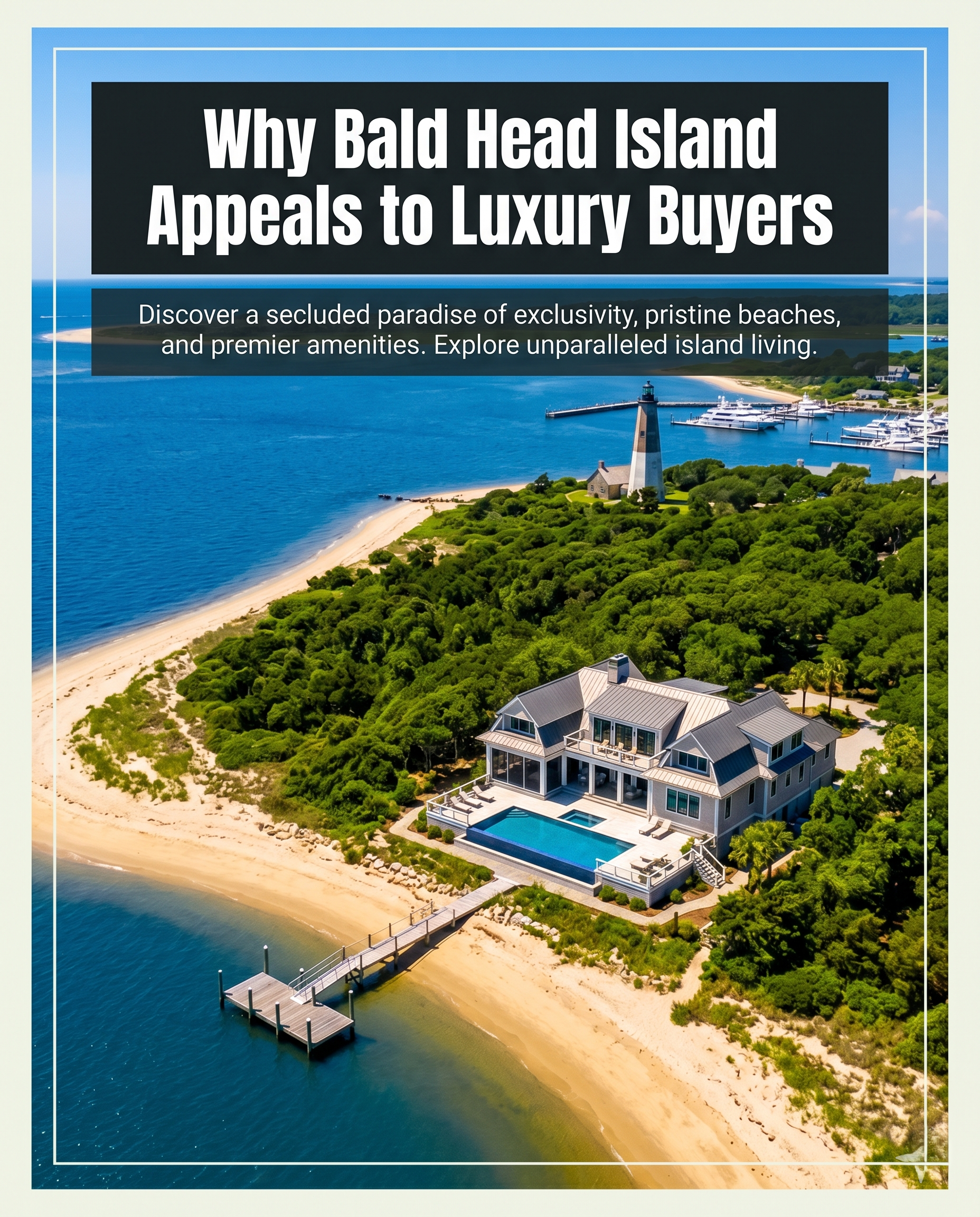
Why Bald Head Island Appeals to Luxury Buyers

Bald Head Island does not sell itself the way other luxury coastal markets do. There are no high-rises, no chain restaurants, and no cars. The only way to get there is the passenger ferry from Southport. That is the point. Buyers who land on Bald Head are usually not shopping price, they are shopping a feeling — and that feeling is harder and harder to find on the East Coast.

After years of working with buyers up and down the Carolina coast, I can say with confidence: the people who buy on Bald Head Island know exactly what they want, and they are not comparing it to anywhere else. Here is what keeps drawing them in.

What Makes Bald Head Island Unique

Bald Head is a barrier island just off the mouth of the Cape Fear River. About half the island is permanently protected as the Bald Head Island Conservancy and state-managed maritime forest. Roughly twelve thousand acres of dunes, marsh, and old-growth maritime forest sit beside roughly two thousand homes and condos. That ratio is the entire pitch.

You move around the island by golf cart, bike, or on foot. There are no traffic lights, no four-lane roads, and no commercial sprawl. The result is a coastal community that feels more like a private nature preserve than a typical beach town.

The Luxury Buyer Profile

Most of the buyers I see on Bald Head Island fall into a few clear categories: second-home buyers from the Triangle, Charlotte, or out of state; retirees relocating from the Northeast or Midwest who want a slower coastal life without sacrificing finish quality; and multi-generational families looking for a place where grandparents, parents, and kids can all be together for a week without anyone needing a car.

They are not impulse buyers. The ferry-only access filters out the casual shopper, which is part of why values have held up so well over the last decade.

The Real Estate Profile

Oceanfront and Million-Dollar Homes

The luxury inventory on Bald Head is concentrated in oceanfront and marsh-front single-family homes. Cape Fear Station, on the east end, and the South Beach and West Beach areas hold most of the high-end product. Custom homes from the early 2000s through current new builds dominate. Most are designed for entertaining a full house — open kitchens, large screened porches, multiple bunk rooms, and dedicated golf cart garages.

The million-dollar-plus inventory here ranges widely. A solid four-bedroom interior oceanfront can list in the high seven figures during peak inventory tightness, while marsh-side and creek-side luxury homes can trade for less.

Waterfront and Marina Living

The marina district, near Harbour Village, gives buyers a different feel — closer to the village, walkable to dinner, with deep-water boat access. Buyers who care more about boating than beachfront access often prefer this side of the island. The waterfront inventory here is meaningfully different from oceanfront, and the price points usually reflect it.

Condos and Townhomes

For buyers who want Bald Head access without the full single-family commitment, island condos are a strong entry point. Cottages, lodges, and condo-style residences in established complexes typically come with rental management infrastructure already in place, which matters for buyers who want some offset income when they are not on the island.

The Lifestyle Factor

What you actually do on Bald Head matters as much as what you own. Members access the Bald Head Island Club for golf, tennis, racquet sports, the croquet lawn, and the marina pool. The Shoals Club, on the east end, gives oceanfront beach club access for those who want it. Most full-time and serious second-home buyers carry both memberships.

Outside of the clubs, the lifestyle is quiet. The beach. Long bike rides. Sunset on Old Baldy. Kayaking the creeks at high tide. Reading on a porch. The luxury here is not flashy. It is the absence of noise.

Why Bald Head Island Appeals to Luxury Buyers

What Buyers Need to Plan For

Ferry, Tram, and Logistics

Cars stay on the mainland. Furniture, building materials, and groceries come over by barge or freight ferry. Anyone buying or building on the island needs to budget for the logistics overhead — it is real, predictable, and manageable, but it is part of the cost of ownership.

Insurance and Wind Coverage

Wind, hail, and flood coverage on Bald Head is more expensive than mainland coastal Brunswick County. Buyers should quote insurance early in their due diligence, not in the last week before closing. The premium is real but not unreasonable for the location.

Property Management for Second Homes

Most luxury buyers who are not full-time residents work with an island-based property manager. The salt environment is relentless, and homes that are not maintained on a regular schedule show it within a season. Builders, painters, HVAC, and pest control all operate on the island, but they book up. Get on the calendar early.

Why Values Have Held

The island has hard limits on growth. The maritime forest is protected. Buildable lots are finite, and the ones left are not getting cheaper. New construction is capped by what the conservancy and the island authority allow. That scarcity is the reason resale values on Bald Head Island have been one of the more stable luxury stories on the Carolina coast through the last several market cycles.

Key Takeaways

  • Bald Head Island is a ferry-access, car-free barrier island roughly half protected as conservancy and maritime forest
  • Luxury inventory is concentrated in oceanfront, marsh-front, and marina-area single-family homes, with condos serving as a smaller-footprint entry point
  • Buyers are typically second-home owners, retirees, and multi-generational families, not casual beach shoppers
  • Club memberships at the Bald Head Island Club and Shoals Club drive much of the lifestyle value
  • Ferry, tram, barge logistics, and a higher insurance profile are part of the carrying cost
  • Limited buildable inventory has helped Bald Head luxury values hold up better than many comparable coastal markets
Posted in For Buyers
June 10, 2026

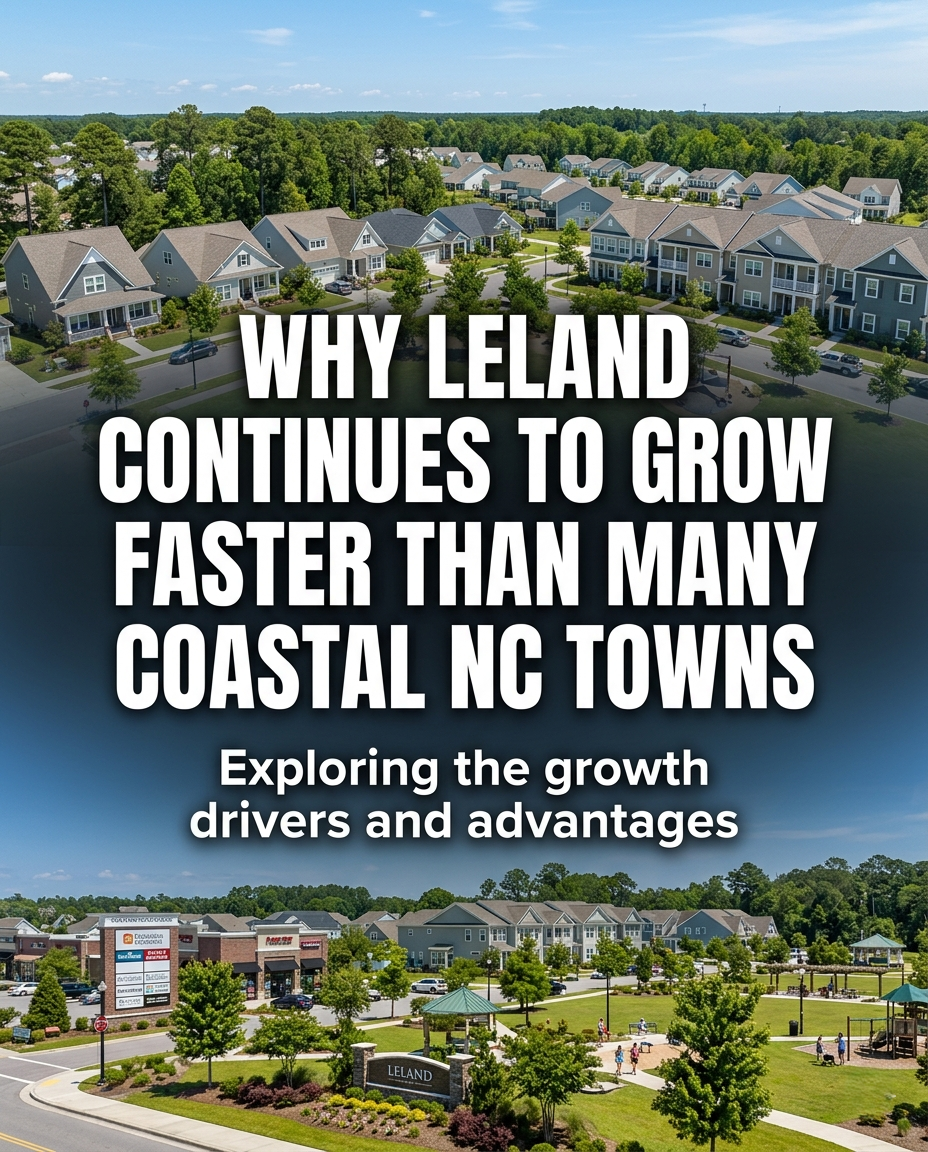
Why Leland Continues to Grow Faster Than Many Coastal NC Towns

Drive across the bridge from Wilmington into Brunswick County and the first ten minutes of Leland tell the story. New stoplights. New rooftops. A grocery store that was not there two years ago. Leland has been the loudest growth story on this side of the coast for most of the last decade, and the pace has not slowed. The question I get from buyers all the time is not whether Leland is growing — it is why it keeps growing while other coastal towns level off.

Here is the honest answer, from someone watching this market every week.

The Location Math

Leland sits at the front door of Brunswick County, directly across the Cape Fear River from downtown Wilmington. A buyer can be at a desk in midtown Wilmington in fifteen to twenty minutes from most of Leland, and at the beach at Oak Island or Caswell Beach in forty-five. That combination — close to the city, close to the coast, with a Brunswick County tax base — is the single biggest reason Leland keeps winning buyers who started their search in Wilmington proper.

Most other Wilmington-area markets do one or the other. Leland does both.

Who Is Actually Moving to Leland

The Leland buyer pool is more diverse than most people realize. It is not just retirees. The current mix breaks down roughly into a few groups:

Out-of-state retirees from the Northeast and Midwest who want a 55-plus community with full amenities and a moderate tax burden. Remote workers and remote-eligible professionals from Raleigh, Charlotte, Northern Virginia, and the Northeast who want a coastal lifestyle without giving up commute access to RDU and CLT. Local Wilmington-area buyers, often younger families and first-time buyers, who can find more home for the money in Leland than across the bridge. Military relocations from Camp Lejeune and Fort Liberty that filter into Leland for the schools and the price point.

That breadth is what keeps the demand engine running through different parts of the cycle.

The Communities Pulling the Most Demand

Brunswick Forest

The flagship amenity community in Leland, Brunswick Forest has been the single most-searched community in this part of Brunswick County for several years running. The mix of single-family, villa, and townhome inventory, the Cape Fear National golf course, the fitness center, the trails, and the on-site retail and medical complex check almost every box a relocating buyer wants. The demand is steady year-round.

Compass Pointe

Compass Pointe sits on the other side of Highway 17 from Brunswick Forest and competes for many of the same buyers. Gated entry, custom and semi-custom new construction, a strong amenity center, and a tighter community feel make it a frequent second look for the buyer who toured Brunswick Forest first.

Magnolia Greens

For buyers who want a slightly more established neighborhood with mature trees, a public golf course, and a price point that often beats the newer amenity communities, Magnolia Greens remains one of the best values in Leland. It also draws a younger family demographic than the gated 55-plus communities.

Why is Leland growing faster than other NC coastal towns? 🌅 It pairs proximity to downtown Wilmington and the beaches with lower Brunswick County taxes and a boom in new homes. Find out why it's winning over buyers

The New Construction Engine

Leland's growth is heavily new-construction-driven. Leland new construction communities have been delivering more inventory than almost any other Wilmington-area market for several years. Builders have responded because the demand has been deep enough to absorb it. The pipeline includes new sections inside the established master-planned communities and several new stand-alone communities that have come online recently.

Buyers should know that not every new construction community is equal. The big national builders are here. So are several strong regional builders. The build quality, warranty terms, and HOA structure vary widely, and the right community depends on the buyer's plans for the home.

Schools and Family Appeal

Brunswick County Schools serve Leland, and the district has been investing in capacity to keep up with growth. New elementary and middle school construction has been the headline. Many relocating families also consider the charter and private school options that have opened in or near the area. This is one of the quieter reasons Leland is picking up family buyers who would have looked at Wilmington a few years ago.

The Brunswick County Tax Story

Brunswick County's property tax rate and the absence of a municipal Wilmington tax overlay is a meaningful number once you scale it up to a $500,000 or $700,000 home. Many buyers crossing the bridge from Wilmington proper save a few hundred dollars a month on their tax bill alone, and that math compounds across the holding period. That is not the only reason buyers move to Leland, but it is a louder one than most people think going in.

What Could Slow It Down

Two things would slow Leland's growth: a major infrastructure squeeze and a sharper rise in insurance costs. The bridge and Highway 17 corridor are already operating near capacity at rush hour. State transportation planning is responding, but it is a multi-year fix. On the insurance side, Brunswick County remains insurable and reasonable, but any sustained shift in private wind and hail availability would affect the carrying-cost math the same way it has elsewhere.

Neither of those is breaking the market right now. Both are worth watching.

Key Takeaways

  • Leland's location gives buyers fast access to downtown Wilmington and reasonable access to the Brunswick beaches, which no other Wilmington-area market combines as well
  • The buyer base is broader than just retirees, including remote workers, military relocations, and local Wilmington families seeking better value
  • Brunswick Forest, Compass Pointe, and Magnolia Greens are the most-searched established communities, each appealing to a different buyer profile
  • Leland new construction continues to lead the Wilmington-area pipeline, but builder quality and HOA structures vary and warrant homework
  • Brunswick County's tax structure adds a real, measurable monthly savings compared to many Wilmington-proper buyers face
  • Infrastructure capacity and insurance trends are the two variables most likely to shape Leland's next chapter
Posted in Market Updates
June 9, 2026

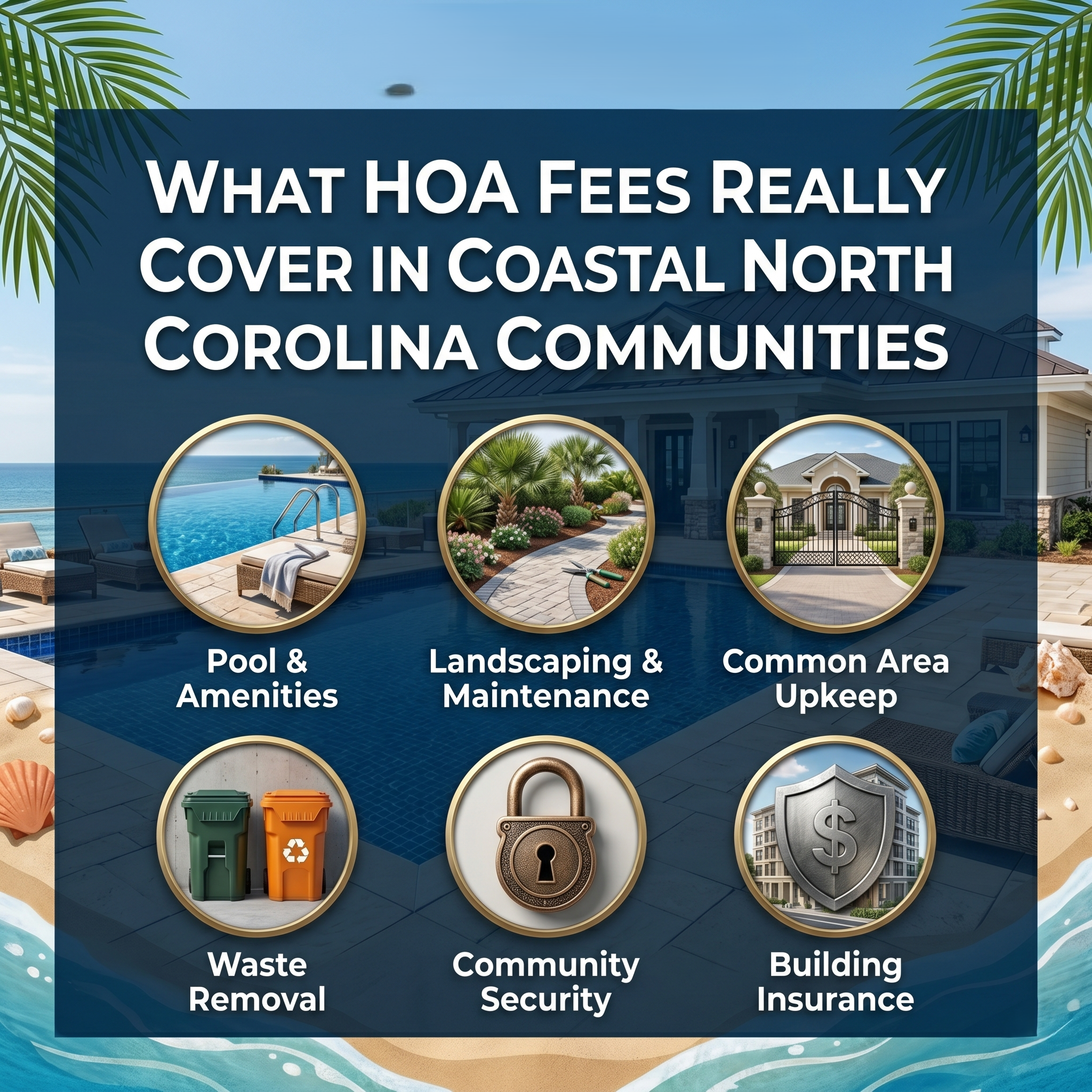
What HOA Fees Really Cover in Coastal North Carolina Communities

HOA fees are one of the most misunderstood line items in a coastal North Carolina home purchase. Buyers see the monthly number, react to it, and never ask the second-most important question: what does that fee actually pay for, and what is it not paying for? After thirty years working with buyers from Wilmington down through the Brunswick beaches, I can tell you that the HOA fee is rarely the real story. The HOA budget is.

Here is how to read coastal NC HOA fees the right way, and what they typically cover at different price points and community types.

Why HOA Fees Vary So Much in Coastal NC

A condo on the oceanfront in Wrightsville Beach can run $900 to $1,800 a month in dues. A single-family home in a mid-tier amenity community in Leland can run $90 to $200 a month. A small townhome community with no pool might be $45. The number reflects three things: what the association maintains, what insurance the building or community carries, and how much reserve funding the board is building up for future repairs.

If two communities have the same fee and the same amenities, the better-run one is almost always the one with stronger reserves.

What Single-Family HOA Fees Typically Cover

In an amenity community like Brunswick Forest or Compass Pointe, monthly HOA dues typically pay for the front-gate or front-entrance maintenance, common-area landscaping, the clubhouse, the pools, the fitness center, the trails and lakes, and the security or roving patrol if there is one. Some communities also include front-yard mowing on the individual lots.

What single-family HOA dues do not cover: your roof, your siding, your individual yard work beyond what is specifically called out, your homeowners insurance, your wind and flood policies, your private storm prep, or any repairs inside your fence line. Those are entirely on you.

What Condo and Townhome HOA Fees Typically Cover

Condo and townhome fees cover much more — and that is why the dollar amount is so much higher. A condo HOA usually covers the building exterior, the roof, the common hallways and stairwells, master insurance on the structure, exterior pest control, trash, water and sewer in many buildings, and reserves for the big shared systems like elevators, roofs, and parking decks.

In a Wilmington condo, this can include the building envelope plus all common amenities. In an oceanfront building, the master policy alone can be a five-figure annual expense per unit because of wind coverage. That is not the HOA being wasteful — it is the cost of insuring an oceanfront concrete tower in 2026.

The Coastal Reality: Insurance Is Driving Fee Increases

If your HOA fee in coastal NC went up 15 to 30 percent in the last two years, the cause is almost always one of two things: the master insurance policy renewal, or a reserve study that identified an underfunded long-term repair. Wind and hail coverage on coastal structures has moved sharply, and HOAs are passing the cost along the only way they can — through dues.

Ask for the last three years of the operating budget before you buy into any condo or amenity community. The trend line tells the story.

Hidden Costs Buyers Miss

Special Assessments

A special assessment is a one-time charge the HOA levies for a specific project that reserves do not cover. New roofs, balcony replacements, paving, and post-storm repairs are the common drivers. Coastal buildings are particularly exposed, and a special assessment of $5,000 to $30,000 per unit is not unusual after a major storm year.

Master Policy Deductibles

The master policy may have a wind deductible of 2 to 5 percent of the insured value. If a storm damages the building, individual owners often share that deductible. This is something buyers should ask about up front, not learn after closing.

Capital Contribution Fees

Many coastal communities charge a one-time capital contribution at closing — often one to three months of dues, sometimes more. It is not refundable. Read the resale certificate before contract.

What HOA Fees Really Cover in Coastal North Carolina Communities

What to Ask Before You Write the Offer

Three documents tell you almost everything you need to know about an HOA: the current budget, the reserve study, and the meeting minutes for the last twelve months. The budget shows what is actually being spent. The reserve study shows whether the community is saving enough for the big repairs ahead. The meeting minutes show what residents and the board are actually worried about — leaks, lawsuits, insurance, parking, anything.

If a seller or listing agent cannot produce these, treat that as information too. In a master-planned community like Brunswick Plantation, this paperwork should be readily available.

Key Takeaways

Use the following quick checklist when evaluating a coastal NC HOA:

  • The monthly fee number is less important than what the fee includes and what the community has in reserves
  • Single-family HOA dues mostly cover amenities and common areas, not your individual home
  • Condo and townhome dues cover the building exterior and master insurance, which is why they are higher
  • Insurance renewals are driving most of the recent fee increases on the coast
  • Always review the budget, reserve study, and meeting minutes before you buy
  • Watch for special assessments, master policy deductibles, and one-time capital contributions

Frequently Asked Questions

Are HOA fees tax deductible in North Carolina?

HOA fees on a primary residence are generally not tax deductible. HOA fees on a rental property are typically deductible as a rental expense. Consult your tax professional for your specific situation.

Can an HOA raise my fees without my consent?

Yes, within the limits set by the community's governing documents. Most North Carolina HOAs can raise dues annually up to a stated percentage without an owner vote, but larger increases or special assessments above a threshold usually require owner approval. The bylaws spell out the exact rules.

What happens if I do not pay my HOA dues?

The HOA can charge late fees and interest, suspend amenity access, and eventually file a lien against your property. In North Carolina, an unpaid HOA lien can lead to foreclosure. Always keep dues current.

Do oceanfront condos always have higher HOA fees?

Almost always, yes. The cost is driven by the master wind and flood policies, elevator and parking deck maintenance, salt-air exposure on exterior building components, and the higher reserves required to keep up with that wear. Two identical-looking condo buildings can have very different fees depending on how recently the major systems were replaced.

How can I find out if a community has a healthy reserve fund?

Ask for the most recent reserve study. A funded ratio above 70 percent is generally considered healthy. Below 30 percent is a warning sign that a special assessment may be coming. Your agent should request this in writing during your due diligence period.

Posted in For Buyers
June 8, 2026

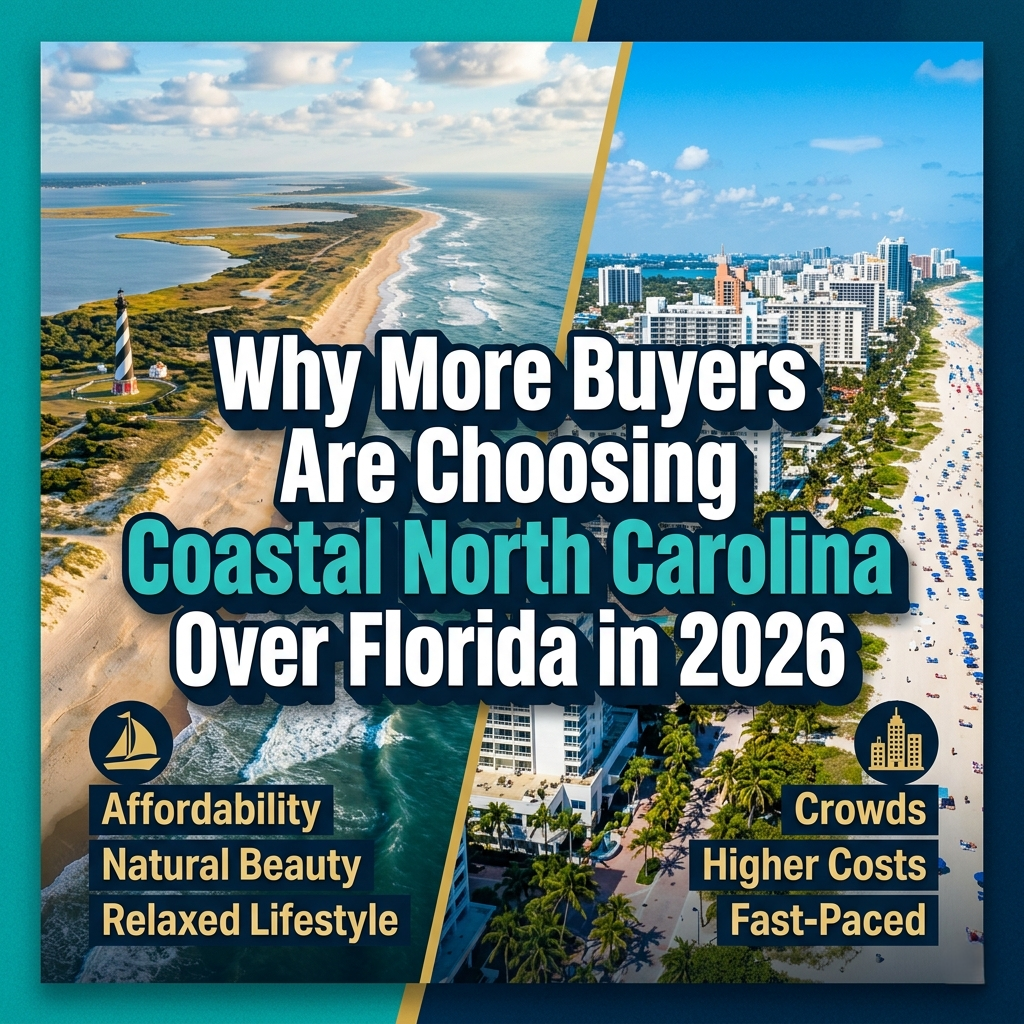
Why More Buyers Are Choosing Coastal North Carolina Over Florida in 2026

For years, Florida was the default answer when buyers from up north imagined their move to the warm coast. That answer is changing fast. More of the buyers I work with in 2026 are skipping Florida entirely and heading to coastal North Carolina instead, and the reasons are stacking up.

Insurance hikes, hurricane fatigue, rising HOA assessments, and crowded traffic corridors have pushed Florida out of reach for a lot of second-home buyers and retirees who were once locked in on it. Coastal North Carolina is offering most of what those buyers wanted in the first place, often at a lower carrying cost.

What Buyers Liked About Florida — and What Coastal NC Now Offers

Most of the Florida-bound buyers I used to compete with wanted four things: warm weather most of the year, no state income tax or a low tax burden, boating and beach access, and an active community to retire into. Coastal North Carolina checks three of those boxes outright. The fourth, taxes, is closer than people think once you compare property tax bills and insurance premiums side by side.

A buyer purchasing a $750,000 single-family home in Wilmington is often paying less in combined taxes and insurance than the same buyer would in Naples or Jupiter. The gap has widened every year since 2022.

Insurance and Storm Risk

The Florida property insurance market has been the loudest reason buyers are walking. Premiums on coastal Florida homes have doubled and tripled in some counties, and several national carriers have pulled back from writing new policies. North Carolina is not immune to wind and hail, but our market is still functional. Buyers can quote a policy, get bound, and close on schedule.

Flood zones still need careful review here, and storm prep matters. The difference is that a buyer purchasing in Wrightsville Beach or Carolina Beach can typically secure both wind and flood coverage without the seven-page disclosures and surcharges Florida has rolled out.

Lifestyle and Crowding

Florida's growth has caught up with it. Roads that handled traffic fifteen years ago are gridlocked. Restaurants take an hour to seat you in season. Even quiet inland towns have filled in. Buyers tell me they want coastal living, not constant lines.

The Wilmington area still feels like a beach town. Wrightsville Beach is a twenty-minute drive from downtown. Carolina Beach has a small-town pier-and-boardwalk feel. Restaurants seat you on a Saturday night without a six-week reservation. That is not a small thing for a buyer leaving New Jersey or Long Island to slow down.

Cost Per Square Foot

New Construction

New construction in coastal NC is still meaningfully cheaper than equivalent new builds in Naples, Bonita Springs, or the Treasure Coast. Buyers who would have stretched for 1,800 square feet in a Florida 55-plus community can often land 2,400 to 2,800 square feet in a comparable amenity-rich Brunswick County community.

Resale Inventory

The resale market here is also more forgiving. Florida resale inventory has bloated as homeowners try to sell out of high insurance and HOA costs, but pricing has stayed elevated. Coastal NC resale homes have moved gently in 2026 and the negotiating room is fairer for buyers without being a fire sale for sellers.

Where Florida Buyers Are Landing

The Wilmington area, Brunswick County, and the Topsail and Surf City corridor are picking up the largest share of these relocations. Within Wilmington proper, buyers gravitate to walkable Historic Downtown, midtown, and the Mayfaire area. Brunswick County draws the amenity-community shoppers. Brunswick Forest in Leland, St. James Plantation in Southport, and Compass Pointe all routinely beat Florida options on monthly carrying cost.

Hampstead, between Wilmington and Surf City, is grabbing buyers who want easy boat access without paying oceanfront prices. Sneads Ferry is another quiet winner for retirees and remote workers leaving Florida.

Why More Buyers Are Choosing Coastal North Carolina Over Florida in 2026

Where Florida Still Wins

Florida is not losing every buyer. If you want consistent warmth in January and February, Florida holds that edge. Coastal NC has real winter weeks, even if our winters are mild compared to most of the country. Some buyers also want the deeper professional sports and theme park infrastructure that Florida has built up over the years.

But for most retirees, second-home buyers, and remote-work families who care more about lifestyle and cost than late-January beach weather, the math has shifted.

Key Takeaways

Coastal North Carolina is winning Florida-bound buyers because the cost of insurance, the cost of housing per square foot, and the daily quality-of-life math have all tilted away from Florida and toward us. Wilmington and Brunswick County offer most of the lifestyle Florida buyers came south for in the first place — boating, golf, walkable communities, mild winters — without the runaway insurance premiums or the crowding. The buyers leaving Florida are not unhappy with the coast; they are unhappy with what owning on the Florida coast now costs. North Carolina is collecting the rest of the trade.

Frequently Asked Questions

Is property insurance cheaper in coastal North Carolina than in Florida?

In most coastal counties, yes. A typical single-family home a few blocks off the water in Brunswick or New Hanover County will see a combined wind and hail policy at a fraction of what coastal Florida is quoting in 2026. Flood insurance through the NFIP is priced similarly in both states, but private wind coverage is the main savings driver.

Does North Carolina have a state income tax?

Yes, North Carolina has a flat state income tax. Florida does not. However, when you factor in lower property insurance, lower homeowners costs, and generally lower property taxes per dollar of home value on the coast, retirees and remote workers often net out close to even or ahead in North Carolina.

How does the property tax burden compare to Florida?

Property tax rates in coastal North Carolina counties are competitive. New Hanover, Brunswick, and Pender counties all run effective rates that compare favorably to many Florida coastal counties once you add in special districts. Buyers should always compare the full annual tax bill on a specific home rather than headline rates.

Is the hurricane risk really lower in coastal NC?

Hurricane risk exists in both states, but the frequency and intensity profile is different. Florida sits in a much more active strike zone over a given decade. Coastal NC homes still need proper storm prep, but insurers price the risk lower and policy availability is more stable.

Posted in For Buyers
June 5, 2026

Cape Fear Real Estate Update and Summer 2026 Events Guide

As another school year wraps up and the Cape Fear coast moves into its busiest season of the year, the Wilmington-area real estate market is moving with it. The Spring 2026 numbers paint a clear picture: inventory is up, demand is holding, values are still rising, and buyers and sellers both have real opportunity if they approach it with the right strategy.

Below is a full breakdown of where the local market sits as we head into summer, followed by a complete guide to summer concerts, farmers' markets, and signature events across New Hanover, Pender, and Brunswick counties.

Spring 2026 Cape Fear Market Report
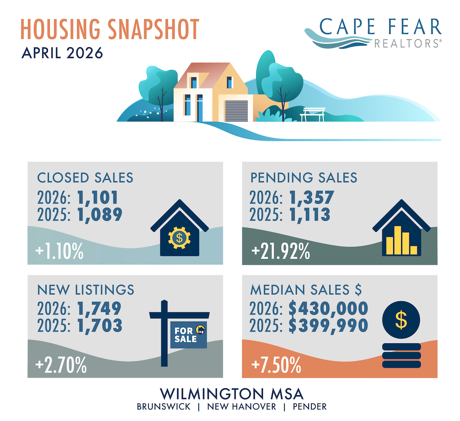
The Cape Fear housing market continued shifting toward a more balanced environment as of the April 2026 recordings, giving buyers more choices while still maintaining steady home values. Active listings climbed to over 4,100 homes, marking one of the highest inventory levels the region has seen in recent years. More inventory means buyers are gaining flexibility, with additional opportunities to compare homes, negotiate terms, and move more thoughtfully through the buying process.

At the same time, buyer demand remained healthy. Pending sales and closed sales both increased compared to earlier in the year, showing that well-priced homes are still attracting strong interest. The median sales price also continued rising year over year, reinforcing that home values across the Wilmington-area market remain stable despite the increase in inventory.

Another notable trend was the decrease in days on market compared to the slower winter months, signaling renewed spring momentum. While buyers now have more options than they did during the ultra-competitive pandemic-era market, desirable homes in strong locations are still moving relatively quickly.

Overall, April's data points to a healthier, more normalized market across the Cape Fear region. Buyers have more breathing room, sellers can still achieve strong values with proper pricing and presentation, and strategy matters more than ever.

National Context

The broader picture is shifting in a different direction. National buyer demand has been weaker over the past several years and the supply of homes available to purchase has been increasing. However, for the first time in four years, there are now fewer homes for sale nationally than at this point last year.

Inventory was expected to rise by 10 percent in 2026 and has done the opposite — supply is shrinking, not expanding. Combined with sales running roughly 6 percent ahead of last year nationally, the broader market is starting to look like it could be tilting back toward sellers if the trend holds.

Here in the Cape Fear region, the market is sitting flatter and maintaining strong demand without the same supply squeeze.

Summer Concert Series

New Hanover County

The Boatyard in downtown Wilmington's Marina District hosts the free Marina Grill Sunset Live Music Series featuring great bands, sunset views, and laid-back coastal vibes. Over in Carolina Beach, the Boardwalk Blast runs Thursdays from 6:30 to 8:30 p.m. on the Carolina Beach Boardwalk as part of the Pleasure Island Concert Series, complete with fireworks. The Boogie in the Park Concert Series happens every first and third Sunday from May through October at Kure Beach Ocean Front Park and Pavilion, with everything from funk and rock to pop and soul from 5 to 7 p.m.

The Oceanic Summer Music Series brings live music to the Crystal Pier at Oceanic Restaurant on Sundays and Thursdays from 6 to 9 p.m. through September. The Airlie Gardens Summer Concert Series fills the Oak Lawn with music on select Fridays from 6 to 8 p.m., June through September.

Pender County

Hampstead Alive After Five brings free outdoor concerts to Hampstead Kiwanis Park on select summer evenings from 6:30 to 8:30 p.m. with live music and food and dessert trucks. The 2026 Topsail Sounds Series runs the fourth Tuesdays of each month from 6:30 to 8:30 p.m. at the Topsail Beach Town Center with live music and food trucks. Meet Me at the Sound Summer Concert Series happens Fridays from 7 to 9 p.m. at Soundside Park with live music and a variety of local vendors.

Brunswick County

The Oak Island Summer Concert Series runs every Friday from 6:30 to 8:30 p.m. at Middleton Park Complex. Holden Beach Summer Concerts take place Sundays at 6:30 p.m. at Bridgeview Park. Ocean Isle Beach hosts its Summer Concert Series Fridays from 6:30 to 8:30 p.m. at Town Center Park. Sunset Sound Waves brings the 2026 summer season to Sunset Beach Town Park every Wednesday from 6 to 8 p.m., with shows this month including Band of Oz, The Macdaddy's, The Switch, and JB and The Get Down Browns. Southport Summer Concerts happen Thursdays from 6 to 8 p.m. at Franklin Square Park, with June lineups including Motomojo, Krispee Biscuits, and Gary and Linda Scalfani.

Local Venues for Upcoming Concerts and Performances

Wilson Center hosts Broadway shows, concerts, and cultural performances. Live Oak Bank Pavilion brings major touring artists to the riverfront. Greenfield Lake Amphitheater offers intimate outdoor concerts with a scenic backdrop. Thalian Hall Center for the Performing Arts presents classic theater, film, and live performances.

Where to Check Out Local Farmers' Markets

New Hanover County

The Wrightsville Beach Farmers' Market runs Mondays through summer at the WB Park Softball Field with fresh produce, unique crafts, and fresh-cut flowers. The Riverfront Farmers' Market sets up every Saturday through November at Dock Street and South Front Street in historic downtown Wilmington, featuring farmers, producers, bakers, artists, and crafters. The Carolina Beach Market happens Saturdays from 8 a.m. to 1 p.m. at Carolina Beach Lake Park with homemade goods, artisan crafts, and fresh produce. The Kure Beach Open Air Market runs Tuesdays from 8 a.m. to 1 p.m. at Kure Beach Ocean Front Park and Pavilion.

Pender County

The Poplar Grove Farmers' Market runs every Wednesday from 9 a.m. to 1 p.m. at Poplar Grove with produce, plants, flowers, local honey, sourdough, salsa, and more. The Hampstead Farmers' Market sets up Thursdays from 4 to 7 p.m. at Ironclad Golf and Shaka Taco. The Holly Ridge Open Air Market runs the last Saturday of every month from June through November, 10 a.m. to 2 p.m. at the Holly Ridge Community Center. Shop the Sound Craft and Farmers' Market happens every fourth Friday from June through October, 8 a.m. to noon at Soundside Park.

Brunswick County

Shallotte Market-Fest at the Riverwalk runs select dates including June 13, September 19, and November 14 from 9 a.m. to 2 p.m. at the Shallotte Riverwalk, with family-friendly markets featuring local vendors, handmade goods, live music, and themed activities. The Southport Summer Market runs Wednesdays through August from 9 a.m. to 2 p.m. at Southport Waterfront Park. The Oak Island Farmers and Artisans Market happens Mondays from 8 a.m. to 1 p.m. at Middleton Park Complex.

Upcoming Local Events

Carolina Beach Pier hosts Full Moon Parties on various Fridays from 7 to 10 p.m. with moonrise views, chill music, and a family- and dog-friendly atmosphere. The 40th Annual Carolina Beach Music Festival lands on Saturday, June 6 at 10 a.m. on the Carolina Beach Boardwalk — the biggest beach music festival on the sand in North Carolina, and an annual sellout, so tickets go early.

Old River Farms in Burgaw is offering its Pick Your Own Bouquet experience at the 8711 Old River Road flower field, 9 a.m. to 8 p.m., for just $5 per bouquet. Sunflowers and zinnias should begin blooming soon. The Native Plant Symposium takes place at the New Hanover Arboretum on 6206 Oleander Drive on Tuesday, June 9 from 9 a.m. to 3 p.m., celebrating the 75th anniversary of the NC Native Plant Society with expert presentations and family-friendly afternoon activities. Tickets are $5 per person and space is limited.

The 23rd Annual Blueberry Festival happens Saturday, June 20 from 9 a.m. to 10 p.m. at 100 South Wright Street in Burgaw, packed with music, food, family, arts and crafts vendors, a car show, contests, farm tours, and concerts. Bluegrass in the Grove takes place Saturday, June 13 from 11 a.m. to 8 p.m. at Poplar Grove with live bluegrass, folk music, and traditional dance. The Trask Family Farm Sunflower Maze and Festival in Castle Hayne runs June 6 and 7 and June 13 and 14, with one of NC's largest sunflower mazes, live music, food trucks, hayrides, homemade ice cream, U-Pick flowers, jump pad, and bubble barn. Oak Island Beach Day is Wednesday, July 1 at Middleton Park Complex, commemorating the July 1, 1999 merger of the towns of Yaupon Beach and Long Beach into the Town of Oak Island, with a sandcastle contest, baby crawling race, large field games, and food vendors.

Featured Properties for Summer 2026

6524 Brevard Drive, Wilmington

This 3,700-square-foot, 4-bedroom, 3-full-bath, 2-half-bath home in the coveted Parkside at Mayfaire sits on a 0.22-acre corner lot. Listed at $1,349,000, it offers elevated coastal living with Charleston-inspired architecture, double 8-foot porches, a wraparound front porch, and a private rear balcony. Inside, 10-foot ceilings, 8-foot doors, rich hardwood flooring, triple crown molding, and plantation shutters set the tone. The kitchen features Viking appliances, custom solid wood cabinetry with 42-inch uppers, and a walk-in pantry. The circular primary suite is a true retreat with a domed ceiling, private balcony, and spa-like bath. The home sits minutes from Mayfaire Town Center, the Cross City Trail, and Wrightsville Beach.

814 Cape Fear Boulevard, Carolina Beach

A 3-bedroom, 2-bath coastal retreat on a 0.42-acre lot just a short stroll from the heart of Carolina Beach, listed at $799,000. The home offers rare access via a dedicated walking and bike path to the ocean, plus hardwood floors, a flexible sunroom, an eat-in kitchen, a fenced backyard, an outdoor shower, and an oversized garage with RV hookup. With recent updates and subdivision potential, the property offers both immediate enjoyment and future opportunity.

508 Dressage Way, Wilmington

Set on a 0.28-acre pond-front lot in Scotts Hill Village, this 5-bedroom-plus-office, 4-bath, 3,554-square-foot Mungo Homes property is listed at $724,900. The open layout includes a chef's kitchen with dual islands, a sunroom overlooking the pond, a main-level guest suite, and a generous upstairs primary retreat. The community offers a pool, clubhouse, and a future kayak launch, just minutes from the Intracoastal Waterway and area beaches.

Key Takeaways

  • Active inventory in the Cape Fear region topped 4,100 homes in April 2026, one of the highest levels in recent years and a meaningful tailwind for buyers
  • Pending and closed sales increased and the median sales price rose year over year, so values are holding even as buyers gain options
  • Days on market dropped from winter, confirming that well-priced and well-presented homes are still moving
  • Sellers should lean harder on strategic pricing, strong marketing, and excellent presentation as the market normalizes
  • Nationally, supply has shrunk for the first time in four years while sales are up, hinting at a possible shift back toward a seller's market if the trend holds
  • Summer concert series, farmers' markets, and signature events are running across New Hanover, Pender, and Brunswick counties from June through fall
  • Standout buyer opportunities are on the board across Wilmington and Carolina Beach, from a Mayfaire luxury home to a Carolina Beach coastal retreat and a pond-front Scotts Hill Village property

About Jeff Lesley

Jeff Lesley AwardWith more than 13 years of dedicated service in the real estate industry, Jeff Lesley is a seasoned professional specializing in both luxury home and commercial real estate markets across the Cape Fear region. Jeff has closed more than 1,100 transactions and over $250 million in sales volume, has lived in the Wilmington area for over 16 years, and holds a Master's in Business Administration from UNCW. He has been the number one individual sales agent in the Cape Fear region by units from 2015 through 2020 and currently ranks as the number four Century 21 agent in all of North Carolina by sales volume.

In May 2022, Jeff partnered with top Century 21 brokerage owner Greg Harrelson to open Century 21 Vanguard in the Cape Fear region. His accolades include the Century 21 President's Producer and Quality Service Producer titles, multiple Centurion Awards across 11 years, multiple Double Centurion Awards across 9 years, and the prestigious Grand Centurion Producer Award, a recognition reserved for the top 1 percent of producers in the Century 21 system. Whether you are buying, selling, relocating, or evaluating your home's value in today's market, Jeff is committed to delivering the strategic, informed guidance Cape Fear clients have come to expect.

Reach Jeff at 910-297-7071 or JLesley@WilmingtonC21.com.
June 4, 2026

Top Renovations That Add Value to Coastal Homes

Owning a home along the North Carolina coast is a different experience than owning a home almost anywhere else. The salt air, the storm seasons, the proximity to water, and the lifestyle expectations of coastal buyers all shape what counts as a smart renovation. If you are thinking about selling, or simply looking to protect and grow the value of your investment, the renovations that matter most along the coast are not always the same ones recommended for inland or suburban homes.

This guide walks through the upgrades that consistently add the most value to coastal homes in southeastern North Carolina, with a clear focus on what coastal buyers expect, what holds up over time near saltwater, and where you are most likely to see a return when it is time to sell.

Why Coastal Homes Need a Different Renovation Strategy

Coastal properties face conditions that inland homes simply do not. Salt-laden air corrodes metal, intense humidity wears down finishes, and storm exposure puts pressure on roofs, windows, and siding year after year. Buyers who shop along the coast already know this, and many of them have either owned a coastal home before or done their homework. They look closely at how a home is built, how it has been maintained, and how it is set up for storm season.

That means the highest-return renovations are not just about looks. They are about durability, lifestyle, and lower long-term ownership costs. A beautifully updated kitchen still matters, but it earns more if the rest of the home shows it has been thoughtfully cared for in the ways coastal buyers expect.

Exterior Upgrades That Pay Off the Most

Impact Windows and Doors

If there is one upgrade that consistently moves the needle on a coastal home, it is impact-rated windows and doors. They reduce insurance costs in many cases, improve energy efficiency, and remove the headache of putting up shutters every time a storm forms in the Atlantic. Buyers along the southeastern North Carolina coast often ask about windows before they ask about almost anything else.

Roofing Built for Coastal Weather

A newer roof is one of the strongest selling points a coastal home can have. Architectural shingles rated for high winds, metal roofs in beach communities, and proper underlayment all signal to buyers that the home is ready for whatever the season brings. Replacing an aging roof before listing nearly always reduces buyer pushback during inspections and helps the home appraise stronger.

Siding, Trim, and Exterior Paint

Hardie board, vinyl, and other low-maintenance siding choices outperform wood in coastal environments. A fresh exterior paint job, especially in coastal-friendly tones, instantly improves curb appeal and signals that the home has been protected from sun and salt. Buyers shopping in places like Wrightsville Beach or Carolina Beach often have a strong visual expectation for what a well-kept coastal home should look like, and exterior presentation is a big part of that.

Outdoor Living Spaces That Coastal Buyers Love

Decks, Porches, and Screened Areas

Coastal living is, at its heart, outdoor living. A well-built deck made from composite materials, a screened porch that blocks the bugs without blocking the breeze, or an upgraded front porch can transform how a home feels and how a buyer pictures life there. These spaces consistently return strong value because they multiply the usable square footage of the home in a climate where outdoor time is part of the appeal.

Outdoor Showers and Storage

Practical coastal touches go a long way. An outdoor shower for rinsing off after the beach, a built-in storage area for kayaks, paddleboards, or fishing gear, and a fenced spot for golf carts or bikes all communicate that the home was designed for the coastal lifestyle. Many buyers shopping Wrightsville Beach waterfront homes see these features as must-haves rather than nice-to-haves.

Landscaping That Handles Salt and Wind

Coastal landscaping should look polished without being a maintenance burden. Native and salt-tolerant plants, simple hardscaping, and clean bed lines often outperform elaborate gardens that will struggle in coastal conditions. The goal is curb appeal that survives the next storm and the next summer of heat without constant intervention.

Interior Renovations With the Strongest Return

Kitchens Built for Real Coastal Living

Kitchens still drive value, but coastal buyers want something specific. Open layouts that connect to outdoor spaces, durable surfaces like quartz, and finishes that hold up to humidity typically outperform high-end designer choices that feel more suited to a city condo. A clean, bright, functional kitchen with strong storage and good lighting almost always returns well at sale.

Bathrooms That Feel Like a Retreat

Primary bathrooms with walk-in showers, double vanities, and good ventilation are major selling points. Ventilation is especially important in coastal homes because moisture management protects everything from paint to cabinetry. Buyers notice when a bathroom feels well-built and well-cared for, even before they could explain why.

Flooring That Stands Up to Sand and Moisture

Luxury vinyl plank, tile, and engineered hardwood designed for humid environments tend to perform best. Replacing aging carpet or warped flooring before listing is one of the most cost-effective upgrades a seller can make. Coastal buyers want flooring that handles wet feet, beach trips, and the occasional storm without falling apart.

Storm-Readiness and Insurance-Friendly Improvements

Insurance costs are a real factor along the coast, and any renovation that lowers those costs adds long-term value. Hurricane straps, wind-rated garage doors, elevated mechanical systems in flood-prone areas, and improved drainage around the foundation can all help. Buyers increasingly ask about wind mitigation reports and flood elevation certificates, and homes that are clearly ready for storm season tend to attract more confident offers.

Even smaller storm-ready upgrades like upgraded fascia, soffit improvements, and properly sealed entry points improve durability and signal that the home has been maintained with the coast in mind.

Renovations That Often Disappoint Coastal Sellers

Not every popular upgrade earns its money back along the coast. Heavily personalized swimming pools in homes already close to the beach often add less value than expected. Over-customized media rooms, very specific paint and finish choices, and luxury touches that ignore coastal conditions can sometimes hurt rather than help. The most reliable rule for coastal renovations is to invest in durability, lifestyle, and broad appeal rather than highly personal style choices.

Strategy for Sellers Planning Renovations Before Listing

The best renovation strategy is to start with what your home already does well and build on it. A waterfront home should lean into its outdoor spaces and views. A historic property in downtown Wilmington should highlight character while quietly modernizing systems and finishes. A vacation rental should be set up for ease, durability, and turnover speed.

Talk with a local agent before spending money. The right pre-listing conversation can prevent over-improving, identify the upgrades that matter in the current market, and help time your project so the home is ready when seasonal buyer demand peaks.

Top Renovations That Add Value to Coastal Homes

Key Takeaways

  • Coastal renovations succeed when they balance durability, lifestyle, and lower long-term costs, not just looks.
  • Impact windows, newer roofs, and low-maintenance siding consistently return strong value.
  • Outdoor living spaces, outdoor showers, and salt-tolerant landscaping match what coastal buyers actually want.
  • Kitchens, bathrooms, and flooring still drive interior value, but coastal-friendly materials matter more than designer trends.
  • Storm-readiness upgrades reduce insurance friction and build buyer confidence at offer time.
  • Avoid heavily personalized renovations that ignore coastal conditions or narrow buyer appeal.

Frequently Asked Questions

Which coastal renovation typically returns the most at resale?

Impact-rated windows and doors are often the strongest single upgrade, especially when paired with a newer roof. They improve durability, reduce insurance friction, and remove a major buyer concern in one step, which is why so many coastal buyers ask about them early in the process.

Are pools worth adding to a coastal home before selling?

It depends on the location and the home. In neighborhoods set back from the beach or in golf communities, a well-designed pool can add value. In homes already steps from the ocean, the return is usually weaker because buyers prioritize beach access over pool amenities. The best move is to check what comparable nearby homes have done before investing.

How much should I budget for pre-listing renovations on a coastal home?

Most sellers see the strongest return when they spend on focused upgrades rather than full remodels. A targeted plan that addresses the roof, windows, fresh paint, flooring, and outdoor living spaces typically outperforms a single high-cost renovation. The right budget depends on your home's age, condition, and price point, which is why an early agent walkthrough is so useful.

Do coastal buyers really care about storm-ready upgrades?

Yes, and increasingly so. Insurance costs, hurricane history, and flood zone questions come up early in coastal conversations. Sellers who can show wind mitigation features, newer roofs, elevated systems, and proper drainage tend to attract more confident buyers and stronger offers.

About Greg Harrelson

Greg Harrelson is a seasoned Realtor with more than 30 years of experience serving the Myrtle Beach and Grand Strand markets branching into North Carolina more recently. As the founder of Century 21 The Harrelson Group, Greg has built his career helping buyers, sellers, and investors achieve success in every corner of the coastal Carolina real estate market. His expertise spans residential homes, investment properties, land development, and coastal condos. Known for his deep local knowledge, innovative marketing strategies, and commitment to personal service, Greg consistently helps clients reach their real estate goals while navigating the ever-changing market with confidence and precision.

Posted in For Sellers