Wilmington NC Real Estate Blog | Market Trends & Relocation Guides

Stay informed on the Wilmington, NC real estate market with our latest blog updates. From detailed relocation guides and neighborhood spotlights to expert investment strategies and local market forecasts, we provide the essential information you need to navigate the coastal Carolina lifestyle with confidence. Explore our recent posts to start your journey toward finding the perfect home in the Port City.

Aug. 12, 2026

Top Features Buyers Want in Coastal North Carolina Homes Right Now

Buyer preferences on the coastal North Carolina market have shifted meaningfully over the last five years. The list of what buyers actively want in 2026 is not the same list they wanted in 2020, and sellers who understand the difference sell faster and closer to their asking price. After decades of walking buyers through Wilmington, Leland, Hampstead, and the beach towns, here is what buyers are actually prioritizing in the homes they buy right now, and how sellers can position for it.

Real Outdoor Living Space

The most consistent feature across every buyer segment is meaningful outdoor living space. Screened porches large enough to seat a real dinner table. Decks with real seating configurations. Outdoor kitchens, real or informal. Fire pits. Covered patios. Buyers touring homes in 2026 pause longer on outdoor spaces than they did five years ago, and homes with strong outdoor living consistently outperform homes without.

The reason is climate math. Coastal NC delivers eight to nine months of usable outdoor weather annually, and buyers want to actually use it. A well-executed screened porch or a proper outdoor kitchen is the highest-ROI home upgrade a seller can make before listing.

A Dedicated Home Office

Remote work is not a phase. Buyers relocating to the coast — retirees, remote-eligible professionals, and second-home buyers who work part of the year here — all want a real home office. A room with a door, natural light, and space for a proper desk setup. Bonus rooms and dedicated dens count. Converted closets do not.

Homes without a designated office space now lose points during showings that they did not lose in 2020. Sellers of homes with unused rooms should stage them as offices before photos.

Hardened Construction and Storm Readiness

Impact-rated windows, hurricane shutters, roof-to-wall connections, and modern roof age are all being asked about explicitly during showings. Buyers who lived through 2018 to 2022 storm activity understand that hardened construction affects insurance premiums, safety, and long-term ownership stress. Buyers who moved here recently learned the lesson quickly.

Documented hardening is worth real money. Sellers who can produce paperwork on impact windows, shutters, or roof-strap systems earn better offers than sellers who cannot.

Updated Kitchens and Baths

Buyers still care about kitchens and baths, though the specific finishes have evolved. Quartz counters over granite. Softer, more neutral palettes replacing the gray-and-white trend. Bigger, functional islands over separate islands and prep zones. Walk-in showers replacing tubs in primary baths. Buyers can look past dated finishes if the price is right, but updated kitchens and baths still shorten time on market meaningfully.

Real Boat Access or Water Views

For any home marketed near water, buyers are more specific than they used to be about what "waterfront" means. They ask about dock permits, water depth, view protection, and elevation. Homes with genuine dock access, protected views, and current documentation earn premiums. Homes marketed as "water view" without a clear line of sight underperform.

Energy Efficiency and Lower Utility Bills

Buyers care about monthly utility bills more than they used to. Efficient HVAC, upgraded insulation, LED lighting, and modern windows all show up on the buyer's mental list. Solar is more common but still not table stakes. Sellers who can produce utility bill history for a home marketed on efficiency benefit meaningfully.

Storage and Garage Space

Coastal life generates gear. Kayaks, beach chairs, bikes, umbrellas, tools, storm supplies, holiday decor. Buyers with active outdoor lifestyles ask about garage space, workshop areas, and outdoor storage. Homes with real, organized storage present better than homes with a cluttered garage door open at showings.

Fenced Yards and Pet-Friendly Layouts

Multi-pet households are common, and buyers ask about fenced yards, doggy doors, and pet-washing stations more than they did five years ago. Small features here move needle-worthy percentages of the buyer pool.

Wide Doorways and Aging-in-Place Considerations

The relocating retiree buyer pool is meaningful, and homes with primary-suite-on-main layouts, wider doorways, curbless showers, and single-level living outperform homes without these features. Even younger buyers appreciate the flexibility.

Reliable High-Speed Internet

Fiber or gigabit cable is broadly available in most established coastal NC markets, but not universally. Buyers now ask specifically about provider, plan, and speeds at the exact address. Sellers should be able to answer.
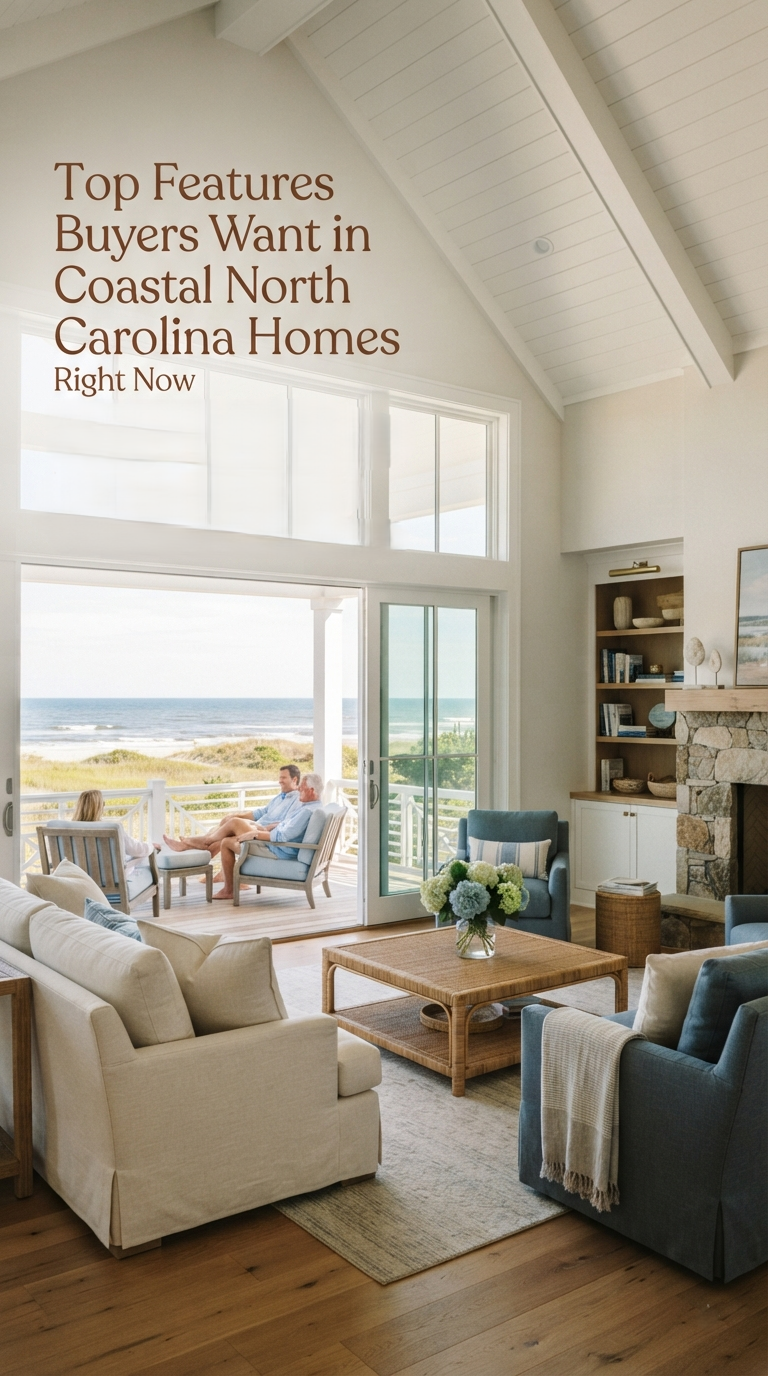
Top Features Buyers Want in Coastal North Carolina Homes Right Now

Modern Smart-Home Basics

Buyers do not require a fully wired smart home, but modern buyers expect Wi-Fi thermostats, a video doorbell, smart-lock capability, and basic camera coverage. Sellers who have already added these small features get credit for them.

Community and Neighborhood Amenities

Buyers evaluate the neighborhood as much as the home. Walking trails, community pools, pickleball courts, and functional HOAs all factor in. Homes in communities with real amenity infrastructure resell better than homes in bare-bones subdivisions.

Elevation and Flood Certifications

Buyers on coastal properties are asking for elevation certificates and flood zone documentation before contract. Homes with clean, current documentation move faster than homes where the buyer has to commission new work during due diligence. Sellers should assemble the paperwork before listing.

Real Screened Sleeping Porches

A niche feature but a resonant one — a screened sleeping porch off a bedroom, or a screened porch large enough to sleep out on nice nights, has become a genuinely differentiated feature in the market. Historic homes with authentic sleeping porches capture premiums.

Original Character in Historic Homes

Buyers who came to coastal NC for the historic district feel want original character in the homes they buy. Original heart pine floors, original trim, original mantles, and preserved architectural details all matter. Historic sellers who over-modernized often erased the value the buyer was actually shopping for.

Well-Maintained Systems

Older homes with clean maintenance records — recent HVAC, recent roof, recent water heater, current pest control, documented crawl-space encapsulation — outperform equivalents without documentation. Buyers see this as risk reduction, and their agents advise them to seek it out.

Key Takeaways

Coastal North Carolina buyers in 2026 are prioritizing real outdoor living, dedicated home offices, hardened construction, updated kitchens and baths, genuine water access when applicable, energy efficiency, coastal-appropriate storage, aging-in-place features, reliable internet, basic smart home amenities, community and neighborhood infrastructure, and clean flood and elevation documentation. Sellers who invest strategically in these areas before listing consistently outperform sellers who focus on cosmetic updates without addressing the specific features today's buyer actively wants. The best sellers ask their agent to walk their home from the buyer's perspective — where does the eye go, what feels dated, what feels missing, what feature would tip a buyer from tour to offer. The list has shifted, and the sellers who update their mental model of what buyers want consistently sell faster and closer to their target price.

Frequently Asked Questions

Should I renovate my kitchen before listing?

Depends on price point, current condition, and time to closing. Cosmetic refreshes — paint, hardware, lighting — usually pay off. Full renovations rarely recoup cost on a fast timeline. Consult your listing agent before spending.

Are pools still a positive feature in coastal NC?

Depends on submarket and buyer profile. In luxury Wrightsville Beach and select Wilmington markets, pools are a real positive. In smaller-lot beach towns or master-planned communities with a community pool, individual pools are often neutral or slightly negative for maintenance-averse buyers.

How much does adding a screened porch typically cost?

A quality screened porch addition on the coast typically runs $25,000 to $75,000 depending on size, finish, and structural requirements. Most well-done screened porches recoup 60 to 90 percent of the cost at resale plus reduce time on market meaningfully.

Do buyers actually care about elevation certificates?

Yes, especially in AE and VE flood zones. Buyers moving faster during diligence value having the document in hand rather than commissioning one themselves. Sellers who can produce a current certificate often close cleaner deals.

What features actually move the needle at showings?

Curb appeal, entry impression, kitchen brightness, real outdoor living, primary-suite quality, and general cleanliness. Buyers form the majority of their impression in the first three rooms and the first outdoor view. Focus preparation there.
Posted in For Buyers
Aug. 11, 2026

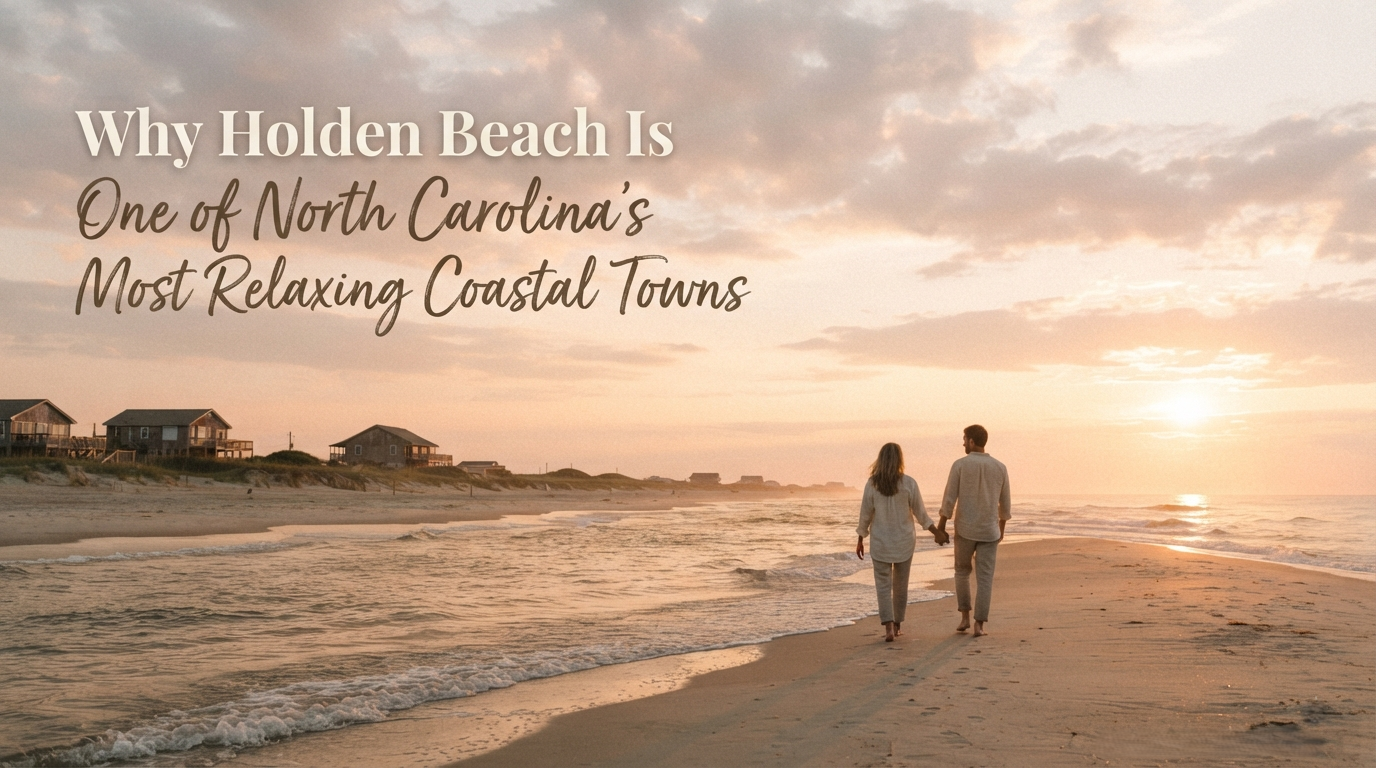
Why Holden Beach Is One of North Carolina's Most Relaxing Coastal Towns

Holden Beach has done something quietly remarkable over the last several decades. As surrounding coastal North Carolina towns grew, redeveloped, and added density, Holden Beach mostly stayed Holden Beach. No high-rises. No boardwalk arcade. No chain-restaurant strip. What visitors find when they cross the bridge from the mainland is a family-scaled beach town that feels genuinely relaxing in a way that has become increasingly rare on the East Coast. Buyers who come here for the vibe consistently stay, and repeat vacationers become long-term owners at a rate that says something about how the town feels day to day. Here is why Holden Beach continues to hold that identity, and what makes it one of the most relaxing coastal towns in North Carolina.

What Holden Beach Actually Is

Holden Beach is a barrier-island town in southern Brunswick County, connected to the mainland by a bridge over the Intracoastal Waterway. The island is roughly eight miles long and family-scaled — single-family beach homes, canal-front homes, and a modest amount of commercial infrastructure. There are no high-rise buildings, no boardwalk amusements, and no dense commercial strip. What you find is a beach, the ICW, quiet streets, and family homes.

The town has actively worked to keep the character of the beach through zoning, density limits, and community identity. Buyers who visit expecting Myrtle Beach or Wrightsville-scale amenities can be disappointed. Buyers who visit expecting a quiet, family beach town come away wondering why more places do not feel like this.

Why It Feels Relaxing

The Density Is Low

Zoning has kept the density down. Single-family homes dominate. Multi-family and rental density are managed. The result is quiet streets, walkable pockets, and low visual clutter.

The Beach Is Wide

Holden Beach's beach is meaningfully wider than several neighboring beaches after recent renourishment. Wide beach means space for families, low crowding even in peak weeks, and more visual and physical breathing room.

The Vibe Is Family-First

Holden Beach markets itself as a family beach and consistently delivers on it. Families return for generations. Grandparents introduced grandchildren to the same house they visited as kids. That kind of continuity supports a certain rhythm that Myrtle Beach or Carolina Beach cannot replicate.

The Business Mix Is Small-Scale

Restaurants and shops on Holden Beach are largely family-owned. Chains are limited. The commercial infrastructure serves residents and visitors without dominating the beach experience.

The Nights Are Quiet

Nightlife is intentionally limited. Holden Beach is not a party beach, and it does not aspire to be one. Retirees, families with young children, and buyers who value quiet nights consistently name this as one of the deciding factors.

Who Lands Here

Families

Multi-generational families anchor the buyer base. Many current owners were once summer renters who eventually bought. The family-first vibe is not accidental — the community has cultivated it deliberately.

Retirees

Retirees who want a slower, quieter coastal life without the high-rise or resort infrastructure find Holden Beach an unusually strong fit. Walkability along the beach, canal-front boating, and a genuinely quiet community rhythm all support long-term retirement living here.

Second-Home and Investment Owners

Second-home and vacation-rental owners occupy a meaningful share of the housing stock. Rental performance is steady for well-located properties, and the family-friendly reputation supports repeat bookings.

Boating and Fishing Enthusiasts

Canal-front homes on Holden Beach offer year-round water access, and the town's boating culture is strong. Fishing tournaments, kayak trips, and boat-shed evenings are part of the daily rhythm for many residents.

Why Holden Beach Is One of North Carolina's Most Relaxing Coastal Towns

The Real Estate Profile

Oceanfront Homes

The top of the market. Oceanfront inventory is finite, generally trades quickly when available, and produces strong vacation rental yields for investor owners.

Canal-Front Homes

Canal-front inventory is a defining feature of Holden Beach. Direct water access, dock potential, and typically more accessible pricing than oceanfront make canal homes especially attractive to boating families and retirees.

Interior Island Homes

Interior barrier-island homes offer beach walking distance at lower entry points. These homes work well as family rentals and as primary residences.

Mainland Homes

Newer construction on the mainland side of the bridge delivers modern finishes and larger lots at lower carrying costs than direct oceanfront exposure. Retirees who want beach proximity without the barrier-island premium often land here.

Practical Considerations

Insurance and Flood

Barrier-island properties carry AE and VE flood zone considerations. Wind, hail, and flood insurance should all be quoted specifically during diligence.

Storm Preparation

Holden Beach is a barrier island and follows town evacuation orders when applicable. Full-time residents build storm prep into their annual routine.

Property Taxes

Homes inside Holden Beach town limits carry a municipal rate on top of Brunswick County property taxes. Homes on the mainland side outside town limits pay only the county rate.

Amenity Infrastructure

Amenities on Holden Beach are intentionally modest — the town itself, the beach, the ICW, and family-owned businesses. Buyers who want country-club amenities should shop mainland communities in the area or a different beach town entirely.

How Holden Beach Compares

Vs. Ocean Isle Beach

Ocean Isle Beach has slightly more commercial infrastructure and rental activity. Holden Beach is quieter and even more family-focused. Retirees and families seeking the quietest option often prefer Holden Beach.

Vs. Sunset Beach

Sunset Beach is even smaller than Holden Beach and has stronger walkable infrastructure. Both are quiet, family-scaled beach towns. Buyers who want more beach and slightly more town choose Holden; buyers who want the smallest scale often choose Sunset Beach.

Vs. Oak Island

Oak Island is larger and has more infrastructure. Holden Beach delivers a quieter, more concentrated family-beach experience. Buyers who want more town choose Oak Island; buyers who want the specific Holden Beach feel choose Holden.

Vs. Carolina Beach or Wrightsville Beach

Carolina Beach and Wrightsville Beach are closer to Wilmington and its amenities. Holden Beach is meaningfully quieter, less commercial, and more purely family-focused.

Long-Term Outlook

Holden Beach has held its identity through several waves of development pressure on the surrounding coast. The town's zoning and community identity make it likely that it will continue to feel like Holden Beach for the foreseeable future. That predictability is one of the underlying reasons the market has held value well through cycles — buyers know what they are buying, and what they are buying does not change dramatically.

Key Takeaways

  • Holden Beach has maintained its family-scaled, low-density beach character while surrounding coastal towns have grown
  • No high-rises, no boardwalk arcade, and no dense commercial strip contribute to a genuinely relaxing daily rhythm
  • The beach itself is wide and less crowded than several neighboring beaches
  • Multi-generational family ownership anchors the community and supports a consistent long-term vibe
  • Retirees, families, boaters, and investors all find niches in the market — each for different reasons
  • Real estate ranges from oceanfront and canal-front to interior island and mainland — each fits a different buyer profile
  • Insurance, flood zones, storm preparation, and municipal-versus-unincorporated tax status all deserve diligence
  • Long-term value has held up well because the town's identity has held up, and buyers understand what they are buying
Posted in Carolina Lifestyle
Aug. 10, 2026

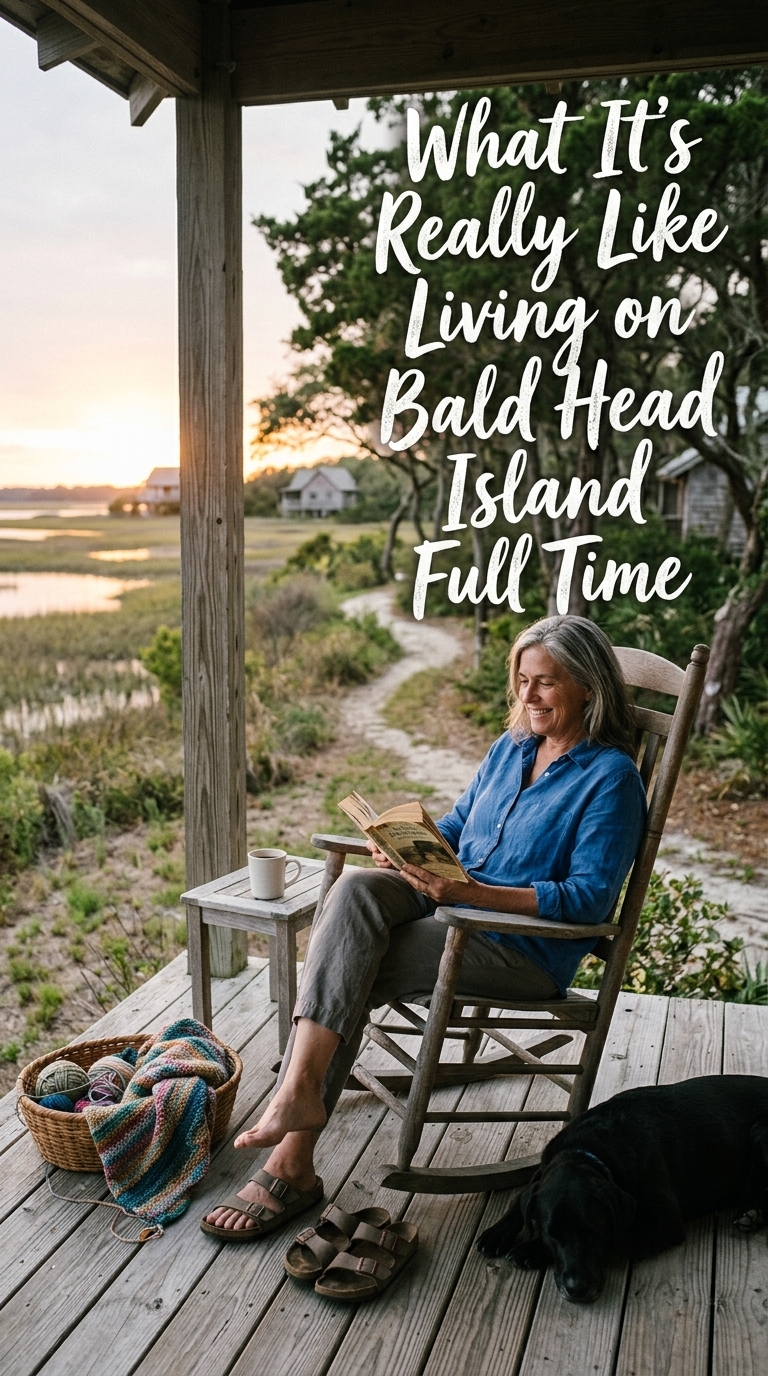
What It's Really Like Living on Bald Head Island Full Time

Everyone visiting Bald Head Island for the first time asks the same question at some point during the weekend — could I actually live here full time? The answer is more nuanced than the ferry-ride marketing suggests. Full-time life on Bald Head Island is a specific kind of daily rhythm, with real trade-offs alongside real rewards. A subset of buyers find it to be one of the best decisions they ever made. Another subset discovers within a year that the ferry-only lifestyle wears on them. Which one you are is worth knowing before the closing table, not after. Here is the honest story of what it actually looks like to live on Bald Head Island year-round.

The Daily Setup

Bald Head Island is accessible only by passenger ferry, freight ferry, or private boat. No cars. Residents get around by golf cart, bike, or on foot. The island is roughly 12,000 acres, roughly half of that permanently protected as conservancy and maritime forest, and the remaining developable acreage supports around 2,000 homes and condos. Most of the year, the population is small enough that residents know each other's names and cart colors.

The village on the harbor side of the island houses the shops, restaurants, the market, the post office, and the ferry terminal. Residents walk or cart to the village for daily needs, meet friends at the coffee shop, and pick up dinner at one of the family-run kitchens. The pace is unhurried in a way that is genuinely rare on the East Coast.

What Full-Time Residents Consistently Love

The Absence of Cars

The single most cited benefit of Bald Head living is what is missing — the sound of traffic, the pace of a car-centered daily life, the aggression of highway driving. Full-time residents describe the car-free environment as one of the most restorative aspects of the move.

The Community Is Real

Because the island is small and residents see each other regularly, the community feels more like a small town than a subdivision. Coffee-shop conversations turn into dinner parties. Neighbors help with hurricane prep. The social infrastructure is stronger than most communities of its size.

The Beach and the Forest

The east-end beaches are largely undeveloped and open to residents throughout the year. The maritime forest is one of the most intact ecosystems on the Southeast coast. Full-time residents spend more time outside than most Americans, and the natural environment is a large part of why.

The Clubs

The Bald Head Island Club and Shoals Club anchor the island's amenity infrastructure. Golf, tennis, croquet, pickleball, oceanfront pool, dining, and a full social calendar make full-time membership meaningful. Most serious full-time residents carry membership in at least one, often both.

Sunsets and Small Ceremonies

Full-timers describe the small daily rituals — sunset on Old Baldy, morning walks at low tide, coffee on the porch overlooking marsh or ocean — as the parts of the year they remember most. The island rewards attention to detail in a way that busier lifestyles do not.

What It's Really Like Living on Bald Head Island Full TimeWhat Full-Time Residents Plan For

Ferry Logistics

Every off-island trip starts and ends with the ferry. Residents build their week around ferry schedules. Doctor appointments, grocery runs, visits with family, contractor visits, and package deliveries all happen through the ferry system. Most full-timers develop a rhythm around it within their first six months.

Getting Furniture and Materials Over

Home construction and renovation materials come by freight barge. Furniture deliveries schedule around the freight schedule. Contractors who work on Bald Head build the logistics premium into their pricing. It is manageable but real.

Health Care

Routine health care requires trips to Southport or Wilmington. Emergency response on the island includes an air-lift protocol for genuinely serious situations. Most residents build a mainland primary care and specialist team into their plan.

Weather and Storms

Hurricane preparation is more intense on an island than on the mainland, both physically and psychologically. Residents evacuate when ordered. Homes need to be secured with real care. Insurance costs reflect the exposure.

Cost of Living

Everything on the island costs slightly more — groceries, restaurants, contractors, deliveries — because of the freight overhead. Property taxes, HOA dues, and club fees add up. Full-timers describe the island as reasonable if they went in with realistic expectations and expensive if they did not.

Winter Quiet

Bald Head has a real winter season during which the population thins, some restaurants scale back hours, and the island is at its most quiet. For residents who came for the quiet, this is one of the best times of year. For residents who need external stimulation, winter can feel isolating.

Who Thrives Full-Time on Bald Head

People who genuinely value quiet over convenience, community over anonymity, and the outdoors over screens. Retirees who have earned the right to move slowly. Remote workers with truly flexible schedules who can absorb the logistical premium. Multi-generational families who use the island as a gathering point. Boaters and beach walkers who spend serious time outdoors. Each of these consistently thrives here.

Who Struggles Full-Time on Bald Head

People who require frequent big-city amenities, restaurants, or entertainment. People who work in mainland jobs with rigid schedules. Full-time professionals who need same-day access to specialists. Anyone who chose the island for the summer feel without evaluating the winter reality. Anyone who dislikes the specific pace and logistics of island life.

The Financial Picture

Home Costs

Homes on Bald Head range widely. Luxury inventory anchors the high end. Condos and smaller cottages offer more accessible entry points. Waterfront and oceanfront homes command premiums. Full-timers should model total carrying cost including club membership, HOA, insurance, and freight-inflated maintenance.

Utilities and Services

Standard water and sewer, standard electricity, satellite and fiber internet options, garbage service. Utility costs run somewhat higher than mainland norms but not dramatically so.

Insurance

Wind, hail, and flood premiums are meaningful. Full-time residents should quote coverage carefully and understand deductibles.

How Full-Time Bald Head Compares to Alternatives

Vs. Southport or Wrightsville Beach

Both offer coastal-town living without the ferry. Full-timers seeking a walkable town without island logistics may prefer these. But neither delivers the specific car-free, small-community feel of Bald Head.

Vs. Other Ferry-Access Islands

Bald Head is one of few East Coast destinations that combines the ferry-only lifestyle with real amenity infrastructure. Comparable ferry-access communities elsewhere often lack the club infrastructure and consistent full-time community that Bald Head has built.

What to Do Before Committing

Rent for a week in each season if possible — summer, fall, winter, spring. Attend community events. Meet current full-time residents. Understand the ferry schedule for your specific plans. Verify healthcare logistics for your specific situation. Model total carrying cost honestly. Each of these is manageable and prevents the mismatch that occasionally sends new residents back to the mainland within a year.

Key Takeaways

  • Full-time life on Bald Head Island is a specific kind of daily rhythm — car-free, ferry-anchored, community-scaled, and outdoors-oriented
  • Residents consistently love the absence of cars, the strong community feel, the beach and forest access, and the amenity infrastructure of the Bald Head Island Club and Shoals Club
  • Full-timers plan around ferry logistics, freight-based material delivery, mainland healthcare routines, hurricane preparation, and a real winter quiet season
  • The lifestyle rewards people who value quiet and community over convenience and mainstream amenities
  • Buyers who need immediate big-city access, restaurants, or professional infrastructure often struggle full-time on Bald Head
  • Financially, full-time ownership requires realistic modeling of home costs, club fees, HOA, insurance, and the freight-inflated maintenance premium
  • The best way to evaluate fit is to spend time on the island across multiple seasons before committing
Posted in Carolina Lifestyle
Aug. 7, 2026

Coastal Cottage Living in Calabash: What Buyers Should Know

The town of Calabash has been known for seafood a lot longer than it has been on any real-estate short list. That is starting to change. Buyers who once drove through on their way to Myrtle Beach or Sunset Beach are stopping to actually look at the town, and what they find is a small coastal community with cottage-scale streets, walkable pockets, and none of the high-rise skyline that defines much of the Grand Strand thirty minutes south. For a specific kind of buyer — quiet, coastal, community-oriented, and looking for a home rather than a subdivision — Calabash consistently over-delivers. Here is a practical look at what cottage living in Calabash is really like and what buyers should know before they land here.

Where Calabash Sits

Calabash sits in the far southern corner of Brunswick County, tucked against the Calabash River just north of the South Carolina line. The town is small — a population well under fifteen hundred — and has retained its identity in a way that neighboring communities have not. The waterfront on the river anchors the town, and dozens of family-owned seafood restaurants make Calabash one of the best-known seafood destinations on the Southeast coast.

For real estate purposes, the town also serves as the address for several larger master-planned communities, golf courses, and residential subdivisions that sit adjacent to Calabash proper. Buyers should understand which section of the broader Calabash area they are actually considering, since the lifestyle varies meaningfully across those sections.

Why Cottage Living Works Here

Cottage-style homes — smaller footprint, front porches, coastal proportions, walkable neighborhoods — are the natural fit for Calabash. The town has not been overrun by tear-down redevelopment the way some of the Wilmington-side beaches have. Older cottages remain in the housing stock, newer construction has tended to respect the cottage scale, and buyers looking for a home that feels like a home rather than a house-museum can find it here.

The cottage lifestyle also fits how Calabash actually lives day to day. Walk to breakfast on the waterfront. Walk to the seafood market for the day's catch. Walk home. Sit on the porch. That is the town's actual rhythm, not a marketing pitch, and cottage-scale homes deliver on it.

The Neighborhoods Around Calabash

Downtown and Waterfront Cottages

The heart of Calabash — walkable to the river, the seafood row, and the local shops — is where cottage inventory feels most authentic. These homes are typically older, restored to varying degrees, and priced at meaningful premiums relative to interior lots because of the walking-distance value. Inventory is thin.

Brunswick Plantation

Brunswick Plantation sits adjacent to Calabash and offers a gated master-planned community with golf, amenities, and a mix of single-family and villa inventory. Buyers who want amenity infrastructure but with a Calabash address often land here.

Carolina Shores

Carolina Shores, just west of Calabash proper, is one of the older established communities in the area. It draws a strong retiree demographic, offers golf and social infrastructure, and delivers accessible pricing relative to the newer communities.

Coastal Cottage-Style Neighborhoods

Several smaller subdivisions in and near Calabash lean into the cottage aesthetic — front porches, low-country and coastal Carolina architectural styles, tighter street patterns. Buyers who value the specific look and feel of coastal cottage architecture should ask their agent to identify these specifically.

Above the Million-Dollar Mark

Calabash also has a real luxury tier — waterfront estates, larger golf-front homes, and custom builds. Calabash luxury inventory tends to move more slowly than the mid-market but reflects the growing recognition of the area's long-term potential.

Coastal Cottage Living in Calabash What Buyers Should Know

Practical Considerations

Access to Services

Calabash itself has restaurants, small groceries, and daily services. Larger shopping and medical are a short drive to Shallotte or up to Wilmington. Myrtle Beach airport is roughly 30 minutes south.

Beach Access

Sunset Beach is the closest beach — about 10 minutes north. Ocean Isle Beach, Holden Beach, and the northern Brunswick beaches are all short drives. The Grand Strand beaches to the south are 15 to 30 minutes.

Golf

Golf is one of the strongest features of the broader Calabash area. Multiple courses within a short drive, and the golf-heavy retirement culture is a real part of daily life.

Boating

The Calabash River offers boating access, and the Intracoastal Waterway is within easy reach for owners who want to venture further. Marinas and launch ramps are available.

Insurance and Property Taxes

Calabash is far enough inland from open coast that wind and hail premiums are typically more moderate than direct beachfront markets. Brunswick County property tax rates are competitive, and buyers inside Calabash town limits carry an additional municipal rate.

Storm Considerations

Hurricane season affects the entire coast, and Calabash residents follow the same preparation rhythm as their neighbors. Flood zone considerations apply to riverside and low-lying properties and should be verified on the specific address.

Who Should Consider Calabash

Retirees who want a quiet, walkable, small-town coastal lifestyle without paying beach-town premiums. Buyers who value cottage-scale homes and neighborhoods over new construction subdivision aesthetics. Golf enthusiasts who want proximity to multiple courses. Boaters who want river and ICW access without oceanfront exposure. Buyers who want a real town where residents actually shop, eat, and know their neighbors. All of these fit Calabash.

Who Should Look Elsewhere

Buyers who want a beach town — Calabash is a river town, not a barrier-island town. Buyers who want intense cultural infrastructure, restaurants beyond seafood, and big-city amenities within a short drive. Buyers who want the social calendar of a Landfall or Compass Pointe. Each of these preferences points to different markets in the region.

What to Ask Before Contract

Is the specific home inside Calabash town limits or in unincorporated Brunswick County (this affects the tax bill)? Is the home in a flood zone, and what is the elevation profile? What is the specific insurance quote for the home? For homes in Brunswick Plantation, Carolina Shores, or another amenity community, what are the current HOA dues, club membership requirements, and reserve fund status? Each answer changes the ownership picture materially.

Long-Term Outlook

Calabash's growth has been steady but not rapid, and the town has generally preserved its scale and identity through the surrounding development pressure. That measured pace is likely the future too. Buyers who love Calabash for what it currently is will find that Calabash mostly stays what it is, which is usually exactly what they came for.

Key Takeaways

Calabash offers something increasingly rare on the Southeast coast — a small, walkable seafood town that has retained its scale and character even as the surrounding region has grown quickly. Cottage-style homes fit the town's natural rhythm, from restored waterfront cottages in the historic core to newer coastal-style construction in the surrounding neighborhoods. The broader Calabash area includes established amenity communities like Brunswick Plantation and Carolina Shores, a real luxury tier for buyers seeking waterfront and larger custom homes, and enough golf, boating, and beach access to fill most retirement lifestyles. Property taxes, insurance, and storm considerations behave much like the surrounding Brunswick beaches — moderate compared to direct oceanfront markets, real but manageable. Buyers who value quiet, walkability, seafood culture, and coastal cottage aesthetics land here and rarely leave. Buyers seeking a beach town, urban amenities, or a full-service amenity-community calendar are usually better served in a different Wilmington-area market. Calabash rewards the buyer who wants a specific kind of coastal lifestyle. For that buyer, few coastal North Carolina towns deliver on the promise as consistently.

Posted in Carolina Lifestyle
Aug. 6, 2026

Why Ocean Isle Beach Appeals to Both Investors and Retirees

Ocean Isle Beach is one of the more unusual real estate markets on the North Carolina coast. Two very different buyer profiles — investors chasing vacation rental performance and retirees seeking a quiet permanent-home lifestyle — routinely land in the same town, often on the same streets, and both leave happy. Most beach towns tilt strongly one direction or the other. Ocean Isle Beach delivers to both, and understanding how it manages that combination is useful for any buyer considering the market.

What Ocean Isle Beach Is

Ocean Isle Beach sits on a barrier island in southern Brunswick County, between Holden Beach to the east and Sunset Beach to the west. The island is compact and connected to the mainland by a bridge that crosses the Intracoastal Waterway. Development on the island includes single-family beach homes, canal-front homes, condos, and some townhomes. The mainland side includes newer construction, established residential communities, restaurants, groceries, and services.

The town has resisted high-rise development, retained a family-scaled feel, and delivered on both vacation-rental performance and permanent-residence lifestyle for the buyers who find it.

Why Investors Land Here

Strong Vacation Rental Demand

Ocean Isle Beach has an established vacation rental ecosystem with multi-generational family visitors who return year after year. Rentals fill through the summer and shoulder-season demand is meaningful for the right properties. Investors who purchase well-located inventory can achieve consistent yields.

Oceanfront and Canal-Front Options

Oceanfront single-family homes deliver the top of the rental market. Canal-front homes on the island's ICW-connected canals offer boating access and often perform well as family rentals. The two product types serve different sub-segments of the vacation renter market.

Manageable Regulatory Environment

Short-term rental rules in Ocean Isle Beach have remained relatively investor-friendly. Buyers should always confirm current town regulations and HOA rules before contract, but the environment has been more permissive than some coastal peers.

Property Management Infrastructure

Multiple established property management companies operate in the town, which simplifies operations for out-of-state and part-time investors. Buyers should compare property managers on fee structure, marketing reach, and maintenance responsiveness.

Why Ocean Isle Beach Appeals to Both Investors and RetireesWhy Retirees Land Here

The Scale Is Human

Ocean Isle Beach has not been overdeveloped. No high-rise buildings, no sprawling commercial corridors on the beach, and a family-scaled feel that makes daily life pleasant.

Walkability and Golf-Cart Living

Much of the island is reachable by foot, bike, or golf cart. Retirees who want to spend less time in the car for local errands find real utility here.

Boating and Water Access

The canal system on the island offers direct water access. The ICW runs behind the island. Fishing, kayaking, paddleboarding, and boating are all part of the local rhythm.

Community Continuity

Full-time residents anchor community life through the year. Church groups, civic organizations, volunteer opportunities, and neighbor relationships remain active outside peak season.

Proximity to Services

Calabash is a short drive for seafood and services. Shallotte offers shopping, medical, and additional infrastructure. Myrtle Beach airport is roughly an hour for family travel.

The Real Estate Profile

Oceanfront and Near-Oceanfront

The top of the market. Oceanfront homes command premium pricing and produce strong rental yields for investor owners. Inventory is finite.

Canal-Front Homes

Ocean Isle Beach's canal system is one of the town's defining features. Canal-front homes offer boating access, sheltered water, and typically more accessible pricing than oceanfront. This inventory works especially well for buyers who want water access and dock potential.

Interior Island Homes

Homes further from the water on the barrier island offer lower entry points while retaining walking distance to the beach. These often perform well as family rentals and as primary residences.

Mainland Homes and Newer Construction

Newer construction on the mainland side of the bridge delivers modern finishes, larger lots, and access to the beach without the higher carrying cost of barrier-island exposure. Retirees who want the beach lifestyle without the direct oceanfront cost often land here.

Condos and Townhomes

Condo and townhome inventory offers lower-maintenance ownership. Some units serve as vacation rentals; others as personal use. Buyers should compare HOA structures carefully.

How Investors and Retirees Coexist

Ocean Isle Beach manages the mix better than most beach towns because the housing stock and street patterns support both. Vacation renters cluster near the beach; permanent residents fill in the interior island and mainland. HOAs and neighborhood covenants are stronger in some sections than others, and buyers can select for the mix they want. Retirees who want no rental activity can find sections dominated by permanent homes. Investors targeting vacation renters can find sections where rental activity is the norm.

What Buyers Should Verify

Rental Rules and HOA Restrictions

Some sections and HOAs restrict rentals; others do not. Always verify in writing before contract.

Flood Zones and Elevation

Barrier-island properties carry AE and VE flood zone considerations. Elevation certificates matter. Insurance should be quoted during diligence.

Insurance Costs

Wind, hail, and flood premiums are meaningful. Quote all three during due diligence, not at underwriting.

Storm Preparation

Ocean Isle Beach is a barrier island and follows storm evacuation orders. Owners should plan pre-season and be ready to respond.

Property Tax Overlays

Town limits carry a municipal rate on top of Brunswick County property taxes. Verify status.

How Ocean Isle Beach Compares

Vs. Holden Beach

Holden Beach is quieter and more family-focused. Ocean Isle Beach has slightly more visible commercial activity and slightly stronger rental infrastructure. Retirees who want the quietest option often prefer Holden Beach; investors targeting rentals often prefer Ocean Isle.

Vs. Sunset Beach

Sunset Beach has an even smaller scale and stronger permanent-resident culture. Ocean Isle Beach has more rental activity and slightly more amenity infrastructure. Retirees seeking absolute quiet often prefer Sunset Beach; those seeking a mix often prefer Ocean Isle.

Vs. Oak Island

Oak Island is the largest of the Brunswick beach towns and delivers the most infrastructure and inventory diversity. Ocean Isle Beach delivers a smaller-scale beach experience. Buyers who want more town choose Oak Island; buyers who want a quieter island choose Ocean Isle.

Long-Term Outlook

Ocean Isle Beach has been one of the more consistent Brunswick beach markets across cycles. Limited inventory on the island supports pricing, and the mixed buyer base of investors and retirees keeps demand steady even when one segment softens. Insurance pressure, storm activity, and broader coastal migration patterns are the variables to watch, as with all coastal markets.

Key Takeaways

  • Ocean Isle Beach uniquely serves both vacation rental investors and permanent-residence retirees at the same time
  • Vacation rental yields remain strong for well-located oceanfront, canal-front, and interior island inventory
  • Retirees benefit from human-scale streets, walkability, boating access, and an active permanent-resident community
  • Real estate ranges from oceanfront and canal-front to interior island, mainland, and condo inventory — each fits a different buyer
  • Investors and retirees coexist because different sections of town serve different demographics
  • Insurance, flood zones, storm preparation, and rental regulations all deserve diligence before contract
  • Ocean Isle Beach compares favorably to peers depending on the buyer's tolerance for rental activity and preferred community scale

Frequently Asked Questions

Can I use my Ocean Isle Beach home as both a personal residence and a vacation rental?

Yes, in most cases. Many owners occupy the home during certain weeks and rent it during others. This dual-use approach requires careful tax planning and property management coordination, but it works well for many owners.

What kind of vacation rental yields are typical?

Well-located oceanfront and canal-front properties can gross 8 to 15 percent of purchase price in annual rent depending on size, condition, and management. Net yields after expenses run substantially lower — typically 3 to 8 percent depending on financing. Always underwrite with realistic expense assumptions.

Is Ocean Isle Beach quieter than Myrtle Beach?

Meaningfully. Ocean Isle Beach has resisted high-rise development, does not have the boardwalk and amusement infrastructure of Myrtle Beach, and delivers a much smaller-scale lifestyle. Buyers seeking that quieter feel consistently prefer it.

What is healthcare access like from Ocean Isle Beach?

Brunswick Novant Medical Center is nearby. Grand Strand Medical Center in Myrtle Beach is roughly 45 minutes. Larger specialty care is reachable in Wilmington. Most retirees find access satisfactory.

How does hurricane preparation work on the island?

Barrier-island residents follow town evacuation orders when issued. Full-time residents build storm prep into their annual routine; second-home owners work through property managers or a friend network to secure the home ahead of storms. Both approaches are workable when planned in advance.

Posted in For Buyers
Aug. 5, 2026

Best Master-Planned Communities in Leland, NC

Master-planned communities are one of the defining features of the Leland real estate market. Over the last twenty-five years, Brunswick County has built out a range of amenity-rich, professionally managed communities that consistently pull relocating buyers from across the country. Each one has a slightly different personality, price point, and demographic. Buyers who take the time to understand the differences make sharper decisions. Buyers who tour three communities in the same afternoon often come away thinking they are similar, when in reality they serve quite different lifestyles. Here is a practical look at the top master-planned communities in Leland, with an honest read on who each is really for.

Brunswick Forest

Brunswick Forest is the flagship of the Leland market. Spread across roughly 4,500 acres, the community combines the Cape Fear National golf course, an extensive fitness and wellness center, several pools, tennis, pickleball, walking and biking trails, and multiple on-site retail and medical anchors. The mix of single-family, villa, and townhome inventory serves a broad price range and a broad buyer demographic — retirees, remote workers, second-home buyers, and families all live here.

Brunswick Forest is the answer for buyers who want the full amenity experience without gated exclusivity. The community's scale and its integration with the surrounding retail and medical infrastructure make it feel like a small town within Leland rather than a subdivision.

Compass Pointe

Compass Pointe takes a different approach. Gated entry, a tighter footprint, a strong amenity center, and a more custom-heavy construction mix create a slightly more upscale feel. Buyers who tour Brunswick Forest and Compass Pointe often say the two communities feel different in ways that are hard to describe on paper — Compass Pointe leans slightly quieter, slightly higher-end, and slightly more socially structured.

Golf, tennis, pickleball, indoor and outdoor pools, walking trails, and community events fill the calendar. Compass Pointe attracts retirees who want a gated, amenity-rich community with a stronger sense of exclusivity than Brunswick Forest offers.

Magnolia Greens

Magnolia Greens is one of the older established master-planned communities in Leland. Mature landscaping, a public-access golf course, active community organizations, and a more established neighborhood feel differentiate it from the newer amenity communities. Pricing is often more accessible than Brunswick Forest or Compass Pointe for comparable homes.

Magnolia Greens serves families as much as retirees, which gives the community a broader demographic mix than the newer 55-plus-leaning amenity communities. Buyers who value settled landscaping over the newest amenities often land here.

Waterford of the Carolinas

Waterford of the Carolinas combines walking trails, water features, a clubhouse, and neighborhood amenities in a community that has grown steadily over the last two decades. Waterford serves a mix of retirees, families, and remote workers who want amenity-community living without the largest scale or the highest HOA dues in the market.

Other Notable Communities in Leland

Grayson Park

Grayson Park offers a mid-price-point community with newer construction, amenity features, and a family-oriented feel. Buyers who want new construction at accessible prices without the premium of the largest amenity communities often consider Grayson Park.

Snee Farm and Established Neighborhoods

Older established neighborhoods in Leland deliver the fundamentals — established landscaping, understood community culture, and often lower price points — without the master-planned amenity package. Buyers who do not need or want the amenity infrastructure sometimes prefer these neighborhoods.

Newer Construction Standalone Communities

Several new construction standalone communities have opened in and around Leland in the last several years. Each has its own HOA structure, amenity offering, and buyer target. Buyers should evaluate on the specifics rather than assuming all Leland new construction communities are equivalent.

How to Compare Master-Planned Communities

The Amenity Package

Not every buyer uses every amenity. Buyers who play golf value courses; buyers who do not are paying for infrastructure they will not use. Same with tennis, pickleball, boating, and fitness. Match the amenity package to the actual daily use, not the aspirational use.

The HOA Structure

HOA dues in Leland master-planned communities range from roughly $75 a month at the lower end to $300 or more at the higher end, plus club membership fees where applicable. Capital contribution charges at closing add several hundred to several thousand dollars. Buyers should compare the total math, not just the headline dues.

The Buyer Demographic

Some communities skew heavily 55-plus. Others are broader family and multigenerational. Neither is better; the fit matters. Buyers should visit the clubhouse and amenity spaces at peak times to see who is actually using them.

The Build Quality and Builder Mix

Master-planned communities typically feature multiple builders working within community architectural guidelines. Build quality varies. Buyers should research the specific builder of the home they are considering as carefully as they research the community.

Location Within the Community

Not every lot in a master-planned community is equal. Golf-front, lake-front, and preserve-front lots command premiums; interior lots trade at more accessible prices. The location within the community affects both current enjoyment and resale value.

Best Master-Planned Communities in Leland, NC

What Buyers Should Do Before Committing

Visit the community more than once. Attend a community event if the calendar allows. Read the covenants and current budget. Ask about pending capital projects. Talk to current residents. Confirm the specific school assignment if that matters. Check the specific home's HOA transfer fees and closing costs. Each of these steps is inexpensive and prevents most post-closing surprises.

Long-Term Outlook

Leland's growth is projected to continue, and master-planned communities will remain a substantial share of the local inventory. Brunswick Forest, Compass Pointe, and Magnolia Greens are all established enough that their long-term operational track records can be evaluated with real data. Newer communities are still building that track record. Buyers who prioritize predictability often lean toward the established communities; buyers who want the newest finishes often lean toward the newer ones. Both paths work when the diligence is done well.

Key Takeaways

Leland's master-planned communities are one of the strongest amenity offerings on the Wilmington-area map. Brunswick Forest anchors the market with its scale, integrated retail and medical, and broad amenity package. Compass Pointe offers gated exclusivity and a slightly higher-end feel. Magnolia Greens delivers established neighborhood character with a mixed demographic. Waterford of the Carolinas serves buyers who want amenity living at a moderate price point. Newer and smaller communities each fit specific buyer profiles. The right community depends on the buyer's amenity actually-uses, budget for HOA and club fees, preference for gated versus non-gated, tolerance for construction activity in newer communities, and lifestyle match. Buyers who visit multiple times, read the community documents, and confirm the specific home's carrying cost consistently end up in the community that fits them. Buyers who tour once and rely on marketing brochures often end up in a community that looked good from the sales center but does not match how they actually want to live day to day. The Leland master-planned market rewards careful diligence and rewards the buyers who match the community to the life they actually intend to live.

Posted in For Buyers
Aug. 4, 2026

The Most Common Questions Buyers Ask About Coastal North Carolina

After thirty years of helping buyers land in coastal North Carolina, the same questions come up in almost every conversation. Some are practical (insurance, taxes, hurricane risk). Some are lifestyle (schools, boating, walkability, retirement). And some are the questions buyers were too embarrassed to ask their first agent — the basic ones that everyone should be asking. Here is an honest, plain-English answer to the questions I hear most, drawn from years of conversations across Wilmington, Leland, and the beach towns.

Cost and Affordability Questions

Is coastal North Carolina still affordable?

Compared to coastal Florida, coastal California, and the Northeast — yes, meaningfully so. Compared to inland North Carolina or the Midwest — no, coastal pricing is higher. The honest framing is that this market is affordable for what it delivers, not affordable relative to interior states.

What does a typical home cost in the region?

Median sale prices vary widely by submarket. Wilmington median is in the mid-$400,000s. Leland median is slightly lower, with new construction and amenity communities pushing higher. Beach towns run higher for waterfront and beachfront inventory. Bald Head Island, Wrightsville Beach, and Figure Eight anchor the top end.

Are property taxes reasonable?

Yes. North Carolina property tax rates are moderate relative to national averages, and Brunswick County in particular offers meaningful savings versus New Hanover County (Wilmington) inside city limits. Always run the actual annual bill on a specific home.

Insurance Questions

How expensive is coastal insurance?

Higher than inland but manageable. Typical coastal homes carry three separate policies — homeowners, wind and hail, and flood — with combined annual premiums often in the $3,000 to $12,000 range depending on location, home age, and coverage. Oceanfront homes run higher; inland coastal homes run lower.

Is flood insurance required?

Required for any federally financed home in a Special Flood Hazard Area (Zone AE, VE, or similar). Not required in Zone X, but often carried anyway because premiums are affordable and losses in "low-risk" zones do happen.

Are carriers actually writing coastal NC?

Yes. Private markets have tightened since 2020 but are still active. The state Beach Plan serves as backup. An independent agent who writes coastal wind business is the most useful resource for finding competitive quotes.

Weather and Hurricane Questions

How often do hurricanes actually hit the coast?

Named systems affect the coastal NC region every year or two on average. Damaging direct hits occur less frequently. Most seasons pass with minor impact, though owners should plan as if a serious storm is possible any year.

Are homes really designed to withstand storms?

New construction to current codes is significantly hardened — impact-rated windows, hurricane straps, and roof-to-wall connections are standard. Older homes vary in their hardening; many have been retrofitted over time, but some have not.

How does the coast look after a bad storm?

The community rebuilds quickly. Emergency response, insurance claims processing, and reconstruction have improved every decade. The coast has been through many storms and continues to function well.

Lifestyle and Community Questions

What is there to do year-round?

Beach access, boating, fishing, golf, tennis, pickleball, restaurants, downtown Wilmington cultural events, festivals, farmers' markets, and the outdoor recreation calendar all keep residents busy year-round. Winter is quieter but still active.

How walkable is the region?

Wilmington's historic district, Southport, parts of Wrightsville Beach, Carolina Beach, and select master-planned communities are meaningfully walkable. Much of the region is car-oriented like most of the Southeast.

Are the beaches nice?

Yes. Wrightsville Beach, Carolina Beach, Kure Beach, Oak Island, Holden Beach, Ocean Isle Beach, Sunset Beach, and the Topsail beaches each offer clean sand, family-friendly access, and warm summer water. Each has its own personality.

What about culture and dining?

Wilmington has the deepest cultural infrastructure — theaters, music venues, restaurants, museums, and the film industry. Smaller towns have their own scenes at more intimate scale.

The Most Common Questions Buyers Ask About Coastal North Carolina

Practical Move Questions

Is the airport useful?

Wilmington International (ILM) connects to several major East Coast hubs. Raleigh-Durham (RDU) is a two-hour drive and offers broader domestic and international options. Both work for most travel needs.

What are the schools like?

New Hanover, Brunswick, Pender, and Onslow counties each run their own school districts. Each has strong schools and weaker schools. Specific assignments matter more than county reputation. Charter and private options are available in several markets.

Is healthcare accessible?

Yes. Novant Health New Hanover Regional in Wilmington is a level II trauma center. Brunswick Novant, Pender Memorial, and specialty practices across the region provide broad coverage. Duke Health and UNC Health referrals are within driving distance.

Is high-speed internet available?

Yes in most established markets. Fiber and gigabit cable service is broadly available in Wilmington, Leland, Hampstead, and most master-planned communities. Rural and some beach town areas can be more variable — verify at the specific address.

Investment and Rental Questions

Do vacation rentals still work as investments?

Yes in the right markets — Oak Island, Holden Beach, Sunset Beach, Carolina Beach, the Topsail corridor. Yields are tighter than 2021 highs but the model still works with the right property and operator.

Is now a good time to buy?

Yes for buyers who are ready. Inventory has loosened, negotiating room is real, and pricing is stable rather than running away. Trying to time the market perfectly usually costs buyers a home they wanted.

What happens with the market next year?

Base case is continued modest appreciation (2 to 5 percent), gradually rising inventory, range-bound rates, and continued in-migration. Insurance is the biggest single variable to watch. Sharp shifts in either direction are less likely than more of the same.

Getting Started Questions

Should I rent before I buy?

For buyers relocating from far away, yes when possible. Even a 30 to 90 day rental lets a buyer test the actual daily lifestyle. Buyers already familiar with the region can typically skip the rental step.

How long should the search take?

Serious searches typically run three to six months from initial visits to closing, though the right home can come up any week. Buyers who are ready to move on the right property when it appears consistently outperform those who are still waiting for the calendar to align.

What is the single most important thing to get right?

Community fit. The right community with the wrong home is a fixable problem. The right home in the wrong community is not. Choose the town, then the neighborhood, then the home, in that order.

Key Takeaways

  • Coastal NC is affordable compared to other US coasts and premium compared to inland markets — pick your comparison honestly
  • Insurance is real but manageable; work with an independent agent who writes coastal business
  • Hurricanes are a genuine consideration but modern building codes and routine preparation make ownership predictable
  • The region delivers real year-round lifestyle — beaches, boating, golf, culture, restaurants, and community events
  • Schools, healthcare, airport access, and internet all rate as functional or better across most established markets
  • Vacation rentals still work in the right submarkets with the right operator
  • Community fit matters more than any individual home feature — pick the town first
  • The typical serious search runs three to six months; the right home can appear any week

Frequently Asked Questions

How does coastal NC compare to coastal Florida for retirees?

Similar climate, meaningfully lower cost of living, lower insurance in most cases, less crowded, and shorter drives to family in the Northeast. Florida offers slightly warmer January and February and a bigger sports and theme park scene. Most retirees who compare the two side by side land in coastal NC.

Are there gated communities in the region?

Yes. Landfall, Compass Pointe, St. James Plantation, Porters Neck, and several others offer gated access. Non-gated master-planned communities are equally common. Both styles have devoted buyer bases.

How is traffic in Wilmington?

Manageable outside of rush hour, congested on the main corridors at 5 p.m. Cross-city travel that took 15 minutes ten years ago now runs 25 to 30. Growth has caught up with the road network, and state investment is planned but slow to arrive.

What is the closest major city?

Raleigh is about two hours by car. Charleston, SC is about three and a half hours. Both are common weekend or day-trip destinations for coastal NC residents.

Do I need an agent to buy in this market?

A local buyer's agent adds real value — market knowledge, negotiation leverage, coastal-specific diligence, and access to inventory. Buyers who work with the right agent consistently make better decisions than those who try to navigate the market alone.

Posted in For Buyers
Aug. 3, 2026

Why Sunset Beach Is Popular With Retirees

Sunset Beach has quietly become one of the most consistently loved retirement destinations on the North Carolina coast. It does not have the tourism volume of Myrtle Beach thirty minutes south or the social scene of Wrightsville Beach an hour north. What it has is something a specific kind of retiree searches for and rarely finds — a genuine, family-scaled beach town with no high-rises, walkable pockets, strong boating access, and a permanent-resident culture that outnumbers seasonal traffic outside peak weeks. Retirees who choose Sunset Beach almost never look elsewhere afterward. Here is what makes the town such a strong fit for that specific buyer.

The Setting

Sunset Beach sits at the southern end of the Brunswick beaches, just north of the South Carolina border. The town covers a barrier island and a mainland section, connected by a bridge over the Intracoastal Waterway. The barrier island is compact — you can walk end to end easily — and the mainland side includes an active town park, restaurants, groceries, and residential inventory that continues to grow.

Bird Island, a state-protected coastal reserve at the western tip of the beach, adds a mile of undisturbed sand that residents and visitors can walk to at low tide. The Kindred Spirit Mailbox on Bird Island — a tradition where visitors leave letters for future strangers to read — is one of the small local touches that captures what Sunset Beach is really about.

Why Retirees Land Here

The Scale Is Right

Sunset Beach has held its scale better than most Southeastern beach towns. No high-rises, no chain hotels on the beach, and a family-scaled beach experience that has resisted the density pressures that reshaped Myrtle Beach. Retirees who wanted the Grand Strand of the 1970s often find it here in 2026.

The Community Is Real

Full-time residents outnumber vacationers most weeks of the year outside peak summer. Community organizations, church groups, book clubs, golf leagues, and volunteer opportunities all operate year-round. The permanent-resident culture is one of the strongest single reasons retirees choose Sunset Beach.

Walkability and Golf-Cart Living

Much of Sunset Beach can be reached by foot, bike, or golf cart. Retirees who want to give up their cars for local errands and social visits can meaningfully do so here.

Waterfront and Boating Access

The ICW runs behind the barrier island, and canal-front and creek-front homes give boaters year-round water access. Fishing, kayaking, and paddleboarding are all part of the daily rhythm for many residents.

Proximity to Calabash and Shopping

Calabash is minutes away for seafood, shopping, and services. Myrtle Beach airport is roughly 45 minutes for family travel access. Wilmington is 90 minutes for larger urban destinations.

The Real Estate Profile

Oceanfront and Second-Row

Oceanfront and second-row homes on the barrier island are the top of the market and generally trade quickly when they list. Inventory is finite, and appreciation has held up well through market cycles.

Canal-Front and Creek-Front

Waterfront homes on the canal and creek system offer year-round boat access at typically more accessible prices than oceanfront. This inventory is especially attractive to boating-focused retirees.

Mainland Homes and Neighborhoods

The mainland side of Sunset Beach includes established neighborhoods, newer construction, and communities like Sea Trail with golf and amenity infrastructure. Retirees who want beach proximity without direct beach exposure often land here.

Condos and Townhomes

Condo and townhome inventory offers lower-maintenance options for retirees who want lock-and-leave living. Some units serve as vacation rentals; others are held for personal use.

Golf, Tennis, and Recreation

Sunset Beach and the surrounding area host a substantial number of golf courses within a short drive. Sea Trail Plantation, Ocean Ridge Plantation, Big Cats Golf Course, and the many additional Calabash and Little River area courses give retirees an ample selection at a range of price points. Tennis, pickleball, and community fitness are all available.

Practical Considerations

Insurance and Flood

Barrier-island homes carry wind, hail, and flood exposure that must be quoted specifically. Mainland homes typically carry lower premiums but should still be evaluated for flood zone and wind coverage. Insurance costs on the coast have moved up meaningfully since 2020 and buyers should build the actual carrying cost into their math.

Storm Season

Sunset Beach is a barrier island and takes hurricane season seriously. Evacuation orders are issued when appropriate, and residents have a rhythm of pre-season preparation and storm-week response.

Property Taxes

Sunset Beach town limits carry a municipal rate on top of Brunswick County property taxes. Homes outside town limits pay only the county rate. Verify the specific address's tax status during diligence.

Healthcare Access

Novant Health Brunswick Medical Center is a short drive. Grand Strand Medical Center in Myrtle Beach is roughly 45 minutes. Larger specialty care is reachable in Wilmington or in the Charleston, SC region.

Why Sunset Beach Is Popular With Retirees

How Sunset Beach Compares to Other Coastal NC Retirement Choices

Vs. Southport

Both deliver small-town character. Southport has a historic downtown, working waterfront, and Cape Fear River location. Sunset Beach delivers an actual beach town with the barrier-island lifestyle. Retirees choose based on whether they want a town-first feel or a beach-first feel.

Vs. Oak Island and Holden Beach

All three are Brunswick beach towns. Oak Island is the largest and has the most infrastructure. Holden Beach is more family-focused and has a slightly quieter feel. Sunset Beach is the smallest, has the most walkable scale, and appeals most directly to retirees seeking a low-density beach lifestyle.

Vs. Wrightsville Beach and Carolina Beach

Wrightsville and Carolina Beach are closer to Wilmington and its urban amenities. Sunset Beach is farther from a major city but delivers a quieter, more permanent-resident-focused lifestyle. Retirees who want low-key win at Sunset Beach; retirees who want proximity to a bigger city win at the Wilmington beaches.

Long-Term Value

Sunset Beach real estate has been one of the more consistently appreciating markets in the Brunswick beaches. The limited inventory, protected scale, and strong retirement demographic combine to support values through market cycles. Retirees buying here often plan for a long hold and are usually rewarded.

Key Takeaways

  • Sunset Beach delivers a genuine, family-scaled beach town with no high-rises and a strong permanent-resident culture
  • Walkability, golf-cart living, and canal-front boating access make it especially fit for retirees who want a low-key lifestyle
  • Bird Island's protected coastal reserve and the surrounding natural areas add a quiet lifestyle premium
  • Real estate ranges from oceanfront and second-row to canal-front, mainland, and condo inventory — each fits a different retirement profile
  • Golf, tennis, pickleball, community groups, and volunteer opportunities support an active retirement social calendar
  • Insurance, flood zones, storm preparation, and municipal-versus-unincorporated tax status all deserve attention during diligence
  • Sunset Beach has held its value through multiple cycles and continues to serve retirees planning long-term holds

Frequently Asked Questions

Is Sunset Beach a year-round community or mostly seasonal?

Meaningfully year-round. Full-time residents outnumber vacationers outside peak weeks, and community organizations, church groups, and social calendars operate throughout the year. This is a specific point of appeal for retirees.

How does Sunset Beach compare to Myrtle Beach for retirees?

Very different. Myrtle Beach is high-density, tourist-focused, and has extensive commercial infrastructure. Sunset Beach is low-density, resident-focused, and quiet. Retirees who considered Myrtle Beach and stepped up to Sunset Beach almost always describe the tradeoff as worth it.

Is healthcare access convenient?

Brunswick Novant Medical Center is nearby. Specialty care and higher-acuity hospitals are within reasonable drives to Wilmington or Charleston. Most retirees find the access satisfactory for typical needs.

Can retirees really live without a car in Sunset Beach?

Meaningfully, though not entirely. Groceries, restaurants, the beach, and community amenities are reachable by golf cart, bike, or foot in many sections of town. Retirees still typically maintain a vehicle for regional trips.

What is the typical home price range?

Widely variable by location and product type. Mainland single-family homes start in the mid-$300,000s to $500,000s, canal-front homes range up into the $800,000s and higher, and oceanfront inventory commands the top of the market. Condo and townhome inventory offers lower entry points.

Posted in Carolina Lifestyle
July 31, 2026

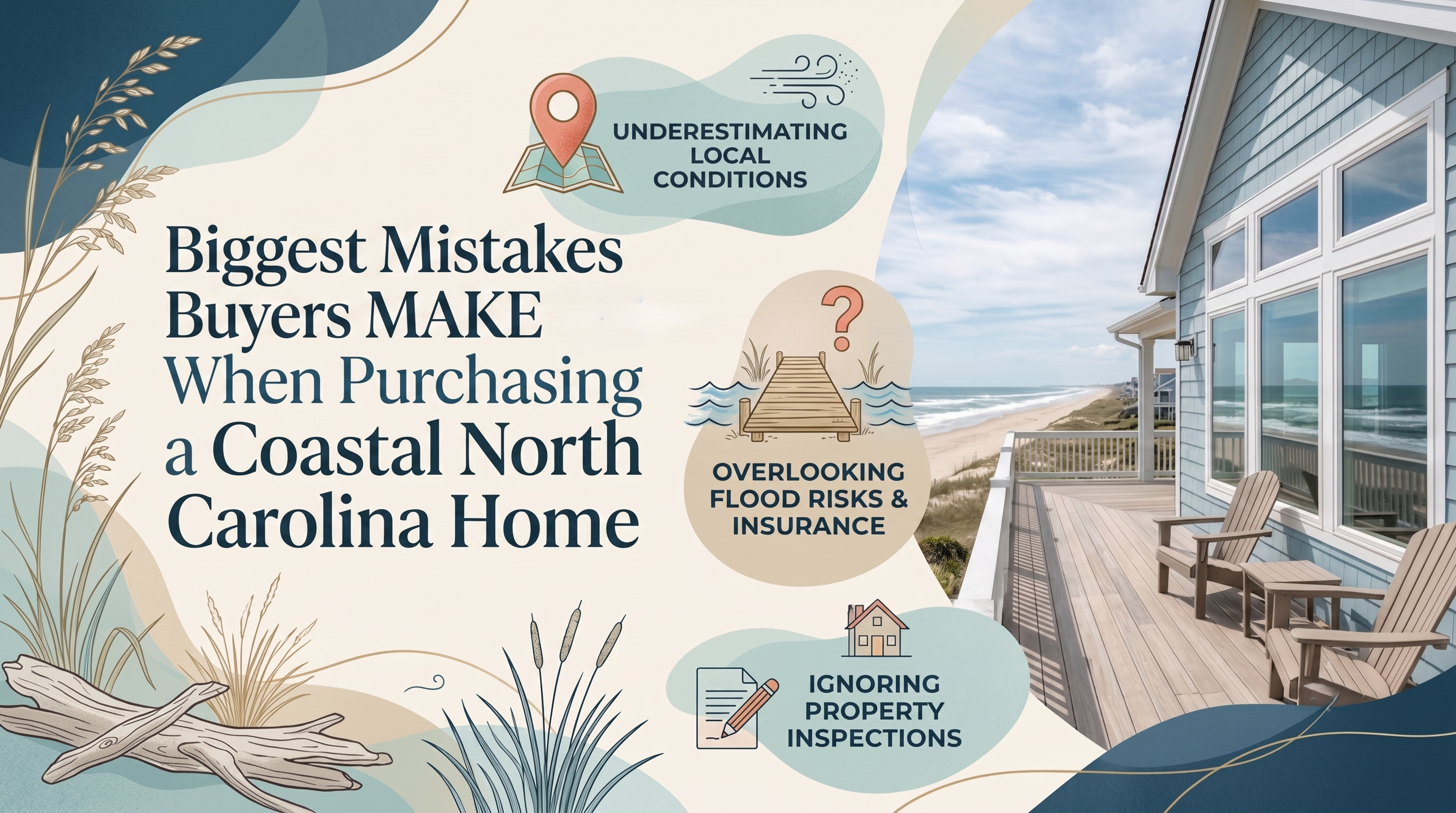
The Biggest Mistakes Buyers Make When Purchasing a Coastal North Carolina Home

After three decades of watching buyers navigate coastal North Carolina, the same mistakes keep repeating. The specific submarket changes, the specific home changes, the specific buyer changes — but the underlying missteps stay the same. Each one is preventable, and most of them are cheap to avoid. Buyers who go into this market knowing the common traps consistently avoid them. Buyers who do not tend to learn the lessons the expensive way in year two or three.

Here is the honest list of the biggest mistakes buyers make when purchasing a coastal NC home, drawing on years of walking properties across Wilmington, Leland, and the beach towns like Oak Island, Carolina Beach, and Wrightsville Beach.

The Biggest Mistakes Buyers Make When Purchasing a Coastal North Carolina Home

Skipping the Insurance Quote Until It Is Too Late

The single most common mistake is treating insurance as a final-week formality. On the coast, insurance is a defining part of the carrying cost. Wind and hail, flood, and homeowners premiums together can add hundreds to over a thousand dollars a month to what a buyer thought the house would cost. Buyers who quote insurance during due diligence make sharper decisions. Buyers who wait until loan underwriting sometimes discover the true cost when it is too late to walk away without losing the deposit.

Falling in Love With the Home Before Understanding the Community

A beautiful home in the wrong community produces quiet frustration that shows up over years. Buyers who spend the search process focused on interior finishes, kitchen layouts, and the master closet often skip the harder question of whether the community fits their actual life. The wrong community cannot be renovated. The wrong home can be.

Ignoring the HOA Documents

Coastal NC has some of the most detailed HOA structures in the Southeast, and buyers routinely sign contracts without reading the covenants, budget, reserve study, or meeting minutes. Then they discover in year one that their fence type is not allowed, or the dues are about to go up 20 percent, or a special assessment for roof replacement is on the way. The documents contain the answers. Buyers who read them close deals with clarity.

Underestimating Salt-Air Maintenance

Buyers relocating from inland markets often underestimate how fast coastal environments age homes. HVAC condensers, roofs, paint, hardware, and outdoor materials all wear faster here than they did in the buyer's previous state. Budgeting inland maintenance rates on a coastal home consistently produces surprise expenses. Coastal maintenance is real, predictable, and 1 to 3 percent of home value annually as a rolling average.

Skipping the Flood Determination

Many buyers rely on a listing description that says "Zone X" or "no flood insurance required" without pulling the current FEMA determination. Flood maps change. Descriptions get out of date. Buyers should pull the flood determination themselves during diligence and confirm the current zone, base flood elevation if applicable, and prior claims. This is inexpensive, quick, and prevents one of the most common post-closing surprises.

Waiving Inspections in a Softer Market

The urge to waive inspection came from the 2020 to 2022 market. In 2026, the market has cooled enough that buyers rarely need to waive to compete, yet some still do. Coastal homes hide moisture and salt issues that inspections uncover. Skipping the inspection to save a day or a thousand dollars is one of the fastest ways to inherit a five-figure repair problem.

Not Verifying Internet Speeds

Remote workers and hybrid professionals often assume high-speed internet is universal in the region. It is not. Fiber and gigabit cable service is broadly available in most established markets, but specific streets, condos, and rural pockets can lack it. Verify at the specific address, not the general neighborhood.

Underestimating Storm Prep Requirements

Every hurricane season, buyers who closed the previous winter discover they do not have shutters, a plan, or storm supplies. First-year owners routinely spend 20 to 40 percent more on storm prep than experienced coastal owners because they are buying everything at once and often at retail. Storm prep is not a crisis expense; it is a routine ownership expense that should be part of year-one budgeting.

Buying Too Much House

The excitement of a new coastal home leads buyers to stretch on square footage, amenities, or view. On the coast, every extra square foot costs to insure, cool, maintain, and repair. Buyers who buy the right amount of house for their actual usage consistently love ownership. Buyers who stretch often quietly resent the carrying cost by year two.

Overlooking Property Tax Overlays

Buyers compare county tax rates without realizing that municipal overlays inside beach towns and inside city limits add meaningfully to the bill. The same $600,000 home can have very different annual property tax bills depending on whether it is inside town limits or a mile down the road in unincorporated county. This is easy to check and worth checking.

Skipping the CLUE Report

The CLUE (Comprehensive Loss Underwriting Exchange) report shows a home's insurance claims history. Prior wind, flood, water, or liability claims affect what future premiums will look like. Buyers should request the CLUE report during due diligence rather than discovering an unexpected claims history from the insurance carrier at underwriting.

Trusting Marketing Language Over Verification

"Oceanview," "steps to the beach," "deepwater dock," "just minutes to Wilmington" — all of these are marketing phrases that mean different things to different sellers. Verify. Walk the walk. Test the drive at rush hour. Measure the water depth. Look at the view from the room the buyer would actually use. The verification is inexpensive; the assumption is expensive.

Not Working With an Agent Who Knows Coastal Specifically

Coastal NC transactions have layers that inland transactions do not — flood, wind, salt, HOA reserves, dock rights, CAMA permitting, evacuation zones, and vacation-rental regulation. An agent who works this market every week reads the risks and opportunities in seconds. An agent who mostly works inland transactions can miss issues that would have saved the buyer thousands.

Failing to Plan for Resale

Buyers who plan a five-year hold and then decide after two years to sell often discover that the specific submarket, price point, or property type has limited buyer appeal. Choosing a home with broad buyer appeal at resale is a form of insurance. Niche properties can be right for the right owner but are also harder to sell when circumstances change.

Key Takeaways

  • Quote insurance during due diligence, not at underwriting — coastal premiums can define carrying cost and change deals
  • Prioritize community fit as much as home fit — the community cannot be renovated
  • Read the HOA covenants, budget, reserve study, and meeting minutes before contract
  • Budget for coastal salt-air maintenance at 1 to 3 percent of home value annually
  • Pull the current FEMA flood determination and get an elevation certificate on AE and VE properties
  • Never waive inspections — coastal moisture and salt issues hide from anything less than a licensed inspection
  • Verify internet speeds at the specific address for remote workers
  • Plan storm prep as a routine year-one expense, not a hurricane-week scramble
  • Do not overbuy — every extra square foot carries coastal operating cost
  • Verify municipal tax overlays; run the actual annual bill on the specific home
  • Request the CLUE report during diligence
  • Verify marketing language with your own eyes, feet, and measurements
  • Work with an agent whose day-to-day is coastal NC transactions
  • Choose a home with broad resale appeal unless committed to a long hold

Frequently Asked Questions

How can I tell if a home is a good fit for the community I want?

Spend a weekend living the intended lifestyle in that community before contract. Coffee, groceries, restaurants, rush-hour drive, the local park, the local farmers' market. Two days of real presence reveals more than any number of showings.

Should I always request an elevation certificate?

Yes if the home is in an AE or VE flood zone. Optional but useful in Zone X properties when planning renovations. The document simplifies future insurance renewals and buyer negotiations at resale.

What is a fair coastal home inspection budget?

Plan for $500 to $1,200 for the general home inspection, $150 to $400 for a wood-destroying-organisms inspection, $300 to $800 for a septic inspection if applicable, $150 to $400 for a well test if applicable, and $400 to $800 for an elevation certificate if needed. Total often $1,500 to $3,500 for a comprehensive coastal diligence package.

How do I evaluate an HOA before contract?

Request the covenants, current budget, reserve study, prior three years of financial statements, and past twelve months of board meeting minutes. Read them all. Any HOA that resists producing these documents is telling you something.

Is it worth quoting insurance from multiple agents?

Yes. Rates for the same coverage vary meaningfully across coastal NC carriers. An independent agent who writes multiple markets typically produces better outcomes than a captive agent with a single carrier.

Posted in For Buyers
July 30, 2026

The Benefits of Buying a Home Near the Intracoastal Waterway

The Intracoastal Waterway is the sinew that ties coastal North Carolina together. Long before it was a real estate feature, it was a working waterway for commerce, transportation, and fishing. Today, it does all of that and more — a protected navigable channel running the length of the coast that shapes daily life for the homes and communities along it. Buyers who buy on or near the ICW are not just buying a home. They are buying a specific way of living that this coast delivers better than almost anywhere else. Here is why ICW-adjacent inventory continues to command a premium and why the buyers who choose it rarely regret it.

What the ICW Actually Delivers

The Intracoastal Waterway runs behind the barrier islands from Norfolk to Miami, cutting a protected channel between the mainland and the coast. In North Carolina, it links Wrightsville Beach to Hampstead, Sneads Ferry, and the Topsail corridor to the north, and connects Wrightsville down through Carolina Beach and around to Southport, Bald Head Island, and the Brunswick beaches to the south. For boat owners, that means safe travel in almost any weather, without ever heading offshore. For homeowners, it means water access, dock potential, wildlife, and a specific quality of light and view that inland homes cannot replicate.

Boating and Water Access

The primary reason buyers pay for ICW proximity is boating. A private dock on the waterway or on an ICW-connected creek gives owners water access without a trailer, a marina slip fee, or a long tow to open water. Fishing, cruising, sailing, kayaking, and paddleboarding all become part of the daily rhythm rather than a weekend event. The ICW's sheltered nature also means small boats can be used year-round in conditions that would keep the same boat off the ocean.

Buyers with children and grandchildren especially value the ICW proximity. Waterfront homes with a dock become the family destination during summers and holidays, drawing multiple generations to the coast.

Views and Light

ICW-front homes look west across the marsh and channel toward sunset. Anyone who has watched a summer evening from a screened porch overlooking the ICW understands why this view holds value. The light, the birds, the boats moving past, the tidal cycles — the daily and seasonal variation keeps the view interesting in a way that ocean views sometimes do not.

Wildlife and Environment

The ICW corridor and the associated marshlands are among the most biologically active environments in North Carolina. Herons, ospreys, dolphins, mullet, and shrimp are daily sightings. For nature-oriented buyers, this alone is worth the premium.

Storm Considerations

ICW-adjacent living comes with real considerations during hurricane season. Waterfront homes face wind, wave, and surge exposure, and flood zone designations for ICW-front homes are often more restrictive than inland alternatives. Insurance costs are higher, and elevation compliance matters. Buyers who go in understanding these factors and plan for them navigate the trade-offs well. Buyers who assume "the ICW is protected water" and skip the flood diligence sometimes learn hard lessons.

The Benefits of Buying a Home Near the Intracoastal Waterway

Where the ICW Adds the Most Value

Hampstead

Hampstead's ICW frontage is one of the strongest boating markets in the region. The community's growth has been driven substantially by the water access, and homes with private docks reliably outperform comparable inland inventory. The proximity to Topsail Inlet makes open-water access practical.

Wrightsville Beach

Wrightsville Beach ICW-front inventory delivers a premium boating and social lifestyle. Motts Channel, Banks Channel, and the sound side of Wrightsville each behave slightly differently, and buyers should shop for the specific water access they want.

Southport

Southport's ICW access ties into the Cape Fear River and to the offshore fishing grounds. The town's boating community is one of the strongest on the NC coast, and ICW-adjacent inventory in and around Southport reflects that.

Brunswick Beaches

Sunset Beach, Ocean Isle Beach, and Holden Beach each offer ICW and canal-front inventory at often more moderate prices than the Wilmington-side markets. Buyers who value water access without the higher-end social scene often land here.

Sneads Ferry

Working-waterfront authenticity, more accessible pricing, and genuine boating culture. Sneads Ferry does not photograph like Wrightsville but consistently delivers on the daily lifestyle its buyers seek.

Practical Considerations

Dock Rights

Not all ICW-adjacent lots have dock rights, and even lots with dock rights face state CAMA permitting for new dock construction. Buyers should verify whether an existing dock is grandfathered, whether the current permit is transferable, and whether the buyer's intended use aligns with the permit.

Water Depth

Tidal range and dock depth affect what boat the dock can accommodate. A dock that dries out at low tide is very different from a deepwater dock. Buyers should verify low-tide depth for the boat they own or plan to own.

Bulkheading and Erosion

Marsh-edge and creek-front lots may require bulkhead maintenance or replacement over time. Buyers should evaluate the existing bulkhead condition and understand the cost profile for future work.

Flood Insurance and Elevation

Most ICW-front homes sit in AE or VE flood zones. Elevation certificates matter, insurance quotes matter, and finished floor height above base flood elevation matters. All should be part of due diligence.

Bridge and Navigation Access

Boaters should verify what navigation restrictions exist between the dock and the boater's intended destinations. Fixed bridges, moveable bridge schedules, and shoaling all affect how usable a specific dock is for a specific boat.

Resale Strength

ICW-front and ICW-adjacent homes consistently resell better than comparable non-waterfront inventory in the same submarkets. The buyer pool is deep — retirees, boaters, second-home buyers, remote workers with families — and the supply is finite. Even in softer market years, ICW inventory generally trades. That resale strength is a real part of the long-term investment case for buying on the water.

Who Should Buy ICW

Buyers who genuinely value water access as a daily feature of their life. Boaters, fishermen, kayakers, wildlife enthusiasts, and buyers who imagine sunset dinners on the porch. Multi-generational families who want a home that draws relatives. Retirees who want the boat to be part of the retirement plan. For these buyers, the ICW premium is not a cost — it is the point.

Who Should Not

Buyers who do not actually plan to use the water. An ICW-front home purchased for the view but rarely enjoyed as a boater or a marsh-watcher is often a home that could have been an inland home at a lower carrying cost. Fit matters more than aspiration here.

Key Takeaways

The Intracoastal Waterway remains one of the strongest lifestyle features of the coastal North Carolina market. ICW-front and ICW-adjacent homes deliver boating access, sunset views, wildlife, and a daily quality of life that inland homes cannot replicate. The premium buyers pay is real but comes with resale strength that has held up through multiple market cycles. The trade-offs — higher insurance costs, flood zone considerations, dock permitting, bulkhead maintenance, and hurricane season awareness — are all manageable when planned for in advance. Buyers who genuinely value water access get more out of an ICW home than almost any other property type on this coast. Buyers who are drawn to the view without a real plan to use the water are usually better served by an inland home a few blocks off the water. The right ICW property is one of the best long-term coastal purchases available in this region. The wrong ICW property, chosen for the wrong reasons, becomes an expensive lesson. Match the home to the life the buyer actually intends to live, and the ICW consistently delivers.

Posted in For Buyers